Judaism and Islam: Abrahamic Brothers Compared
Judaism and Islam share more than most people realize — strict monotheism, dietary laws, daily prayer, and descent from Abraham. A respectful comparison of two closely related faiths.
The Short Answer
Judaism and Islam are, in many ways, closer to each other than either is to Christianity. Both insist on strict, uncompromising monotheism. Both have comprehensive legal systems governing daily life. Both have dietary laws, daily prayer requirements, and a deep suspicion of depicting God in images. Both trace their origins to the patriarch Abraham — Judaism through his son Isaac, Islam through his son Ishmael.
This is not to minimize real and important differences. But anyone studying these two faiths side by side will be struck by how much they share — and by how much their parallel structures reveal about the common Abrahamic inheritance.
Shared Foundation: One God
The theological bedrock of both Judaism and Islam is absolute monotheism.
Judaism’s central declaration is the Shema: “Hear, O Israel, the Lord our God, the Lord is One.” Islam’s parallel declaration is the Shahada: “There is no god but God, and Muhammad is His messenger.”
Both traditions reject the Christian doctrine of the Trinity. Both insist that God is incorporeal — without physical form. Both forbid images or representations of God. Both consider attributing divinity to any human being (or any created thing) to be the gravest possible sin.
The Hebrew word for God, Elohim, and the Arabic word Allah share the same Semitic root. Arabic-speaking Jews and Christians use “Allah” to refer to God — it is not an exclusively Islamic term.
Abraham: Shared Ancestor, Different Stories
Both traditions claim Abraham (Ibrahim in Arabic) as their founding patriarch. The stories overlap significantly but diverge at a critical point.
In the Torah, Abraham has two sons: Ishmael (by Hagar) and Isaac (by Sarah). The covenant passes through Isaac to Jacob (Israel), and from there to the Jewish people. Ishmael is blessed but sent away.
In the Quran, Abraham also has both sons, but Islamic tradition holds that the covenant — and the near-sacrifice on Mount Moriah — involved Ishmael, not Isaac. The Arab peoples descend from Ishmael, making Jews and Arabs cousins in the biblical narrative.
This shared ancestry is not merely symbolic. It creates a family bond — complicated, strained, but real — between the two traditions.
Law: Halakha and Sharia
Both Judaism and Islam are law-centered religions — a feature that distinguishes them from most branches of Christianity.
Halakha (Jewish law) governs every aspect of Jewish life: diet, prayer, business, marriage, Shabbat, clothing, and interpersonal ethics. It derives from the Torah, Talmud, and centuries of rabbinic interpretation.
Sharia (Islamic law) similarly governs diet, prayer, charity, fasting, pilgrimage, family law, and commercial transactions. It derives from the Quran, Hadith (sayings of Muhammad), and centuries of scholarly interpretation.
The parallel is striking: both traditions believe that God’s will extends to the details of daily life, not just to abstract theology. Both have rich traditions of legal scholarship, debate, and evolving interpretation. Both value the legal scholar (rabbi / ulama) as a central figure in communal life.
Dietary Laws: Kosher and Halal
The similarities between kosher and halal dietary laws are remarkable:
| Kosher | Halal | |
|---|---|---|
| Pork | Forbidden | Forbidden |
| Blood | Forbidden | Forbidden |
| Ritual slaughter | Required (shechitah) | Required (dhabihah) |
| Prayer at slaughter | Yes (blessing) | Yes (bismillah) |
| Alcohol | Permitted (with restrictions on wine) | Forbidden |
| Shellfish | Forbidden | Permitted |
| Meat + dairy | Separated | No restriction |
Key differences: Kosher law is more restrictive in several ways. It forbids shellfish and most seafood without fins and scales. It strictly separates meat and dairy products. It requires specific rabbinic supervision (hechsher). Halal permits shellfish and does not separate meat and dairy.
A practical note: Kosher food (except wine and grape products) is generally considered halal by most Islamic authorities. The reverse is not always true — halal food may include shellfish or mix meat and dairy, which would not be kosher.
Prayer
Both traditions require daily prayer at specified times:
Judaism prescribes three daily prayer services: Shacharit (morning), Mincha (afternoon), and Ma’ariv (evening). Prayer is ideally performed with a minyan (quorum of ten) in a synagogue, facing Jerusalem.
Islam prescribes five daily prayers (salat): Fajr (dawn), Dhuhr (midday), Asr (afternoon), Maghrib (sunset), and Isha (night). Prayer is ideally performed in a mosque, facing Mecca.
Both traditions involve physical prostration (bowing), ritual washing before prayer, and set liturgical texts. The mosque’s call to prayer (adhan) functions similarly to the synagogue’s call to worship.
Prophets
Both traditions honor a long line of prophets. Judaism recognizes prophets from Abraham through Malachi. Islam recognizes many of the same figures — Abraham (Ibrahim), Moses (Musa), David (Dawud), Solomon (Suleiman), and many others — as prophets who preceded Muhammad.
The critical difference: Islam considers Muhammad the final prophet (the “Seal of the Prophets”), whose revelation supersedes all previous ones. Judaism does not accept Muhammad as a prophet and does not consider the Quran as divinely revealed scripture.
Islam also considers Jesus (Isa) a major prophet — born of a virgin and performing miracles — though not divine and not the son of God. Judaism does not consider Jesus a prophet at all.
Jerusalem
Jerusalem is sacred to both faiths, but for different reasons:
For Judaism, Jerusalem is the location of the Temple Mount — where the First and Second Temples stood, where Abraham nearly sacrificed Isaac, and where the Divine Presence was believed to dwell. The Western Wall is the holiest site in Judaism. Jerusalem has been the direction of Jewish prayer for over two thousand years.
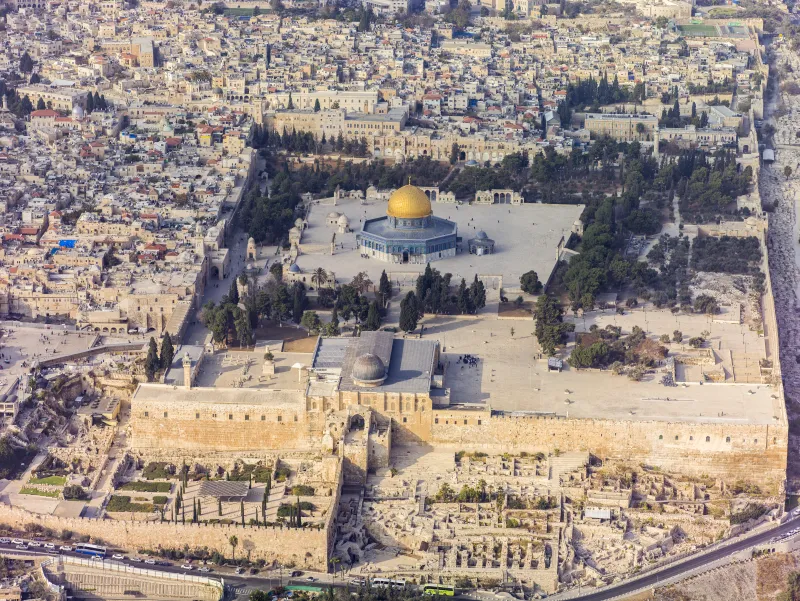
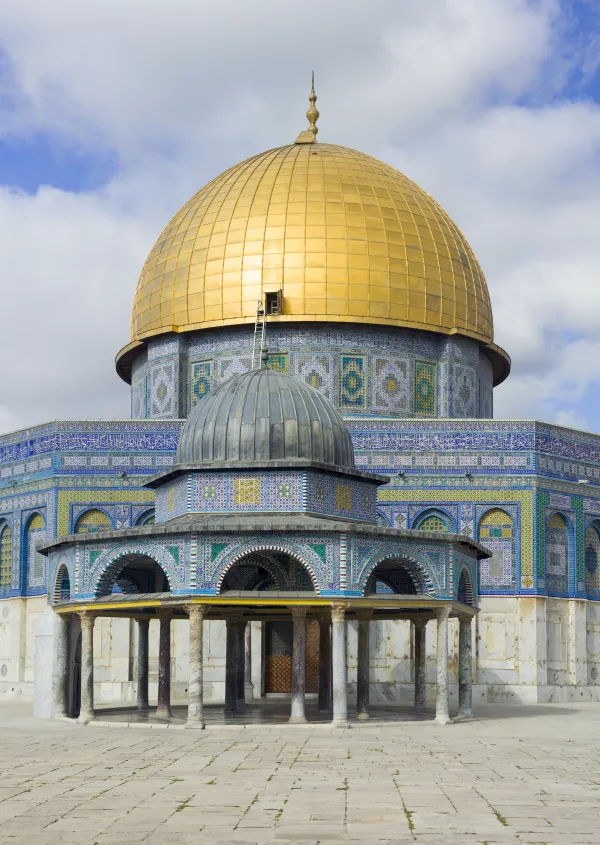
For Islam, Jerusalem is the third holiest city (after Mecca and Medina). The Al-Aqsa Mosque and the Dome of the Rock stand on the Temple Mount (known in Arabic as al-Haram al-Sharif). Islamic tradition holds that Muhammad journeyed to Jerusalem on his Night Journey (Isra and Mi’raj) and ascended to heaven from the Temple Mount.
The overlapping claims to this tiny piece of land make Jerusalem the most contested sacred space on earth — a source of both spiritual connection and political conflict between the two communities.
Key Differences
Despite the deep parallels, important differences remain:
Chosen people: Judaism teaches that Jews have a unique covenant with God — not superiority, but a specific set of obligations (the 613 commandments). Islam teaches that all believers are equal before God, and that Islam is the universal faith for all humanity.
Conversion: Both allow conversion, but the processes differ dramatically. Converting to Judaism is lengthy and historically discouraged. Conversion to Islam requires only the sincere recitation of the Shahada.
Sabbath: Jews observe Shabbat on Saturday with strict rest. Muslims gather for communal prayer on Friday (Jumu’ah) but Friday is not a day of rest in the Shabbat sense.
Clergy: Neither tradition has clergy in the Christian sacramental sense, but both have religious scholars (rabbis / imams) who teach, interpret law, and lead prayer.
Interfaith Connections
The history between Jews and Muslims is complex — periods of remarkable coexistence (the Golden Age of Spain, where Jewish culture flourished under Muslim rule) and periods of conflict (the modern Israeli-Palestinian struggle).
But theological hostility between the two traditions has historically been less intense than between Judaism and Christianity. There were no Muslim Crusades against Jews, no Muslim Inquisition. The Muslim world generally offered Jews dhimmi (protected minority) status — second-class, certainly, but safer than the alternatives in medieval Christendom.
Today, Jewish-Muslim dialogue initiatives are growing. Shared theological commitments — monotheism, law, ethical living, Abraham — provide a foundation for conversation that both communities can recognize as authentic.
Understanding the deep structural parallels between Judaism and Islam does not solve political conflicts or erase historical grievances. But it does remind us that these are sibling traditions — family members who share far more than they usually acknowledge.
Frequently Asked Questions
Are Judaism and Islam related?
Yes. Both are Abrahamic religions, tracing their lineage to the patriarch Abraham — through Isaac for Judaism and through Ishmael for Islam. They share strict monotheism, dietary laws, daily prayer, and many prophets. In many ways, Judaism and Islam are theologically closer to each other than either is to Christianity.
What is the difference between kosher and halal?
Both systems require ritual slaughter with a sharp blade, prohibit pork, and forbid consuming blood. Kosher law is more restrictive: it also prohibits shellfish, requires separation of meat and dairy, and demands specific supervision. Halal permits shellfish and does not require meat-dairy separation. Food that is kosher (except wine) is generally considered halal.
Do Jews and Muslims worship the same God?
Both traditions insist on strict monotheism — one God, indivisible and incorporeal. The Arabic word 'Allah' simply means 'God' and is used by Arabic-speaking Jews and Christians as well. While theological details differ, most scholars agree that Jews and Muslims worship the same God understood through different prophetic traditions.
Sources & Further Reading
Related Articles
Jerusalem: 3,000 Years of Faith, Conflict, and Hope
For three millennia, Jerusalem has been the spiritual heart of the Jewish people — and a city sacred to three faiths. Its story is one of devotion, destruction, and enduring hope.
Kashrut: The Jewish Dietary Laws
More than just 'no pork' — kashrut is a comprehensive system that transforms eating into a sacred act.
What Do Jews Believe? Core Beliefs, Values, and the Spirit of Debate
Jewish belief centers on one God, Torah, ethical action, and humanity's role in repairing the world — but within that framework, debate and diversity of opinion are not just tolerated but sacred.