Gratitude in Judaism: Hakarat HaTov and the Art of Saying Thank You
The first word a Jew says each morning is 'thank you.' Judaism mandates 100 blessings daily, celebrates 'enough' with dayenu, and treats gratitude not as a feeling but as an obligation.

Thank You Is Not Optional
The very first word a Jew says each morning — before coffee, before checking the news, before any conscious thought about the day ahead — is a word of gratitude. Modeh (for men) or modah (for women): “I give thanks.”
Modeh ani lefanecha… — “I give thanks before You, living and eternal King, for You have returned my soul to me with compassion. Great is Your faithfulness.”
This is not an accident of liturgical history. It is a deliberate architectural choice: gratitude as the foundation stone of every single day. Before you know what the day will bring — before you know if it will be good or terrible, productive or wasted, joyful or heartbreaking — you say thank you. Because you are alive. And that alone is worth acknowledging.
Judaism has a name for this practice of noticing and acknowledging goodness: hakarat hatov — literally, “recognizing the good.” And it is not treated as a nice personality trait or a wellness hack. It is treated as a moral obligation. One of the most serious ones.
Hakarat HaTov: Gratitude as Duty
In Jewish ethics, ingratitude is not merely impolite. It is a character defect so severe that the tradition compares it to denying God.
The logic works like this: if you cannot recognize and acknowledge good done to you by a human being — someone you can see, hear, and touch — how can you possibly recognize and acknowledge good done to you by God? Ingratitude toward people leads inexorably to ingratitude toward the divine. And ingratitude toward the divine is the root of all spiritual failure.
The Talmud illustrates this with a devastating example: the Israelites in the wilderness received manna from heaven — miraculous food that sustained them for forty years — and complained about it. “Our soul is dried up,” they said. “There is nothing but this manna before our eyes” (Numbers 11:6). They had everything they needed and could see only what they lacked. The tradition treats this as a cautionary tale about what happens when gratitude fails.
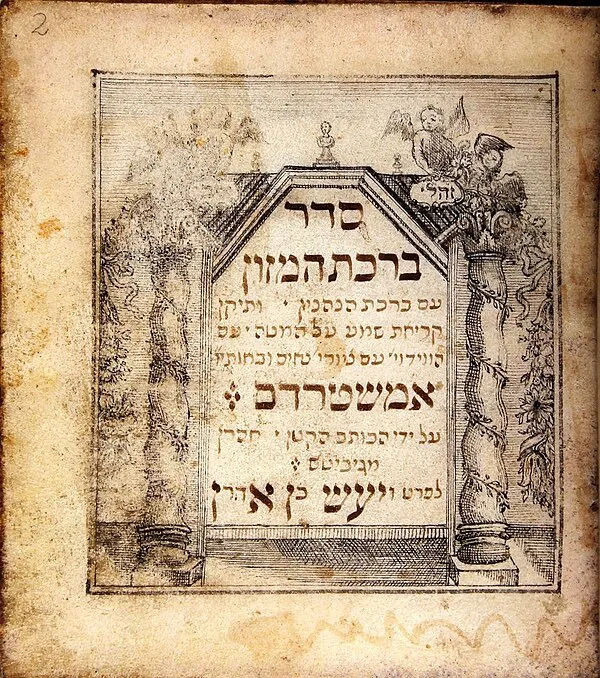
The obligation of hakarat hatov extends to everyone who has done good for you:
- Parents — The commandment to honor parents is, at its root, an obligation of gratitude. They gave you life. Everything else follows from that.
- Teachers — The tradition demands extraordinary respect for those who taught you Torah, placing their honor even above that of parents in certain contexts.
- Friends and strangers — Anyone who has helped you, hosted you, comforted you, or gone out of their way for you deserves acknowledgment.
- Enemies — The Torah prohibits abhorring an Egyptian, “for you were a stranger in his land” (Deuteronomy 23:8). Even the nation that enslaved Israel deserves a measure of gratitude for having hosted them. This is hakarat hatov at its most radical.
100 Blessings a Day
The Jewish system for cultivating gratitude is remarkably concrete. It does not rely on feeling grateful. It relies on doing gratitude — performing specific acts of acknowledgment, over and over, throughout the day.
The tradition teaches that a Jew should recite approximately 100 brachot (blessings) each day. This count includes:
- Morning blessings — approximately 15, thanking God for waking up, seeing, walking, being clothed, having strength
- Prayer service blessings — the Amidah contains 19 blessings, recited three times daily
- Food blessings — before and after eating, with different blessings for different food categories
- Nature blessings — upon seeing lightning, hearing thunder, smelling fragrant plants, seeing a rainbow, seeing the ocean
- Bodily function blessings — yes, there is a blessing after using the bathroom (asher yatzar), thanking God for the complex plumbing of the human body
The effect of this system is cumulative. By the end of a day in which you have blessed everything from your morning vision to your evening meal, you have trained your brain to notice. The default human mode is to take things for granted — to notice only what is wrong, unusual, or missing. The blessing system overrides that default. It forces you to see the ordinary as extraordinary, the routine as miraculous.
Rabbi Abraham Joshua Heschel called this “radical amazement” — the practice of being genuinely astonished by what most people consider unremarkable. The sun rose today. You can see it. Your legs carry you. Water comes out of the tap. These are not trivial things. They are miracles that happen to coincide with being commonplace.
Dayenu: The Song of Enough
Perhaps the most beloved expression of gratitude in Jewish life is dayenu — the song sung at the Passover seder that lists fifteen gifts God gave the Jewish people during the Exodus and declares, after each one: “Dayenu! It would have been enough!”
If God had taken us out of Egypt but not split the sea — dayenu! If God had split the sea but not led us through the desert — dayenu! If God had led us through the desert but not given us the Torah — dayenu!
The song is joyful, catchy, and deceptively profound. Its message is radical gratitude — the ability to appreciate each individual gift without immediately asking, “What’s next?” This is extraordinarily difficult for human beings. We are wired to want more, to focus on what we do not have, to move the goalposts the moment we achieve something.
Dayenu teaches the opposite. It says: stop. Look at what you have. This — just this — would have been enough. And the fact that you have more than enough? That is cause for singing.
The Gratitude Practice
Modern psychology has “discovered” what Judaism has practiced for millennia: gratitude journaling — the practice of regularly writing down things you are grateful for — has been shown to improve mental health, reduce anxiety, strengthen relationships, and increase life satisfaction.
The Jewish version predates the psychological research by a few thousand years. The system of 100 daily blessings is, in essence, a gratitude practice — except that it is spoken rather than written, communal rather than private, and structured rather than freeform. And it is not optional.
Some contemporary rabbis have made the connection explicit, encouraging congregants to keep a gratitude journal alongside their daily prayer practice. The two complement each other: the structured blessings cover the universal experiences (waking up, eating, witnessing nature), while the journal captures the personal ones (a conversation that meant something, a moment of unexpected kindness, a problem that resolved itself).
The Opposite of Entitlement
If gratitude is the foundation of Jewish ethics, then its opposite — entitlement — is the foundation of ethical failure. The person who believes they deserve everything they have, who takes credit for their own success and blames others for their failures, who sees gifts as rights and kindness as obligation — that person has lost the capacity for hakarat hatov. And without hakarat hatov, the tradition teaches, every other virtue crumbles.
This is why gratitude comes first. Not first in the sense of “most important” (though it is that too), but first in the sense of chronologically first. The first word of the day. The first prayer of the morning. The first act of consciousness. Because if you start with gratitude, everything that follows has a different quality. The day is received, not seized. The world is a gift, not a possession. And the people in your life are blessings, not furniture.
The Word That Changes Everything
There is a midrash that says the word Yehudi — Jew — comes from the same root as todah — thanks. The patriarch Judah (Yehudah), from whom the Jewish people take their name, was named by his mother Leah with a declaration of gratitude: “This time I will thank God” (Genesis 29:35).
If this is true — and whether or not it is etymologically precise, it is spiritually true — then the very identity of the Jewish people is rooted in the act of giving thanks. To be a Jew is to be a thanker. To see the world through the lens of gratitude. To wake up every morning, before you know what the day will bring, and say the first word that matters:
Thank you.
Frequently Asked Questions
What does hakarat hatov mean?
Hakarat hatov (הכרת הטוב) literally means 'recognizing the good.' It is the Jewish concept of gratitude — but stronger than the English word implies. In Judaism, gratitude is not merely a feeling but a moral obligation. Failing to recognize and acknowledge good that has been done for you is considered a serious character flaw. The Talmud considers ingratitude one of the worst traits a person can have.
Why does Judaism require 100 blessings a day?
The requirement to recite approximately 100 blessings daily is attributed to King David (based on a play on words in Deuteronomy 10:12) and codified in the Shulchan Arukh. The purpose is to cultivate constant awareness and gratitude — for food, for bodily functions, for nature, for Torah, for life itself. By blessing everything from thunder to bread to the ability to stand upright, a Jew trains themselves to notice what most people take for granted.
What is the connection between dayenu and gratitude?
Dayenu ('It would have been enough') is a song from the Passover Haggadah that lists 15 gifts God gave the Jewish people during the Exodus, declaring after each one: 'It would have been sufficient.' The song teaches radical gratitude — the ability to appreciate each individual gift without demanding more. It is a corrective to the human tendency to always want the next thing rather than appreciating what has already been given.
Sources & Further Reading
- Sefaria — Talmud on Gratitude ↗
- My Jewish Learning — Hakarat HaTov ↗
- Rabbi Jonathan Sacks, Celebrating Life
Related Articles
Jewish Blessings (Brachot): Sanctifying Every Moment
Judaism has a blessing for everything — from bread to thunder, from waking up to seeing a rainbow. Learn about brachot, the system of blessings that turns daily life into sacred practice.
Jewish Ethics: A Guide to Moral Living
From Hillel's golden rule to the Mussar movement, Jewish ethics offers a comprehensive framework for moral living — covering speech, the environment, labor rights, medical decisions, and the obligation to repair the world.
Modeh Ani: The First Words of the Jewish Day
Modeh Ani — 'I give thanks' — is the first prayer a Jew says upon waking, even before washing hands. Discover this short, powerful expression of gratitude, why it omits God's name, and how it shapes the Jewish approach to every new day.