Jewish Charity Organizations: A Guide to Giving Wisely
From the JNF planting trees in Israel to HIAS helping refugees worldwide, here's a guide to the major Jewish charitable organizations — what they do, how they work, and where your money goes.

The Obligation to Give
In Judaism, giving to those in need is not optional. It is not a generous impulse or a tax strategy. It is an obligation — a mitzvah — rooted in the Torah and codified in Jewish law. The word tzedakah, often translated as “charity,” actually comes from tzedek — justice, righteousness. You give not because you are generous but because it is the right thing to do.
This distinction matters. It means that giving is expected regardless of your emotional state, your financial comfort, or your feelings about the recipient. The Talmud teaches that even a person who receives tzedakah is obligated to give tzedakah — because the obligation belongs to everyone.
With that foundation, here is a guide to the major Jewish charitable organizations — what they do, where they operate, and how to give wisely.
Israel-Focused Organizations
Jewish National Fund (JNF-KKL)
What they do: Land development, forestry, water infrastructure, and environmental projects in Israel. The iconic blue JNF box — the pushke — has been a fixture of Jewish homes worldwide for over a century.
Known for: Planting trees in Israel (over 250 million since 1901), building water reservoirs in the Negev desert, and developing communities in peripheral areas.
Giving tip: JNF tree planting certificates remain one of the most popular Jewish gifts — for birthdays, memorials, and celebrations.
Magen David Adom (MDA)
What they do: Israel’s national emergency medical, disaster, ambulance, and blood bank service — the Israeli equivalent of the Red Cross.
Known for: Operating Israel’s emergency response system, blood bank services (handling 97% of Israel’s blood supply), and disaster relief both in Israel and internationally.
Giving tip: Donations fund ambulances, mobile intensive care units, and blood drives. American Friends of Magen David Adom (AFMDA) coordinates US donations.
Friends of the IDF (FIDF)
What they do: Support programs for Israeli soldiers — education, financial assistance, recreational facilities, and support for lone soldiers (those serving without family in Israel).
Known for: The Lone Soldier program, which supports immigrants and orphans who serve in the IDF without family support.
Global Jewish Organizations
JDC (American Jewish Joint Distribution Committee)
What they do: The JDC is the world’s leading Jewish humanitarian organization, operating in over 70 countries. They provide disaster relief, support elderly Jews in the former Soviet Union, run development programs, and strengthen Jewish communities worldwide.
Known for: A remarkable 110+ year history that includes rescuing Jews during the Holocaust, supporting displaced persons after World War II, secretly maintaining Jewish life in the Soviet Union, and rebuilding Jewish communities after communism’s fall.
Giving tip: The JDC is one of the most efficient and respected Jewish charities, consistently receiving high ratings from Charity Navigator.
HIAS (Hebrew Immigrant Aid Society)
What they do: Originally founded in 1881 to help Jewish immigrants settle in America, HIAS has evolved into a global refugee resettlement and advocacy organization that helps refugees of all backgrounds.
Known for: Their motto shift from “We help refugees because we are Jewish” to “We help refugees because we were refugees.” HIAS now serves refugees from Syria, Afghanistan, Central America, and dozens of other countries.
ORT (Organization for Rehabilitation through Training)
What they do: Education and vocational training, operating schools and programs in over 30 countries. World ORT runs a network of schools, colleges, and training programs that serve approximately 200,000 students annually.
Known for: STEM education, technology training, and building self-sufficiency — aligning with Maimonides’ teaching that the highest form of tzedakah is helping someone become independent.
Community Organizations
Jewish Federations of North America
What they do: The umbrella organization for 146 local Jewish Federations across the US and Canada, which collectively raise and distribute over $2 billion annually for Jewish needs — locally, in Israel, and around the world.
Known for: The annual Federation campaign, which funds everything from local Jewish day schools and senior services to Israel programs and overseas humanitarian aid. Your local Federation is often the best single address for supporting Jewish communal needs.
Tomchei Shabbos / Food Banks
Many Jewish communities operate Tomchei Shabbos programs that provide food packages to families in need before Shabbat and holidays. These hyper-local organizations ensure that every Jewish family can celebrate with dignity. They typically operate with minimal overhead and maximum impact.
MAZON: A Jewish Response to Hunger
What they do: A national anti-hunger organization that funds food banks, meal programs, and advocacy for food security policy. MAZON (from the Hebrew for “food”) was founded on the principle that no one should go hungry while others celebrate.
Known for: Their “3% Celebration” campaign, which asks families celebrating simchas (joyous occasions like bar mitzvahs and weddings) to donate 3% of the celebration cost to fight hunger.

How to Choose Wisely
Maimonides outlined eight levels of tzedakah, from lowest to highest:
- Giving reluctantly
- Giving less than you should, but cheerfully
- Giving after being asked
- Giving before being asked
- The recipient knows the donor but not vice versa
- The donor knows the recipient but not vice versa
- Neither knows the other
- Helping someone become self-sufficient — the highest form
When choosing where to give, consider:
- Efficiency: What percentage of donations goes to programs vs. administrative costs? Check Charity Navigator or GuideStar ratings.
- Impact: Does the organization produce measurable results? Look for annual reports and outcome data.
- Alignment: Does the organization’s mission match your values and priorities?
- Local vs. global: Jewish tradition teaches that local needs come first (aniyei ircha kodmim — “the poor of your city take precedence”), but global needs are also obligatory.
- Transparency: Does the organization publish financial reports? Is leadership accountable?
Disaster Relief
When disaster strikes — earthquakes, floods, wars, pandemics — several Jewish organizations mobilize quickly:
- IsraAID — Israeli humanitarian organization that deploys to disaster zones worldwide
- JDC — Long-standing disaster response capacity
- HIAS — Refugee support in crisis situations
- Federations — Often create emergency funds for specific crises
The Jewish Way of Giving
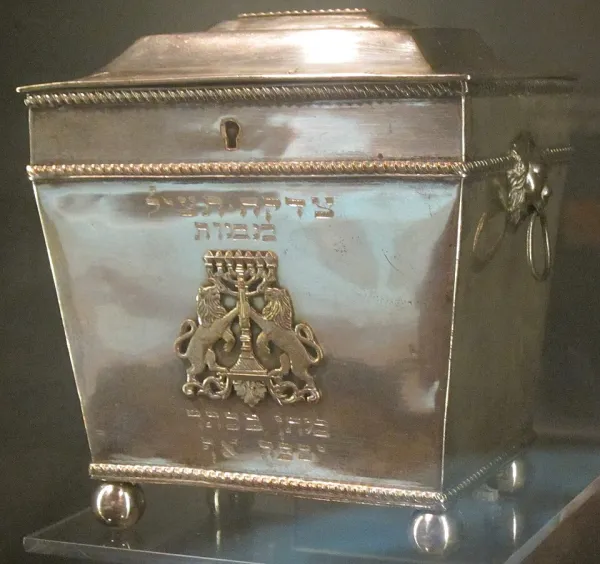
Jewish tradition teaches that giving should be a habit, not an event. The practice of dropping coins in a pushke (charity box) before lighting Shabbat candles every Friday night trains the hand and the heart. Maimonides taught that it is better to give a dollar a day for a hundred days than a hundred dollars once — because each act of giving strengthens the character.
The organizations listed here represent just a fraction of the Jewish philanthropic landscape. From massive international agencies to tiny local programs, the infrastructure of Jewish giving is vast, diverse, and deeply embedded in communal life.
The question is never whether to give. It is how much, to whom, and in what way that will do the most good. These are questions worth taking seriously — because in Judaism, tzedakah is not just generosity. It is justice.
Frequently Asked Questions
How much should Jews give to charity?
Jewish tradition suggests giving approximately 10% of your income to charity (ma'aser), based on the biblical tithing system. The Talmud sets a maximum of 20% (so that the giver doesn't impoverish themselves) and a minimum of roughly 3%. Maimonides taught that many small gifts are better than one large one, as each act of giving develops the habit of generosity.
What is the difference between tzedakah and charity?
The English word 'charity' comes from the Latin 'caritas' (love/compassion), implying a voluntary, emotionally motivated act. The Hebrew word 'tzedakah' comes from 'tzedek' (justice/righteousness), implying an obligation. In Judaism, giving to those in need is not merely nice — it is a duty. This distinction shapes how Jewish tradition approaches philanthropy: not as generosity from the privileged to the less fortunate, but as a righteous act that the giver is obligated to perform.
Which Jewish charities are most effective?
Effectiveness depends on your priorities and how you define impact. For immediate humanitarian aid, the JDC (Joint Distribution Committee) and Magen David Adom are highly regarded. For long-term development, ORT (education and vocational training) has a strong track record. For refugees and immigration, HIAS is the leading Jewish organization. Check Charity Navigator ratings, review annual reports, and consider Maimonides' hierarchy of giving — the highest form being helping someone become self-sufficient.
Key Terms
Sources & Further Reading
Related Articles
Major Jewish Organizations: A Complete Guide
From the ADL to the JCC, from Hillel to Hadassah — the major Jewish organizations that shape communal life, advocacy, education, and philanthropy. What each one does and how to get involved.
Jewish Philanthropy: How a Culture of Giving Shaped the World
Jewish philanthropy is not charity — it is obligation. From Maimonides' ladder of giving to modern mega-donors like Bloomberg and Pritzker, the Jewish culture of tzedakah has built hospitals, universities, and social safety nets worldwide.
Tzedakah: The Jewish Obligation of Justice and Giving
Tzedakah is not charity — it's justice. From Maimonides' eight levels to the humble pushke on the kitchen counter, Jewish giving is an obligation, not an option.