Bar Mitzvah: Everything You Need to Know
The complete guide to bar and bat mitzvah — from spiritual meaning to Torah reading to party planning. What it is, how to prepare, what to expect, and why it matters.
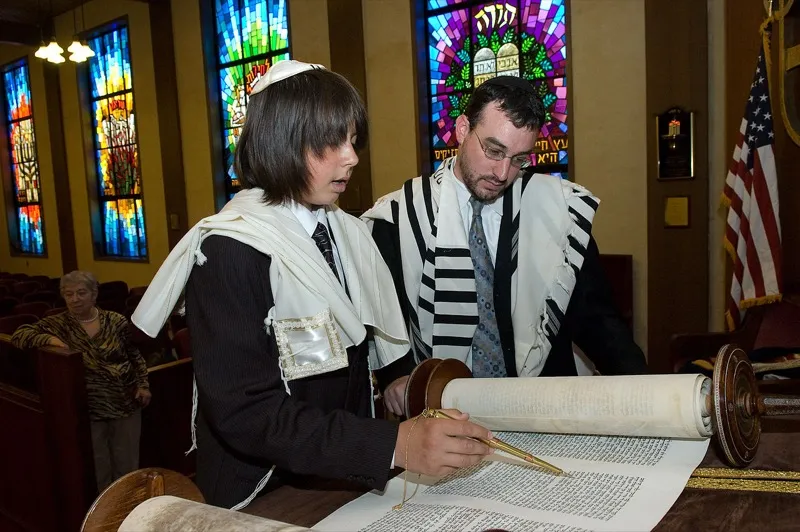
More Than a Party
Let us begin with what a bar mitzvah is not. It is not a party. It is not a rite of passage that a rabbi “performs” on a child. It is not something that can be scheduled, rescheduled, or canceled. A bar mitzvah is a status change — automatic, inevitable, and profound.
On the day a Jewish boy turns 13 (or a girl turns 12 in Orthodox tradition, 13 in Reform and Conservative), they become a bar or bat mitzvah — a “child of the commandment.” From that moment forward, they are personally responsible for their own religious obligations. They can be counted in a minyan (prayer quorum). They can be called to the Torah. They can lead services. They can fast on Yom Kippur. The community treats them as an adult in matters of Jewish law.
The ceremony, the Torah reading, the speech, the party — all of these are celebrations of this transformation. But the transformation itself happens with or without them.
This guide covers everything: what it means, how to prepare, what happens during the ceremony, and how to plan a celebration that honors both the tradition and the individual.
Quick Facts About Bar/Bat Mitzvah
- Literal meaning: Bar mitzvah (“son of commandment”), Bat mitzvah (“daughter of commandment”)
- Age requirement: 13 for boys (and girls in Reform/Conservative), 12 for girls in Orthodox tradition
- Preparation time: Typically 12-18 months of study and preparation
- Torah portions: 54 portions per year, child reads their birthday week’s portion
- Haftarah reading: Additional reading from Prophets (Nevi’im) section
- Language skills: Must learn Hebrew reading and Torah cantillation (trope)
- Global celebrations: Over 100,000 bar/bat mitzvahs celebrated annually worldwide
- Historical development: Modern ceremony developed in 19th century, ancient concept from Talmud
- Minyan eligibility: Automatically counted in 10-person prayer quorum after bar/bat mitzvah
- Average cost: $20,000-$50,000 for celebration in US (varies widely by community)
- Torah reading: Typically 3-7 aliyot (call-ups) depending on day and tradition
- Bat mitzvah history: First celebrated by Judith Kaplan (Rabbi Mordecai Kaplan’s daughter) in 1922
- Alternative celebrations: Mitzvah projects, trips to Israel, community service increasingly popular
The Meaning
The Age of Responsibility
Why thirteen? The Talmud (Avot 5:21) lists thirteen as the age for mitzvot — the age when the yetzer hatov (good inclination) becomes fully active, balancing the yetzer hara (selfish inclination) that is present from birth. At thirteen, the tradition says, a person is capable of moral reasoning, self-control, and genuine choice between right and wrong.
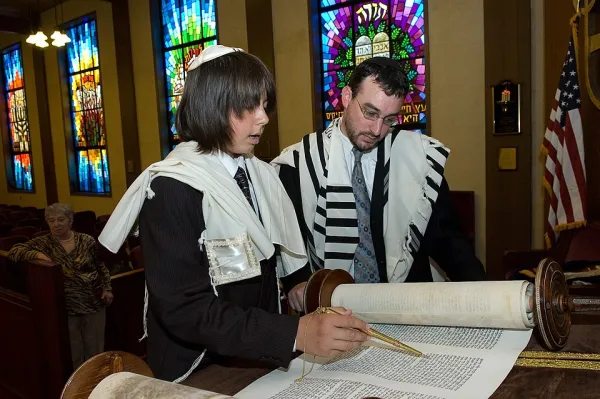
Before bar mitzvah, a child’s religious obligations are their parents’ responsibility. After bar mitzvah, they are their own. The parent traditionally recites a blessing: Baruch shep’tarani me’onsho shel zeh — “Blessed is the One who has freed me from responsibility for this one.” It sounds almost like relief — and in a way, it is. The child is now their own person before God.
Bar Mitzvah vs. Bat Mitzvah
The bat mitzvah — the female equivalent — is a more recent development. The first American bat mitzvah was celebrated by Judith Kaplan (daughter of Rabbi Mordecai Kaplan, founder of Reconstructionism) in 1922. Today, bat mitzvah celebrations are standard in Reform, Conservative, and many Modern Orthodox communities.
In ultra-Orthodox communities, girls do not typically have a public Torah-reading ceremony, though some celebrate with a party, a d’var Torah (speech), or a women’s gathering.
The Preparation
Choosing a Date
The bar mitzvah is celebrated on the Shabbat on or following the child’s 13th Hebrew birthday. The Hebrew calendar birthday may differ significantly from the secular birthday — sometimes by weeks. Families should consult a rabbi to determine the correct date.
Some families choose alternative dates: a Monday or Thursday morning (when the Torah is also read), a weekday Rosh Chodesh (new month), or a holiday. The most common choice remains Shabbat morning.
Learning the Torah Portion
The heart of bar mitzvah preparation is learning the weekly Torah portion (parashah) assigned to the child’s Shabbat. This involves:
- Chanting the Torah — The Torah is read in a specific cantillation system (trope), with no vowels or musical notation in the scroll itself. The child memorizes the melody and the text.
- Chanting the Haftarah — A selection from the Prophets, chanted in a different melody. Many children learn both the Torah portion and the Haftarah.
- Leading prayers — In many communities, the bar mitzvah child leads some or all of the Shabbat morning service.
- Preparing a d’var Torah — A speech or teaching about the Torah portion, demonstrating the child’s ability to engage with Jewish texts.
Working with a Tutor
Most children work with a tutor — often the synagogue’s cantor, a trained bar mitzvah teacher, or a knowledgeable community member — for 12 to 18 months. Weekly lessons focus on Hebrew reading, trope (cantillation), prayer fluency, and the d’var Torah.
Mitzvah Project
Many families encourage the child to undertake a mitzvah project — a sustained act of tzedakah (charitable giving) or community service. This can range from volunteering at a food bank to organizing a donation drive to visiting elderly community members. The project connects the bar mitzvah to the tradition’s emphasis on responsibility to others.
The Ceremony
The Shabbat Morning Service
A typical bar mitzvah Shabbat morning service includes:
- Preliminary prayers (Pesukei d’Zimrah) — the bar mitzvah may lead portions
- Shacharit — the morning service, including the Shema and Amidah
- Torah reading — the bar mitzvah is called to the Torah (aliyah), chants their portion, and possibly reads for other aliyot as well
- Haftarah — the bar mitzvah chants the prophetic reading
- D’var Torah — the bar mitzvah delivers a speech about the Torah portion
- Parent’s blessing — parents may address their child from the bimah (pulpit)
- Musaf — the additional service
The moment when the child first reads from the Torah scroll — the actual scroll, handwritten on parchment, without vowels or punctuation — is often deeply emotional. Months of preparation come together in a single chant, voice sometimes wavering, sometimes soaring, always real.
The Aliyah
Being called to the Torah (aliyah, meaning “going up”) is the defining ritual act of the bar mitzvah. The child recites blessings before and after the Torah reading, then chants from the scroll. In many communities, family members receive aliyot as well, making it a multi-generational event.
Candy Throwing
In many congregations, after the bar mitzvah chants their Haftarah, the congregation showers them with candy. It is chaotic, joyful, and entirely wonderful. The symbolism: may your life be sweet.
The Celebration
The Kiddush
At minimum, most families host a kiddush luncheon at the synagogue following services — wine, challah, and food for the congregation. This can range from simple (platters and cake) to elaborate (a full sit-down meal).
The Party
The bar mitzvah party is a separate event, often held on Saturday evening or Sunday. In contemporary practice, parties range widely:
- Simple gatherings — a meal at home or a restaurant with family and close friends
- Traditional celebrations — a catered event with DJ, dancing, and a program (candle-lighting ceremony, montage video, hora dancing)
- Destination events — bar mitzvahs in Israel, on a cruise, or at a resort
- Creative alternatives — outdoor adventures, arts-based celebrations, or multi-day retreats
The hora — being lifted on a chair while friends and family dance in circles — is a signature moment at many bar mitzvah parties. It is terrifying, exhilarating, and unforgettable.
Gift Etiquette
Common bar mitzvah gifts include:
- Money — often in multiples of $18 (the numerical value of chai, “life”)
- Israel bonds — a traditional investment gift
- Jewish ritual objects — a kiddush cup, a tallit, a mezuzah
- Books — Jewish texts, novels, or anything the child loves
- Charitable donations — made in the child’s honor
Guests should check with the family regarding gift preferences. When in doubt, a check in a multiple of $18 in a thoughtful card is always appropriate.
Adult Bar/Bat Mitzvah
Many Jews who did not have a bar or bat mitzvah as children choose to celebrate as adults. Adult b’nai mitzvah are increasingly common, particularly in Reform and Conservative congregations. Some participants are in their 30s and 40s; others are in their 70s and 80s.
The experience is often profoundly moving. Learning to read from the Torah at any age — standing before the community and claiming your place in the chain of tradition — is an act of courage and commitment that transcends age.
Why It Matters
At its core, bar mitzvah is about one thing: responsibility. Not the fun kind — the real kind. The kind that means your actions have consequences. That your words matter. That you are accountable for how you treat other people and how you engage with the world.
The tradition gives a thirteen-year-old this message: you are ready. Not finished — ready. Ready to begin the lifelong work of being a moral person, a contributing member of the community, and a link in the chain that connects Abraham and Sarah to the present moment.
That is worth celebrating — with Torah, with family, with candy thrown in joy, and with the knowledge that every bar and bat mitzvah, in every community, in every generation, is saying the same thing: the chain continues. The story goes on. And you are part of it now.
Frequently Asked Questions
What does 'bar mitzvah' actually mean?
Bar mitzvah literally means 'son of the commandment' (bat mitzvah means 'daughter of the commandment'). It refers to the age at which a Jewish child becomes legally responsible for observing the commandments — 13 for boys and 12 or 13 for girls, depending on the community. The bar/bat mitzvah happens automatically at this age; the ceremony is a celebration, not the event itself.
How long does it take to prepare for a bar mitzvah?
Most families begin preparation 12-18 months in advance. The child typically studies with a tutor (often the synagogue's cantor or a private teacher) to learn their Torah and Haftarah portions, the prayer service, and often to prepare a d'var Torah (speech). Party planning and logistics may begin even earlier, especially for popular venues.
Do you need a big party for a bar mitzvah?
No. The only requirement is that the child reach the appropriate age. Many meaningful bar and bat mitzvahs involve simply being called to the Torah on a Shabbat morning. The celebration can be as simple as a kiddush lunch at the synagogue or as elaborate as a multi-day event. What matters is the milestone, not the scale of the party.
Key Terms
Sources & Further Reading
Related Articles
Bar and Bat Mitzvah: Coming of Age
At age 12 or 13, a Jewish child becomes responsible for the commandments — a milestone celebrated with joy and meaning.
The Complete Guide to Bar and Bat Mitzvah
Everything you need to know about Bar and Bat Mitzvah — from the meaning of the ceremony and months of preparation to the Torah reading, celebration, and gifts.
Planning a Bar Mitzvah: An 18-Month Timeline
Planning a bar or bat mitzvah can feel overwhelming. This 18-month countdown covers everything — choosing a date, finding a tutor, booking the venue, invitations, catering, entertainment, photography, budget, and guest etiquette.