Angels in Judaism: Messengers, Guardians, and Heavenly Fire
From Michael the warrior to Gabriel the herald to the angels welcomed every Friday night — Judaism's angel tradition is rich, surprising, and very different from what you see on greeting cards.
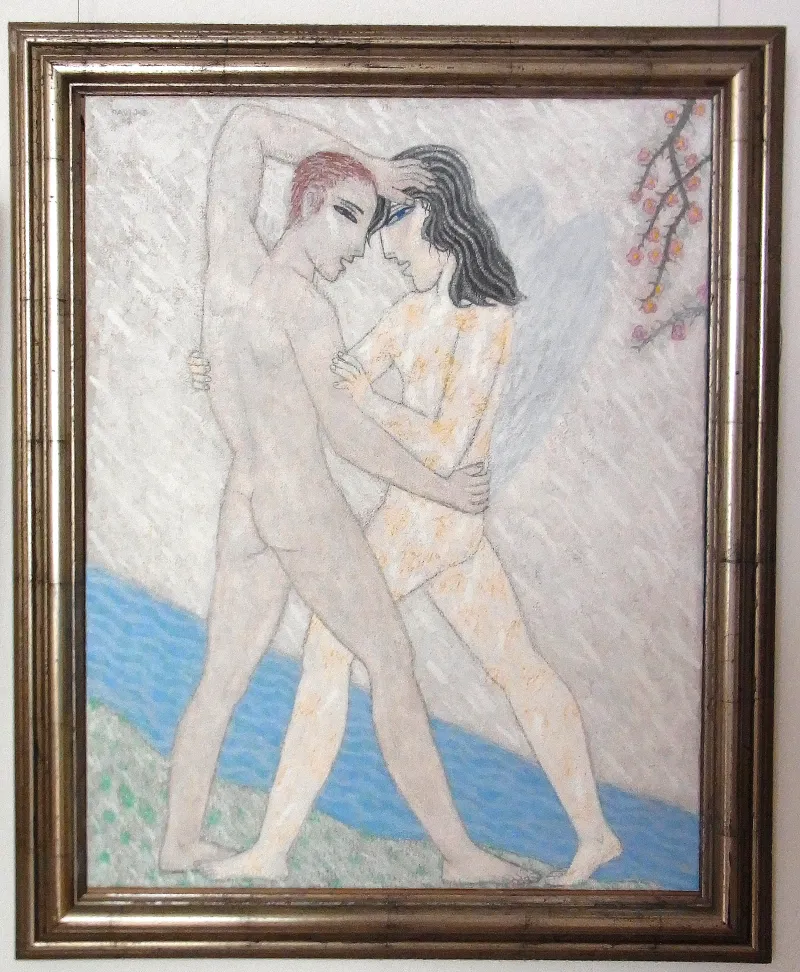
Not What You Think
Forget the chubby babies with wings. Forget the gentle figures in white robes hovering protectively over sleeping children. Forget the harp-playing residents of fluffy clouds. The angels of Jewish tradition are something else entirely — something stranger, fiercer, and more theologically interesting than anything on a greeting card.
In Jewish tradition, angels are malakhim — the Hebrew word literally means “messengers.” They are beings of fire and light, created by God to perform specific tasks, incapable of independent will, and utterly subservient to divine purpose. Some are terrifying. Some are beautiful. Some are so strange that the prophet Ezekiel struggled to describe them — four-faced creatures with wheels within wheels, covered in eyes, moving in straight lines without turning (Ezekiel 1).
Jewish angels do not have free will. They cannot rebel. They do not make choices. They are, in a sense, the original automatons — perfectly obedient instruments of God’s will. And yet the tradition surrounding them is rich, complex, and deeply woven into Jewish prayer, ritual, and mystical thought.
The Named Angels
Jewish tradition names only a handful of angels, and each name reveals their function:
Michael: The Guardian of Israel
Michael (Mikha’el — “Who is like God?”) is Israel’s guardian angel and the angel of mercy. In the book of Daniel (12:1), he is described as “the great prince who stands for your people.” When Israel faces divine judgment, Michael serves as the defense attorney in the heavenly court, arguing on Israel’s behalf.
The Midrash portrays Michael as the angel who rescued Abraham from the furnace of Nimrod, who appeared to Moses in the burning bush, and who will herald the messianic era with a great shofar blast. He is associated with the element of water and the quality of chesed (loving-kindness).
Gabriel: The Warrior of God
Gabriel (Gavri’el — “God is my strength”) is the angel of strength, judgment, and divine power. In the book of Daniel, Gabriel interprets visions and explains prophecies. The Talmud identifies Gabriel as the angel who destroyed Sodom and Gomorrah and who will eventually slay the wicked.
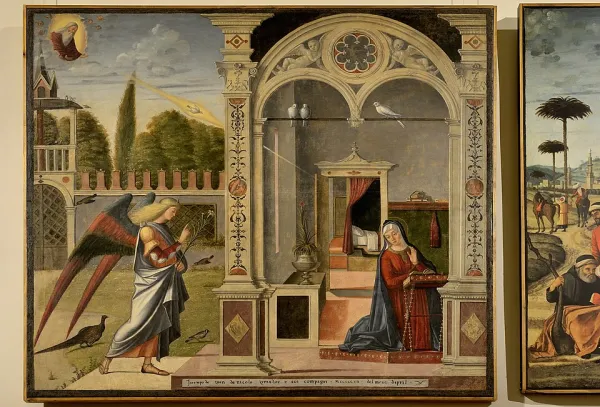
Gabriel is associated with fire and the quality of gevurah (strength/judgment). Where Michael advocates mercy, Gabriel executes justice. Together, they represent the balance of divine attributes.
Raphael: The Healer
Raphael (Refa’el — “God heals”) is the angel of healing. In the book of Tobit (an apocryphal/deuterocanonical text), Raphael accompanies Tobias on a journey, guides him, and heals his father’s blindness. The Talmud and Midrash associate Raphael with healing and identify him as one of the three angels who visited Abraham after his circumcision (Genesis 18) — each angel coming for a specific mission: Michael to announce Sarah’s pregnancy, Raphael to heal Abraham, and Gabriel to destroy Sodom.
Uriel: The Light of God
Uriel (Uri’el — “God is my light”) appears in several post-biblical texts, particularly in 2 Esdras and 1 Enoch. He is associated with wisdom, light, and the illumination of divine truth. Though less prominent in mainstream rabbinic literature than Michael, Gabriel, and Raphael, Uriel features significantly in mystical traditions.
The Angel of Death
The Malakh HaMavet (Angel of Death) is one of the most fearsome figures in Jewish tradition. Unlike popular depictions of the Grim Reaper, the Jewish Angel of Death is an angel like any other — a servant of God performing a divinely appointed task.
The Talmud describes the Angel of Death as covered entirely in eyes — so that no one can escape his gaze. He stands at the head of a dying person’s bed with a drawn sword, on the tip of which hangs a drop of bitter gall. When the dying person sees the angel, they open their mouth in terror, and the drop falls in, causing death (Avodah Zarah 20b).
Despite its grim role, the Angel of Death is not evil in Jewish thought. Death is part of God’s plan, and the angel is simply its executor. Some sources even depict the Angel of Death with a measure of compassion — coming gently to the righteous and firmly to the wicked.
Shalom Aleichem: Welcoming Angels on Friday Night
One of the most beautiful angel traditions in Judaism occurs every Friday night. As families gather around the Shabbat table after returning from synagogue, they sing Shalom Aleichem — a hymn welcoming the ministering angels who, according to the Talmud, accompany a person home from the synagogue on Shabbat eve.
The Talmud (Shabbat 119b) tells the story: two angels — one good, one from the other side — visit every Jewish home on Friday night. If they find the home prepared for Shabbat — candles lit, table set, the family in peace — the good angel says: “May it be God’s will that it be this way next Shabbat too.” And the other angel is compelled to answer: “Amen.” But if the home is in disarray, the opposite occurs.
The Shalom Aleichem hymn has four stanzas: welcoming the angels, asking their blessing, requesting their departure (so that the family can enjoy Shabbat in privacy), and wishing them peace on their way. It is sung in homes around the world, a weekly acknowledgment that the sacred intersects with the domestic — that angels pass through ordinary dining rooms on Friday nights.
Metatron: The Mysterious Prince
Metatron is the most enigmatic figure in Jewish angelology. He appears primarily in mystical and post-Talmudic literature as the “Prince of the Countenance” (Sar HaPanim) — the highest of all angels, who sits beside God’s throne and serves as the heavenly scribe, recording the deeds of Israel.
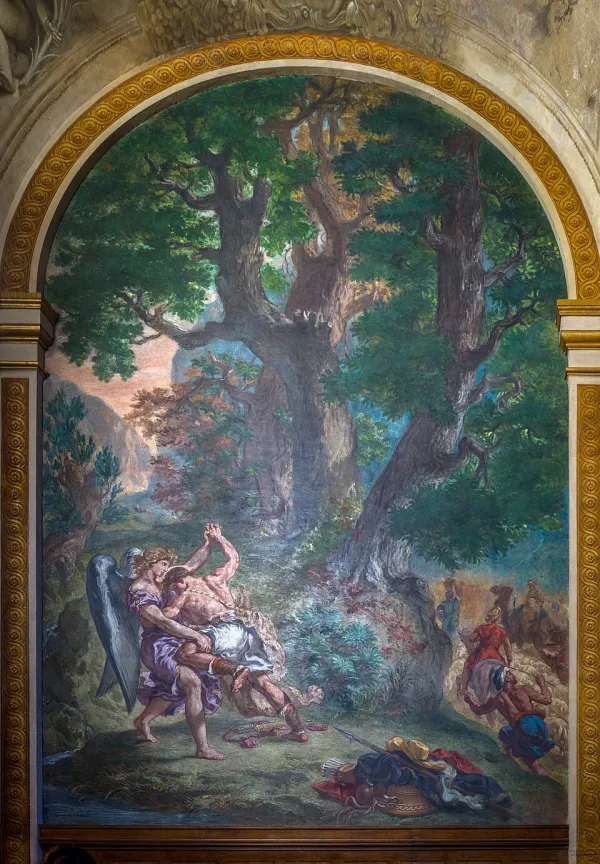
The most startling tradition identifies Metatron with the biblical Enoch — the man of whom Genesis says simply, “Enoch walked with God, and he was no more, for God took him” (Genesis 5:24). According to the mystical text 3 Enoch, Enoch was transformed into the angel Metatron upon being taken to heaven — his flesh turned to flame, his bones to embers, his eyes to torches.
The Talmud includes a cryptic and cautionary story about Metatron (Hagigah 15b). The sage Elisha ben Abuya, upon seeing Metatron seated in heaven (angels normally stand), concluded that there must be “two powers in heaven” — a heretical conclusion that led to his excommunication. The story serves as a warning: angels, however exalted, must not be confused with God.
Angels You Create
One of the most remarkable teachings about angels comes from the ethical tradition. The Pirkei Avot (Ethics of the Fathers, 4:11) teaches: “Every mitzvah that a person performs creates an angel, and every transgression creates a prosecuting angel.” In this understanding, angels are not only primordial beings created at the dawn of time — they are constantly being created by human actions.
Every act of kindness, every prayer, every moment of Torah study generates a spiritual advocate. Every harmful act generates an accuser. At the end of a person’s life, according to this tradition, they face a heavenly court filled with angels — and every one of them was created by the person’s own choices.
This teaching transforms angelology from abstract theology into a profound ethical insight: your actions have spiritual consequences. The angels that will speak for or against you are the ones you are creating right now, with every choice you make.
Not Objects of Worship
Judaism is adamant on one point: angels must never be worshipped. They are servants, not masters. Messengers, not the sender. The Talmud records that when Rabbi Yochanan ben Zakkai asked whether one should pray to Michael or Gabriel for help, he was told: “Neither. Call directly to God, and He will answer” (Jerusalem Talmud, Berakhot 9:1).
This insistence distinguishes Jewish angelology from traditions that venerate angels as intermediaries. In Judaism, the post office exists — but you address your letters directly to the addressee. The messengers are impressive, even awe-inspiring, but they are never the destination.
The angels of Judaism are fire and light, obedience and mission, beauty and terror. They carry messages, guard nations, heal the sick, and escort souls. They visit your dining room on Friday night. They are born from your good deeds. And through it all, they point — always, relentlessly — back to the One who sent them.
Frequently Asked Questions
Does Judaism believe in angels?
Yes, though the Jewish concept of angels differs significantly from popular culture and from Christian angelology. In Judaism, angels (malakhim) are spiritual beings created by God to perform specific missions. The Hebrew word 'malakh' literally means 'messenger.' Angels do not have free will — they cannot choose between good and evil. They are instruments of God's will, each created for a specific task. Some exist permanently (like Michael and Gabriel), while others are created for a single mission and then cease to exist.
What is the Shalom Aleichem song about angels on Friday night?
Shalom Aleichem is a hymn sung at the Friday night Shabbat table, welcoming the ministering angels who, according to the Talmud (Shabbat 119b), accompany a person home from synagogue on Friday evening. The Talmud teaches that two angels — one good and one from the other side — visit every Jewish home on Shabbat eve. If the home is prepared for Shabbat (candles lit, table set, peaceful atmosphere), the good angel says 'May it be so next Shabbat' and the other angel is compelled to say 'Amen.' If the home is not prepared, the opposite occurs.
How do Jewish angels differ from Christian angels?
Several key differences distinguish Jewish and Christian angelology. In Judaism, angels do not have free will and cannot rebel against God — there is no concept of 'fallen angels' in mainstream Jewish theology (Satan in Judaism is an angel doing God's bidding, not a rebel). Jewish angels do not have permanent wings in most textual sources (cherubim and seraphim are distinct categories). Angels in Judaism cannot be prayed to or worshipped — they are servants, not intermediaries deserving devotion. And Judaism generally avoids the elaborate hierarchies of nine angel orders found in Christian tradition.
Sources & Further Reading
Related Articles
Jewish Views on God: Monotheism, Names, and the Mystery Beyond Understanding
Judaism's God is one, incorporeal, and ultimately beyond human comprehension — yet intimately concerned with every human life. From the ineffable Name to the 13 Attributes of Mercy, Jewish theology holds mystery and relationship in constant tension.
Kabbalah: An Introduction to Jewish Mysticism
Beyond the law and the stories lies a hidden dimension of Judaism — Kabbalah, the mystical tradition that seeks to understand the nature of God, creation, and the human soul.
Shabbat: The Weekly Day of Rest
Every week, Jewish life pauses for 25 hours of rest, reflection, and togetherness — discover the beauty of Shabbat.