Hebrew vs Yiddish: Two Jewish Languages, Two Different Worlds
Hebrew and Yiddish are both Jewish languages written in the same script — but one is Semitic and ancient, the other Germanic and medieval. Here's how they compare.
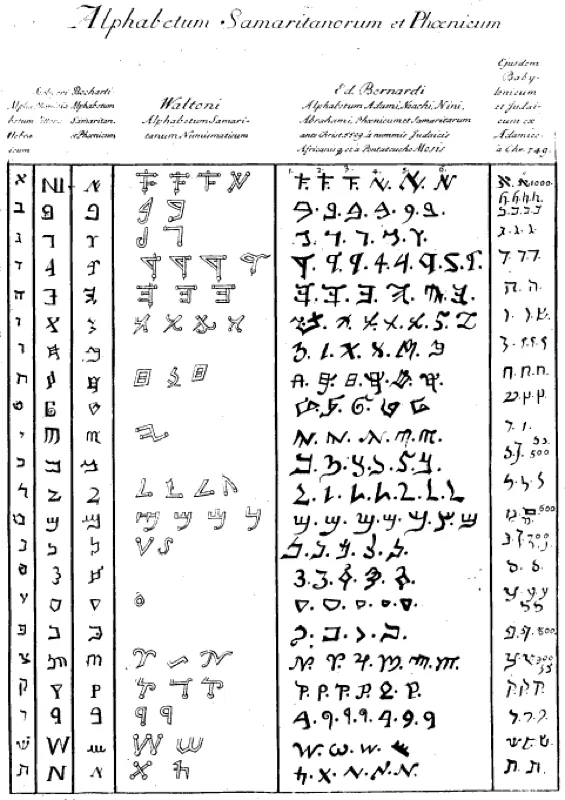
The Confusion That Won’t Go Away
People confuse them constantly. “Oh, you speak Hebrew? Say something in Yiddish!” Or: “Is Yiddish just old Hebrew?” Or the classic: “Aren’t they basically the same thing?”
They are not. Hebrew and Yiddish are as different from each other as English is from Arabic. They belong to different language families, emerged in different centuries, developed in different parts of the world, and carry entirely different cultural identities. Within the rich tapestry of Jewish languages worldwide, these two represent completely distinct traditions — the only thing they share is an alphabet, and even that they use differently.
Understanding the difference between Hebrew and Yiddish is understanding two very different chapters of Jewish history.
The Quick Comparison
| Feature | Hebrew (עברית) | Yiddish (ייִדיש) |
|---|---|---|
| Language family | Semitic (related to Arabic, Aramaic) | Germanic (related to German, Dutch) |
| Origin | Ancient Israel, ~10th century BCE | Rhineland, ~9th-10th century CE |
| Script | Hebrew alphabet | Hebrew alphabet (with some modifications) |
| Direction | Right to left | Right to left |
| Vowels | Optional diacritics (nikkud) | Vowels written into text |
| Grammar | Semitic root system (3-letter roots) | Germanic grammar (cases, verb conjugation) |
| Native speakers | ~10 million (Israel) | ~600,000-1 million (Hasidic communities) |
| Status | Official language of Israel | No official state status |
| Revived? | Yes — famously revived in late 1800s | No state revival; maintained in communities |
| Religious use | Torah, prayer, liturgy | Daily speech, literature, theater |
| Sound | Guttural consonants, Semitic rhythm | Germanic sounds, Slavic influences |
Origins: Ancient vs Medieval
Hebrew: Three Thousand Years Old
Hebrew is one of the oldest living languages on earth. The earliest Hebrew inscriptions date to roughly the 10th century BCE. The Hebrew Bible — the Torah, the Prophets, the Writings — was composed in Hebrew (with some Aramaic passages). For thousands of years, Hebrew was the language of Jewish scripture, prayer, and scholarship.
But here is the crucial thing: Hebrew stopped being a spoken daily language around the 2nd century CE, after the Roman destruction of Judea. For nearly 1,700 years, Jews used Hebrew for prayer, study, and correspondence — but they spoke other languages at home: Aramaic, Arabic, Ladino, and eventually Yiddish.
Then, in the late 19th century, a man named Eliezer Ben-Yehuda did something unprecedented in human history: he revived a dead language. Through sheer force of will, institutional activism, and the Zionist movement, Ben-Yehuda and his collaborators transformed Hebrew from a liturgical language into a living, breathing modern tongue. Today, Hebrew is the official language of Israel, spoken natively by over 10 million people.
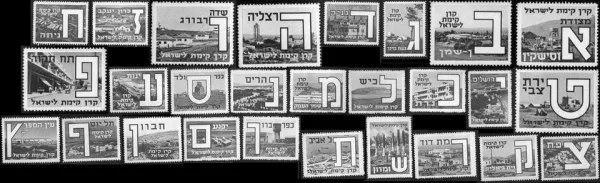
Yiddish: A Thousand Years of Mama-Loshen
Yiddish was born in the Rhineland — the border region between France and Germany — around the 9th or 10th century CE. Jewish communities in this area spoke a form of Middle High German, blended with Hebrew and Aramaic vocabulary (for religious and legal terms) and eventually enriched with Slavic words as Jews migrated eastward into Poland, Lithuania, Ukraine, and Russia.
Yiddish was the mama-loshen — the “mother tongue” — of Ashkenazi Jews. It was the language of daily life: the marketplace, the kitchen, the shtetl street, the lullaby, the argument, the joke. Hebrew was for God; Yiddish was for everything else.
At its peak before World War II, Yiddish was spoken by an estimated 11-13 million people, making it one of the most widely spoken Jewish languages in history. The Holocaust devastated the Yiddish-speaking world — millions of native speakers were murdered, and the communities where Yiddish thrived were destroyed.
How They Sound: Side by Side
To appreciate how different these languages are, consider these parallel sentences:
| English | Hebrew | Yiddish |
|---|---|---|
| ”How are you?” | ?מה שלומך (Ma shlomkha?) | ?וויִ גייט עס (Vi geyt es?) |
| ”Thank you” | תודה (Todah) | אַ דאַנק (A dank) |
| “Good morning” | בוקר טוב (Boker tov) | גוט מאָרגן (Gut morgn) |
| “I love you” | אני אוהב אותך (Ani ohev otkha) | איך ליב דיך (Ikh lib dikh) |
| “What’s your name?” | ?מה שמך (Ma shimkha?) | ?וויִ הייסט דו (Vi heyst du?) |
Even to a non-speaker, the difference is audible. Hebrew sounds Middle Eastern — guttural, rhythmic, with the unmistakable “ch” (ח) and “ayin” (ע) sounds that connect it to its Semitic cousins. Yiddish sounds European — it has the cadence of German, the borrowed consonants of Polish and Russian, and a melodic, expressive quality that lends itself perfectly to storytelling, comedy, and complaint.
The Alphabet Connection
Both languages use the Hebrew alphabet — the same 22 letters, written right to left. This is the source of most confusion. If you see text in Hebrew letters, you cannot immediately tell whether it is Hebrew or Yiddish without reading it.
But they use the alphabet differently:
- Hebrew uses the letters primarily as consonants, with optional vowel marks (nikkud) added above and below the letters for beginners and in sacred texts. Fluent readers read without vowels.
- Yiddish uses several Hebrew letters as vowels, creating a more phonetic writing system. The letters אָ, ו, and יִ represent specific vowel sounds in Yiddish that they do not represent in Hebrew.
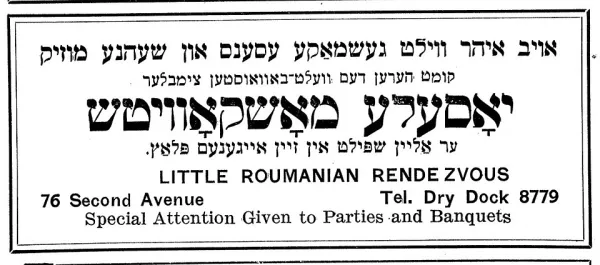
Cultural Identity: Two Different Jewish Worlds
Hebrew and Yiddish carry different cultural associations that reflect the communities that speak them.
Hebrew is associated with:
- The State of Israel and Zionism
- Ancient scripture and modern nationhood
- Sephardic and Mizrahi pronunciation (in its modern form)
- The Israeli military, technology sector, and cultural scene
- A deliberate project of national revival
Yiddish is associated with:
- Eastern European Ashkenazi culture
- The shtetl, the immigrant experience, and nostalgia
- Humor, theater, literature, and music
- Hasidic communities (where it remains a living language)
- Words that entered English — chutzpah, schmuck, mensch, kvetch
There was, historically, real tension between Hebrew and Yiddish speakers. Early Zionists often disdained Yiddish as the language of the diaspora — the language of exile, weakness, and the old world they were trying to leave behind. Yiddish advocates, in turn, saw Hebrew revivalists as cultural imperialists who were killing a living language to resurrect a dead one.
Who Speaks What Today?
Hebrew: Approximately 10 million native speakers, virtually all in Israel. Millions more study it worldwide as a second language for religious purposes. It is a thriving, evolving modern language with new slang, literature, and academic output every year.
Yiddish: An estimated 600,000 to 1 million daily speakers, primarily in Hasidic communities in Brooklyn, Williamsburg, Monsey (New York), Bnei Brak (Israel), Antwerp (Belgium), and London. Yiddish is actually growing in these communities, where large families ensure intergenerational transmission. There is also a small but vibrant secular Yiddish revival movement, with university programs, cultural festivals, and new literature.
Two Languages, One People
Hebrew and Yiddish are both Jewish languages, but they represent different answers to the question of what it means to be Jewish in the world. Hebrew says: We have our own ancient land, our own ancient tongue, our own sovereign story. Yiddish says: We lived among the nations, we created beauty in exile, we laughed and cried and survived in languages borrowed and remade.
Both are true. Both are necessary. And both, in their different ways, carry the sound of Jewish life across the centuries.
Sources
- YIVO Encyclopedia — Yiddish Language — Scholarly overview of Yiddish history and linguistics
- Academy of the Hebrew Language — Israel’s official authority on the Hebrew language
- My Jewish Learning — Hebrew vs Yiddish — Accessible comparison of the two languages
- Jewish Virtual Library — Revival of Hebrew — The story of Hebrew’s modern revival
Frequently Asked Questions
Are Hebrew and Yiddish the same language?
No. Hebrew is a Semitic language related to Arabic and Aramaic, originating in ancient Israel. Yiddish is a Germanic language related to German, originating in medieval Europe. They share the Hebrew alphabet and some vocabulary, but they are completely different languages — a Hebrew speaker cannot understand Yiddish and vice versa.
Which came first, Hebrew or Yiddish?
Hebrew came first by thousands of years. Biblical Hebrew dates to at least the 10th century BCE. Yiddish emerged around the 9th-10th century CE in the Rhineland, making Hebrew roughly 2,000 years older. Hebrew is one of the world's oldest languages still in use; Yiddish is medieval.
Is Yiddish a dying language?
Not exactly. While the number of secular Yiddish speakers has declined dramatically since the Holocaust, Yiddish is actually growing among Hasidic and ultra-Orthodox communities worldwide. An estimated 600,000-1 million people speak Yiddish today as a daily language, primarily in Hasidic communities in New York, Israel, London, and Antwerp.
Sources & Further Reading
Related Articles
Hebrew: The Language of the Torah and Israel
From an ancient sacred tongue to a modern spoken language — the remarkable story of Hebrew's revival.
Common Hebrew Words and Phrases Everyone Should Know
Whether you are visiting Israel, attending a synagogue, or just curious, these essential Hebrew words and phrases — from Shalom to Yalla — will open doors and earn smiles.
Jewish Languages Worldwide: A Journey Through Linguistic Diversity
Explore the remarkable linguistic diversity of Jewish communities worldwide — from Hebrew's revival to Yiddish's golden age, Ladino's poetry, and dozens of other Jewish languages across the globe.
Yiddish: The Language of the Ashkenazi Heart
A thousand years of humor, wisdom, and survival — Yiddish is far more than a language, it's a worldview.