Jews in Medieval Europe: Between Cross and Crescent
For a thousand years, Jews navigated the dangerous terrain of medieval Europe — excluded from guilds, confined to money lending, subjected to blood libels and Crusade massacres, yet creating extraordinary intellectual and cultural achievements.
A Thousand Years of Precarious Survival
The medieval period — roughly the fifth through fifteenth centuries — was the crucible in which much of Ashkenazi Jewish identity was forged. It was an era of extraordinary paradox: intellectual golden ages alongside horrific violence, creative achievement amid crushing restriction, and communities that built synagogues knowing they might be burned within a generation.
To understand medieval Jewish life, you must understand the fundamental fact that shaped it: Jews were the only significant non-Christian minority in Western Europe. In a civilization that defined itself through Christian faith, Jews existed as permanent outsiders — tolerated when useful, persecuted when convenient, and always vulnerable.
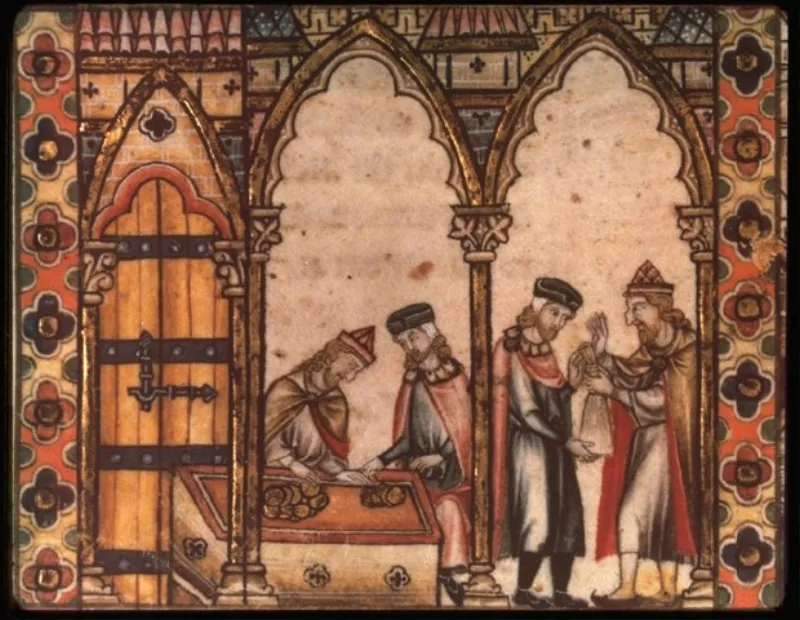
The Economic Trap
Medieval European society was organized through guilds, which controlled virtually every trade and profession. Jews were systematically excluded from guilds, which were explicitly Christian organizations often associated with patron saints. Jews could not be farmers in most places (land ownership was frequently prohibited), could not join craft guilds, and were barred from most professions.
At the same time, the Catholic Church prohibited Christians from lending money at interest — a practice called usury and considered a mortal sin. But credit was essential to a growing economy. Into this gap stepped Jewish moneylenders, filling a crucial economic function that no one else was permitted to perform.
The result was a devastating trap. Jews were pushed into finance by exclusion from all other work, then despised for the very role they had been forced to occupy. Borrowers resented their creditors. Kings and nobles borrowed heavily from Jewish financiers, then sometimes expelled or killed them rather than repay their debts. The stereotype of the Jewish moneylender — exploitative, greedy, alien — became embedded in European culture, surfacing in literature from Chaucer to Shakespeare.
The Crusades and Mass Violence
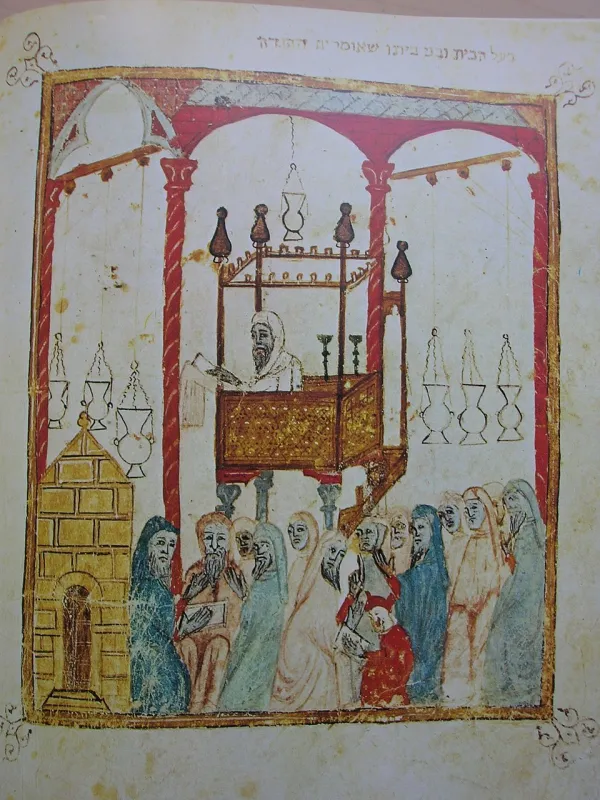
The First Crusade of 1096 unleashed a wave of anti-Jewish violence that marked a turning point in European Jewish history. As Crusading armies marched toward the Holy Land to “liberate” Jerusalem from Muslim rule, some asked why they should travel thousands of miles to fight the enemies of Christ when Christ’s “killers” — the Jews — lived among them.
In the Rhineland cities of Mainz, Worms, Cologne, and Speyer, Crusading mobs attacked Jewish communities with savage ferocity. In Mainz alone, approximately 1,100 Jews were killed. Many chose martyrdom — killing themselves and their families rather than accept forced baptism — creating a tradition of kiddush Hashem (sanctification of God’s name) that became central to Ashkenazi identity.
The Second and Third Crusades brought further violence. The pattern was established: religious fervor, economic resentment, and the vulnerability of a small minority combined to produce periodic explosions of mass murder.
Blood Libels and Host Desecration
Two toxic myths emerged in the medieval period that would haunt Jews for centuries.
The blood libel — the accusation that Jews murdered Christian children to use their blood in religious rituals — first appeared in Norwich, England, in 1144. Despite having no basis in reality (Jewish law strictly prohibits the consumption of any blood), the charge spread across Europe, leading to mob violence, show trials, and executions. Popes and some bishops condemned the accusation, but it persisted nonetheless, recurring periodically into the twentieth century.
The host desecration accusation — the claim that Jews stole consecrated communion wafers and tortured them to reenact the crucifixion — was another deadly fiction. In 1298, the Rintfleisch massacres killed thousands of Jews across Bavaria after a host desecration charge. In 1370, Jews in Brussels were burned alive on the same accusation.
The Black Death
The Black Death of 1347-1351 killed roughly one-third of Europe’s population — and brought catastrophe upon the Jews. As the plague swept through Europe, rumors spread that Jews had caused it by poisoning wells. In reality, Jews died of the plague at similar rates to everyone else.
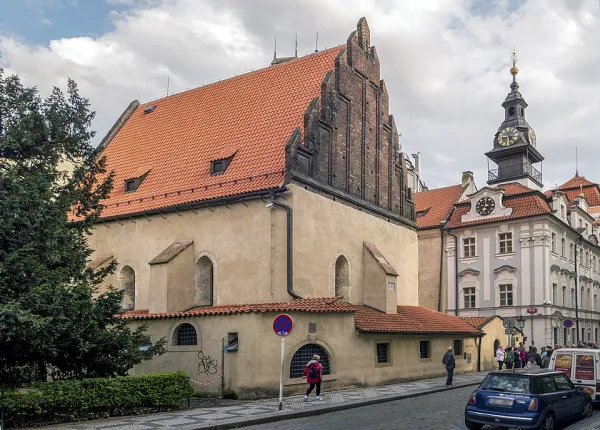
The well-poisoning accusation led to massacres across Central Europe. In Strasbourg, 2,000 Jews were burned alive before the plague even reached the city. In Basel, the entire Jewish community was locked in a wooden building on an island in the Rhine and burned. Hundreds of communities were destroyed. Pope Clement VI issued a papal bull declaring Jews innocent and threatening to excommunicate those who attacked them — but the violence continued.
Golden Ages Amid the Darkness
Yet the medieval period also produced extraordinary Jewish achievement. The Golden Age of Spain — roughly the tenth through twelfth centuries — saw Jewish poets, philosophers, and scientists create works of lasting brilliance under Muslim rule. Maimonides (Rabbi Moses ben Maimon), born in Córdoba in 1138, became the greatest Jewish philosopher of the medieval world. His Guide for the Perplexed and Mishneh Torah remain foundational texts.
In Christian Europe, the Rhineland communities produced giants of Jewish scholarship. Rashi of Troyes wrote commentaries on the Torah and Talmud that remain the most widely studied in the Jewish world. His grandsons, the Tosafists, developed a dialectical method of Talmudic analysis that pushed Jewish legal reasoning to new heights.
Ghettos and Expulsions
The late medieval period brought increasing segregation. Jews were confined to specific quarters — Jewish streets, juderías, Judengassen — that gradually became formalized into ghettos. The Venice Ghetto, established in 1516, gave the institution its name (from the Italian “getto,” a foundry that had previously occupied the site).
Expulsions became epidemic. England expelled its Jews in 1290, France in 1306 and again in 1394, Spain in 1492, Portugal in 1497. The expelled communities migrated eastward to Poland and the Ottoman Empire, carrying their traditions with them and establishing the centers of Jewish life that would dominate for the next five centuries.
The medieval experience burned certain lessons into Jewish consciousness: the fragility of tolerance, the danger of depending on the goodwill of rulers, the importance of portable wealth and education, and the necessity of communal solidarity in a hostile world. These lessons, learned in blood across a thousand years of European history, shaped the Jewish people’s character in ways that persist to this day.
Frequently Asked Questions
Why were medieval Jews associated with money lending?
Medieval Christian doctrine prohibited Christians from lending money at interest (usury). Jews were simultaneously barred from most other occupations — guilds excluded them, land ownership was often forbidden, and many trades were closed. This pushed Jews into finance, where they filled an essential economic role but became targets of resentment.
What was a blood libel?
A blood libel is the false accusation that Jews murder Christian children to use their blood in religious rituals, particularly for making Passover matzah. First recorded in Norwich, England, in 1144, this lie spread across Europe, leading to mob violence, trials, and executions of Jews. The Church officially condemned blood libels, but they persisted for centuries.
When were the first Jewish ghettos established?
The term 'ghetto' originated in Venice in 1516, where Jews were confined to a specific island district. However, the practice of confining Jews to designated quarters was older — Jewish quarters existed throughout medieval Europe. Ghettos persisted in various forms until the nineteenth century, with the Roman ghetto not abolished until 1870.
Sources & Further Reading
Related Articles
Understanding Antisemitism: History, Forms, and the Fight Against Hatred
Antisemitism — hatred of Jews — is one of the oldest and most persistent forms of prejudice. From ancient expulsions to modern online hate, understanding its roots is the first step toward fighting it.
The Golden Age of Jewish Spain
For centuries, Jews in Muslim and Christian Spain created an extraordinary civilization of poetry, philosophy, science, and interfaith dialogue.
A History of Antisemitism: From Ancient World to Modern Times
A comprehensive look at the history of antisemitism — from ancient Egyptian and Greek hostility through medieval blood libels, expulsions, the Dreyfus Affair, pogroms, the Holocaust, and modern manifestations.