Jews in the Ottoman Empire: Refuge and Renewal
When Spain expelled its Jews in 1492, the Ottoman Empire opened its doors. For centuries, Ottoman lands provided a haven where Sephardi Jews rebuilt their lives, created a vibrant Ladino culture, and became integral to the empire.
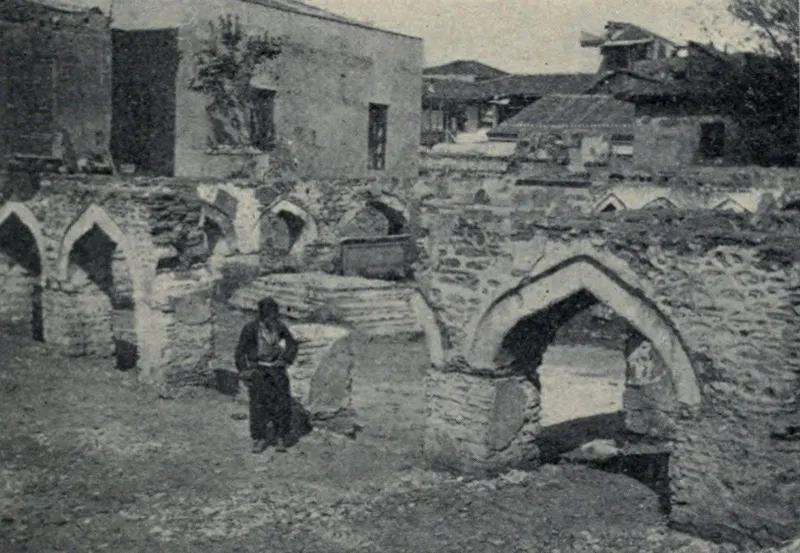
The Sultan’s Welcome
In the spring of 1492, as Columbus sailed westward, a far larger human drama was unfolding in the Iberian Peninsula. Ferdinand and Isabella of Spain issued the Alhambra Decree, ordering all Jews to convert to Christianity or leave the kingdom within four months. Approximately 200,000 Jews — the heirs of the Golden Age of Spain — were uprooted from a land they had called home for over a thousand years.
Many fled to Portugal, only to face forced conversion there in 1497. Others scattered across North Africa and Italy. But the largest number found refuge in an unexpected place: the Ottoman Empire.
Sultan Bayezid II not only permitted Spanish Jews to enter his domains — he actively encouraged it. According to a famous (possibly apocryphal) saying, the sultan remarked about Ferdinand of Spain: “You call this king wise? He impoverishes his own country to enrich mine.” Whether or not these exact words were spoken, the sentiment was real. The Ottomans recognized that the expelled Jews brought invaluable skills — in medicine, commerce, diplomacy, languages, and the newly revolutionary technology of printing.
Settling the Empire
The Spanish Jewish refugees — known as Sephardim, from the Hebrew word for Spain — settled across the Ottoman Empire: in Istanbul, Salonica, Izmir, Damascus, Cairo, Jerusalem, and dozens of smaller cities. They brought with them the Ladino language (Judeo-Spanish), their distinctive liturgy and religious customs, and a sophisticated cultural heritage shaped by centuries of coexistence with Muslims and Christians in Iberia.
The Ottoman state organized its diverse population through the millet system — a framework of communal autonomy for non-Muslim religious groups. The Jewish millet, led by the Hakham Bashi (Chief Rabbi), had authority over its own religious law, education, taxation, and communal governance. Jews could not serve in the military, hold high government office, or build new synagogues taller than mosques, but within these constraints, they enjoyed a level of security and self-governance that was extraordinary by European standards.
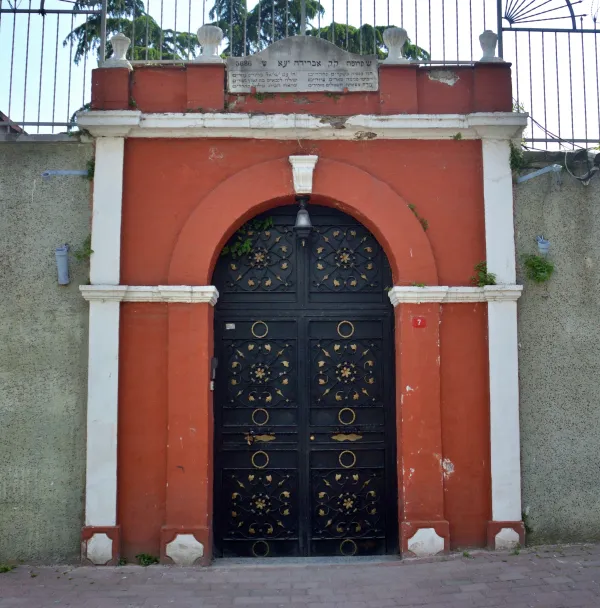
This was not paradise — dhimmi status was inherently unequal, and periodic humiliations and local violence occurred. But compared to the Inquisition, the Crusades, and the blood libels of Christian Europe, the Ottoman Empire was a haven. As the historian Bernard Lewis has written, Ottoman tolerance was real, even if it was not equality.
Salonica: The Mother of Israel
No city better embodied the Ottoman Jewish experience than Salonica (modern Thessaloniki, Greece). After 1492, waves of Spanish Jews transformed this port city into the most Jewish city in Europe — and possibly the world. By the sixteenth century, Jews constituted a majority of Salonica’s population, a situation that persisted for over four hundred years.
The city’s commercial life revolved around its Jewish community. The port closed on Shabbat and Jewish holidays. Jewish merchants controlled the textile trade, dockworking, and much of the overland commerce. Salonica became the center of Ladino culture — producing newspapers, literature, theater, and music in the Judeo-Spanish language.
The city was also a center of Jewish intellectual life. Rabbinical academies attracted scholars from across the Sephardi world. Joseph Karo, who compiled the Shulchan Aruch — the most authoritative code of Jewish law — spent time in Salonica before settling in Safed. The city’s printing presses produced some of the earliest printed Jewish texts.
Salonica was also the birthplace of Sabbatai Zevi (1626-1676), the most famous false messiah in Jewish history, whose messianic movement convulsed the entire Jewish world before his conversion to Islam. The legacy of Sabbateanism — and the Dönmeh community of crypto-Jewish Muslims that followed — remains a sensitive topic in Turkish and Jewish history.
Istanbul, Damascus, and Beyond
Istanbul — the imperial capital — housed a substantial and influential Jewish community. Jews served as physicians to the sultans, as diplomatic intermediaries, and as merchants in the bazaars. The city’s synagogues, some dating to the fifteenth century, reflected the diversity of the community — separate congregations for Jews from Castile, Aragon, Portugal, Italy, and the Romaniot (Greek-speaking) Jews who had lived in the region since antiquity.
In the Levant, Jewish communities flourished in Damascus, Aleppo, and Jerusalem. The Jewish community of Safed in the Galilee experienced a remarkable sixteenth-century renaissance, becoming the center of Kabbalistic mysticism. It was in Safed that Rabbi Isaac Luria developed his influential mystical teachings, and that Joseph Karo completed the Shulchan Aruch.

Decline and Dissolution
The nineteenth century brought challenges. As the Ottoman Empire weakened, nationalist movements surged among its subject peoples. The tanzimat reforms sought to modernize the empire and grant equality to non-Muslims — but equality sometimes meant the loss of communal autonomy that had protected Jewish life for centuries.
The dissolution of the Ottoman Empire after World War I scattered its Jewish communities among new nation-states. Salonica became part of Greece, and its Jewish community faced Greek nationalism and eventually the Holocaust — the Nazis deported approximately 49,000 Salonican Jews to Auschwitz in 1943, virtually annihilating a community that had been the jewel of the Sephardi diaspora.
In Turkey, the new republic under Atatürk maintained a Jewish community that persists to this day, though reduced from roughly 80,000 in the early twentieth century to approximately 15,000 now. In the Arab successor states — Syria, Iraq, Egypt — Jewish communities survived until the mid-twentieth century, when the Arab-Israeli conflict drove most to emigrate.
Legacy
The Ottoman Jewish experience offers a counterpoint to the European narrative of unrelenting persecution. For four centuries, the Ottoman Empire provided a home where Jews could practice their religion, govern their communities, and contribute to a diverse society. The tolerance was imperfect, conditional, and occasionally violated — but it was real, and it mattered.
The legacy lives on in the Ladino language, still spoken by elderly Sephardi Jews in Israel and Turkey. It lives in the liturgical melodies carried from Spain through Istanbul to Tel Aviv. It lives in the cuisine — the börek, the baklava, the stuffed vegetables — that Sephardi families serve on Shabbat from Brooklyn to Buenos Aires. And it lives in the memory of a time when a Muslim sultan opened his gates to Jewish refugees and said, in effect: you are welcome here. In a world still struggling with questions of immigration, tolerance, and coexistence, that memory carries weight.
Frequently Asked Questions
Why did the Ottoman Empire accept Jews expelled from Spain?
Sultan Bayezid II welcomed Spanish Jews in 1492 for both pragmatic and strategic reasons. The Jews brought valuable skills in medicine, commerce, printing, and diplomacy. The sultan is said to have mocked Ferdinand of Spain, asking how a king could be considered wise if he impoverished his own country to enrich another.
Why was Salonica called the 'Mother of Israel'?
Thessaloniki (Salonica) was the only major European city where Jews formed a majority of the population for centuries. By the sixteenth century, its Jewish community numbered around 30,000, and the city's commerce, culture, and daily rhythm were shaped by Jewish life. The port even closed on Shabbat.
What was the millet system?
The millet system was the Ottoman method of governing non-Muslim religious communities. Each millet (nation) — Greek Orthodox, Armenian, Jewish — had autonomy in religious, educational, and certain legal matters, governed by its own religious leaders. Jews were led by the Hakham Bashi (Chief Rabbi).
Sources & Further Reading
Related Articles
The Golden Age of Jewish Spain
For centuries, Jews in Muslim and Christian Spain created an extraordinary civilization of poetry, philosophy, science, and interfaith dialogue.
The Inquisition and the Jews: Conversos, Crypto-Jews, and Survival
The story of the Spanish and Portuguese Inquisitions — forced conversion, crypto-Judaism, auto-da-fé, and the remarkable survival of secret Jewish communities across five centuries.
Ladino: The Romance Language of the Sephardic Jews
Born in medieval Spain and carried across the Mediterranean, Ladino is a living testament to the resilience and beauty of Sephardic culture.