Kurdish Jews: One of the World's Most Ancient Jewish Communities
For over 2,700 years, Jews lived in the mountains of Kurdistan — speaking Aramaic, preserving unique traditions, and maintaining a bond with the land. Today, virtually all live in Israel.
The Mountains Remember
In the rugged mountains where Iraq, Turkey, and Iran meet — a region the Kurds have called home for millennia — there once lived a Jewish community so ancient that its members could plausibly claim to be among the oldest Jewish communities on earth. They lived in stone villages perched on hillsides, farmed terraced fields, raised goats, and spoke a language — Aramaic — that Jesus himself would have recognized.
The Jews of Kurdistan are gone from those mountains now. Virtually every one of them lives in Israel, brought there in the great waves of immigration that followed the creation of the Jewish state. But they carried with them a tradition, a language, a cuisine, and a way of being Jewish that is unlike anything else in the world. And in the parks and community centers of Jerusalem, Haifa, and Be’er Sheva, they continue to celebrate who they are.
Ancient Origins
Kurdish Jews trace their origins to the Assyrian conquest of 722 BCE, when the Assyrian Empire conquered the northern Kingdom of Israel and deported its ten tribes to “Halah, Habor, the river of Gozan, and the cities of the Medes” (2 Kings 17:6). The geography described in this verse corresponds broadly to the Kurdistan region — the area around the upper Tigris and Euphrates rivers.
Whether the Kurdish Jews are literal descendants of those exiled Israelites is unprovable. But the community’s own traditions insist on this connection, and the antiquity of the community is not in doubt. By the time of the Babylonian Talmud (compiled in the 5th-6th centuries CE), Jewish communities in the Kurdistan region were well established. The Talmud mentions cities in the region, and several prominent Talmudic figures are associated with areas that fall within historical Kurdistan.
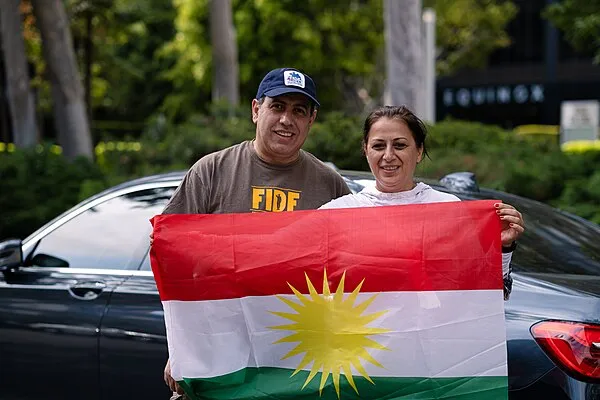
One of the most important sites associated with Kurdish Jews is the town of Amadiya (also spelled Amedi), perched on a plateau in what is now northern Iraq. Local tradition identifies Amadiya with the biblical city where the prophet Nahum is buried. The Jewish community of Amadiya was one of the most prominent in Kurdistan, known for its scholars and its ancient synagogue.
Language: The Last Aramaic Speakers
Perhaps the most remarkable feature of Kurdish Jewish culture is its language. Kurdish Jews spoke Neo-Aramaic — a family of dialects descended from the Aramaic that served as the common language of the Near East from roughly the 7th century BCE through the early Islamic period.
Aramaic is the language of significant portions of the Talmud, of the Zohar, of the Kaddish prayer, and of the traditional Jewish marriage contract (ketubah). While these texts preserve a literary form of Aramaic, the Kurdish Jews spoke it as a living, daily language — arguably the closest thing to a direct continuation of the ancient tongue.
Different communities spoke different dialects. The Jews of Zakho spoke Lishana Deni. The Jews of Amadiya spoke a related but distinct variety. These dialects were mutually intelligible with the Neo-Aramaic spoken by Assyrian Christians in the same region — evidence of centuries of coexistence.
Today, the language is endangered. The generation that grew up in Kurdistan — now elderly — are the last fluent speakers. Their children and grandchildren, born in Israel, speak Hebrew. Linguists at the Hebrew University of Jerusalem and other institutions have been racing to document and preserve Kurdish Jewish Neo-Aramaic before its last speakers are gone.
Life in Kurdistan
Kurdish Jews lived in a world shaped by geography and by their relationships with their Kurdish Muslim neighbors. Those relationships were complex — marked by periods of peaceful coexistence and periods of violence, by economic interdependence and social hierarchy.
Jewish men worked primarily as merchants, dyers, weavers, and farmers. Jewish women were known for their skill in textile work, particularly the production of colorful woven goods. In some communities, Jews served as the primary traders, connecting remote mountain villages with the markets of larger towns.
Religious life was organized around the synagogue and the teachings of local rabbis and hakhamim (sages). Kurdish Jewish practice reflected both the broader traditions of Middle Eastern Jewry and unique local customs:
- Ziyara — pilgrimages to the tombs of biblical and post-biblical figures believed to be buried in the region, including Nahum, Jonah, and Daniel
- Unique liturgical melodies that blend Hebrew prayer with Kurdish musical scales
- A rich oral tradition of stories, proverbs, and folk wisdom in both Aramaic and Kurdish
- Distinctive holiday foods, including kubbeh (stuffed dumplings) in dozens of regional variations
The Great Migration
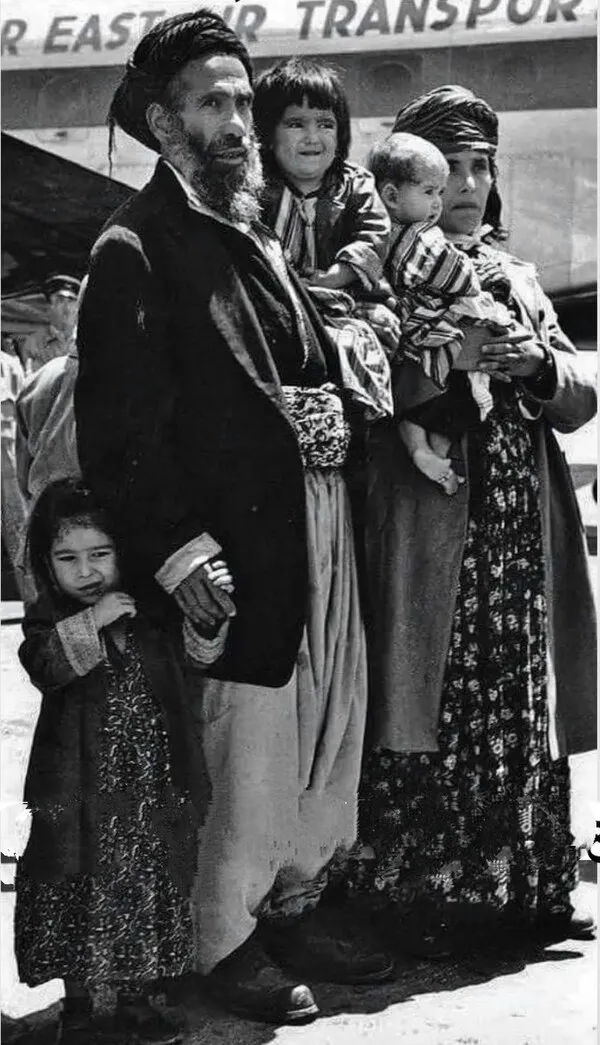
The modern history of Kurdish Jews is a story of departure. Beginning in the 1940s and accelerating after the creation of Israel in 1948, the ancient community uprooted itself and moved en masse to the Jewish state.
The migration happened in several phases. Some Kurdish Jews made their way to British Mandate Palestine before 1948, often traveling overland through Turkey or Syria. After Israeli independence, Operation Ezra and Nehemiah (1950-1951) airlifted roughly 120,000 Jews from Iraq, including many from the Kurdish north. By the mid-1950s, virtually no Jews remained in Iraqi Kurdistan.
Jews from Iranian and Turkish Kurdistan followed similar paths, though their migrations were more gradual. By the 1970s, the Kurdish Jewish communities that had existed for over two millennia were effectively empty.
Life in Israel
The transition to Israel was difficult. Kurdish Jews, like many Mizrahi immigrants, faced discrimination and cultural dismissal from the Ashkenazi establishment that dominated the young state. They were sent to ma’abarot (transit camps) and development towns in the periphery. Their language, customs, and traditions were often treated as inferior.
Over decades, Kurdish Jews integrated into Israeli society while maintaining distinct communal bonds. Many settled in Jerusalem, where the Nahlaot and Musrara neighborhoods became centers of Kurdish Jewish life. Others went to cities in the north and south.
Today, an estimated 150,000-200,000 Israelis are of Kurdish Jewish descent. They have produced military leaders, politicians, academics, and cultural figures. The singer Ofra Haza, though of Yemenite heritage, popularized a style of music that resonated with the broader Mizrahi experience. Kurdish Jewish musicians have maintained their own musical traditions, blending traditional Aramaic songs with modern Israeli sounds.
The Saharane: Keeping Memory Alive
The most visible expression of Kurdish Jewish identity in Israel is the Saharane — an annual outdoor festival typically held during the intermediate days of Sukkot. Thousands of Kurdish Jewish families gather in parks around Jerusalem and other cities for a celebration that combines:
- Traditional music — songs in Neo-Aramaic, Kurdish, and Hebrew
- Dancing — including the traditional Kurdish line dances that are one of the community’s most recognizable cultural expressions
- Food — kubbeh in its many varieties, kubba bamia, dolma, and other Kurdish Jewish specialties
- Storytelling — elders sharing memories of life in Kurdistan with younger generations who have never seen the mountains
The Saharane is more than a party. It is an act of cultural preservation — a way of saying to the next generation: this is where we came from, this is who we are, and this matters.
An Ancient Thread
The story of Kurdish Jews is, in one sense, a familiar Jewish story — a community scattered by exile, maintained by faith, and ultimately gathered back to the land of Israel. But in another sense, it is entirely unique. These were Jews who lived for nearly three thousand years in the same mountains, spoke a language that connected them directly to the ancient Near East, and maintained traditions that existed nowhere else.
That world is gone. The villages are empty, the synagogues abandoned, the last generation that remembers is growing old. But in the parks of Jerusalem during Sukkot, when the music starts and the dancing begins and someone’s grandmother insists on making the kubbeh herself because nobody else does it right — in those moments, Kurdistan lives on.
Frequently Asked Questions
How old is the Kurdish Jewish community?
Kurdish Jews trace their presence in the region to at least 2,700 years ago, following the Assyrian conquest of the northern Kingdom of Israel in 722 BCE. Some community traditions link them to the Ten Lost Tribes of Israel, though this cannot be verified historically. What is clear is that they maintained a continuous Jewish presence in the mountains of Kurdistan for over two millennia.
What language did Kurdish Jews speak?
Kurdish Jews spoke various dialects of Neo-Aramaic (also called Targumit or Lishana Deni), a language descended from the Aramaic that was the lingua franca of the ancient Near East. This makes them among the last native speakers of Aramaic-family languages. They also spoke Kurdish and, depending on the region, Arabic, Turkish, or Persian. In Israel, the younger generations have shifted to Hebrew.
What is the Saharane celebration?
The Saharane (from the Kurdish word for picnic or outing) is an annual festival celebrated by Kurdish Jews in Israel, typically during the intermediate days of Sukkot. Thousands of Kurdish Jewish families gather for outdoor celebrations featuring traditional music, dancing, food, and storytelling. It serves as a way to maintain Kurdish Jewish identity and pass traditions to younger generations born in Israel.
Sources & Further Reading
Related Articles
The Jewish Diaspora: 2,000 Years Across the Globe
How the destruction of the Second Temple scattered the Jewish people across continents, creating diverse communities united by faith.
Jews of Iraq: The Oldest Diaspora Community
Iraqi Jews trace their roots to the Babylonian Exile 2,600 years ago. They produced the Babylonian Talmud, thrived in Baghdad's golden age, and suffered the Farhud before their mass exodus to Israel.
The Ten Lost Tribes of Israel: History, Mystery, and Modern Searches
When Assyria conquered the Northern Kingdom in 722 BCE, ten Israelite tribes vanished from history. The search for the lost tribes has spanned continents, centuries, and DNA labs.