Jews of Cuba: A Tropical Diaspora's Extraordinary Story
From converso settlers to a thriving pre-revolution community of 15,000, and then a near-total exodus — the story of Cuban Jews is one of resilience, loss, and quiet revival.
An Island of Surprises
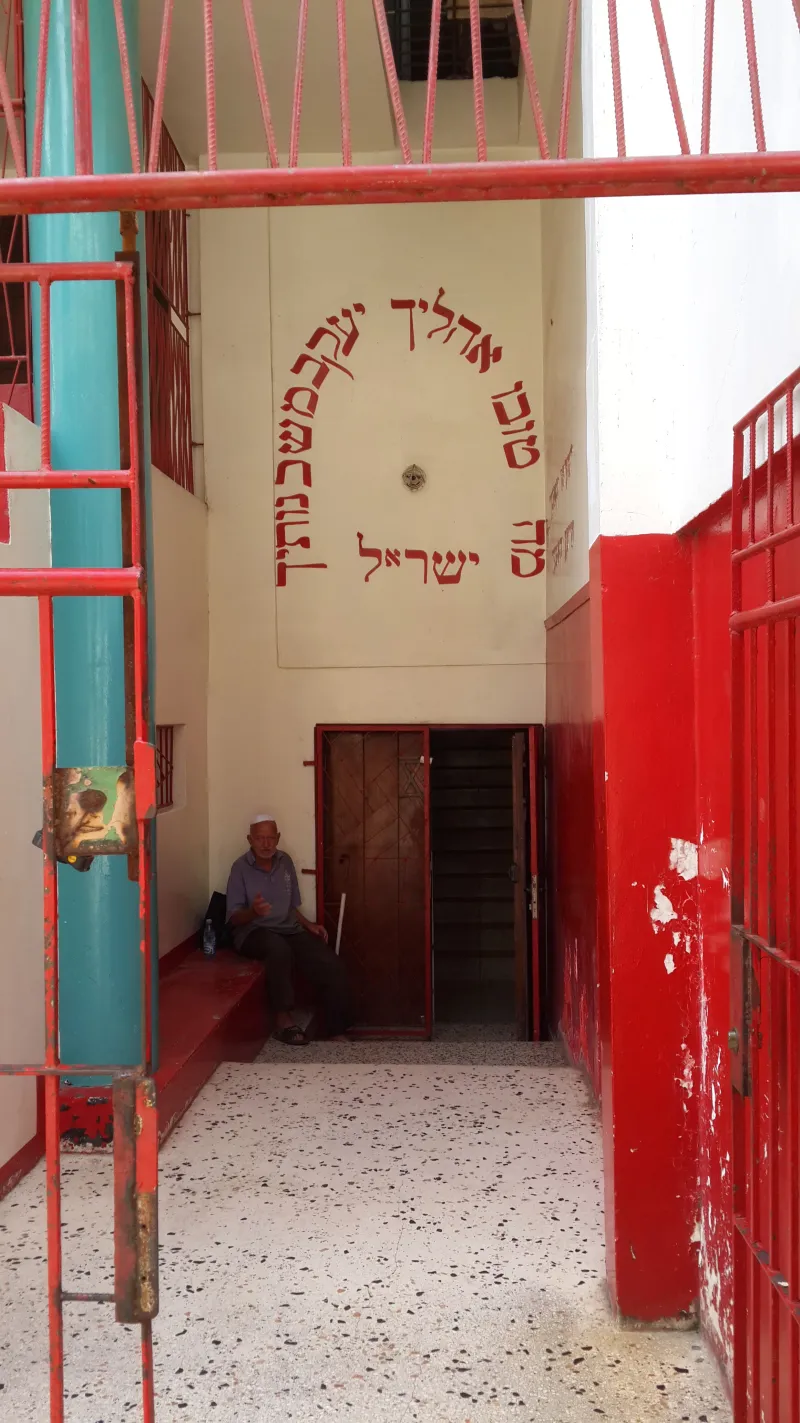
You would not expect to find a synagogue on a side street in Old Havana, tucked between crumbling colonial buildings and a bodega where a man sells coffee from a window no bigger than a mailbox. You would not expect, on a Friday evening, to hear the familiar melodies of Kabbalat Shabbat drifting through wooden shutters into the Caribbean night. You would not expect, in a country that declared itself officially atheist for decades, to find a Jewish community that has refused — quietly, stubbornly, joyfully — to disappear.
But here they are. The Jews of Cuba.
Their story is one of the most improbable in the long history of the Jewish diaspora — a story of converso settlers, immigrant merchants, pre-revolutionary glamour, revolutionary upheaval, mass exodus, and now, against all odds, a small but determined revival.
Converso Beginnings
Jews came to Cuba with Columbus. Not openly — the Spanish Crown had expelled all Jews in 1492, the same year Columbus sailed — but as conversos: Jews who had converted to Christianity under pressure but who, in many cases, maintained Jewish practices in secret. Luis de Torres, Columbus’s interpreter (he spoke Hebrew and Aramaic, which the explorers thought might be useful in the Orient), is sometimes cited as the first Jew in the Americas.
Throughout the colonial period, conversos trickled into Cuba, hiding their origins from the Inquisition, which operated in the Spanish colonies though with less intensity than on the peninsula. They became merchants, sugar planters, and traders. Some assimilated completely. Others kept a quiet flame burning — lighting candles on Friday nights, avoiding pork, observing fasts — without ever calling themselves Jewish.
The Great Immigration
The modern Jewish community of Cuba was built by immigrants who arrived in waves between the 1880s and the 1940s. They came in three main groups:
American Sephardim from Turkey and the former Ottoman Empire arrived first, in the late 19th and early 20th centuries. They established the first openly Jewish institutions on the island, including a Sephardic synagogue and community center.
Eastern European Ashkenazim — from Poland, Lithuania, Russia, and Romania — arrived in large numbers in the 1920s and 1930s. Many of them intended Cuba to be a way station on the route to the United States, but American immigration quotas tightened, and they stayed. They brought with them Yiddish, a love of learning, and an entrepreneurial drive that would make them successful in Cuba’s booming economy.
Refugees from Nazi Europe arrived in the late 1930s and early 1940s. Cuba accepted more Jewish refugees per capita than almost any country in the Western Hemisphere — though the most famous case is a tragic exception. In 1939, the SS St. Louis arrived in Havana carrying 937 Jewish refugees from Germany. Despite having valid landing permits, the passengers were denied entry due to a political dispute. The ship was forced to return to Europe, where many of its passengers later perished in the Holocaust.
The Golden Years
By the 1950s, Cuba’s Jewish community had reached its peak of approximately 15,000 members. Havana alone had five synagogues, a Jewish community center, Jewish schools, a Jewish cemetery, and a thriving network of social and cultural organizations. Jews were prominent in Cuban business life — particularly in the textile and garment industries, retail, and import-export trade.
The community was diverse and vibrant. Ashkenazi and Sephardic Jews maintained separate institutions but collaborated on communal matters. Zionist organizations were active. A Jewish newspaper, Havaner Lebn (Havana Life), was published in Yiddish. Children attended Jewish day schools where they studied Hebrew alongside Spanish.
Cuba’s Jews were, for the most part, middle class and urban. They lived in Havana’s Vedado neighborhood and the areas around Centro Habana. They ran shops on the bustling commercial streets, sent their children to university, and built lives that combined Jewish tradition with the warmth and informality of Cuban culture.
The Revolution and the Exodus
Everything changed in 1959.
Fidel Castro’s revolution was not specifically anti-Jewish — Cuba never experienced state-sponsored antisemitism of the kind that plagued other Latin American countries. But the revolution’s economic policies devastated the Jewish community. The nationalization of private businesses wiped out the economic base of a community built on commerce and trade. Jewish-owned shops, factories, and import businesses were seized by the state.
Faced with economic ruin, the overwhelming majority of Cuban Jews left. Between 1959 and the mid-1960s, approximately 94 percent of the Jewish community emigrated. Most went to Miami, where they established a vibrant Cuban-Jewish community that persists to this day. Others went to Israel, Mexico, Venezuela, and other destinations.
Those who remained — perhaps 1,000 to 1,500 people — faced decades of isolation. Cuba’s alliance with the Soviet Union and its official atheist ideology made religious life difficult, though not impossible. Synagogues remained open but were poorly attended. There were no rabbis on the island for decades. Jewish education dwindled. Intermarriage, always common in Cuba, became nearly universal.
The Revival
The collapse of the Soviet Union in 1991 brought Cuba to its knees economically — the “Special Period” was a time of hunger, blackouts, and desperation. But paradoxically, it also opened a door for Cuba’s Jewish community.
As Cuba cautiously opened to the outside world, international Jewish organizations began reconnecting with the island’s remaining Jews. The JDC (American Jewish Joint Distribution Committee), which had been active in Cuba before the revolution, reestablished contact. Canadian Jewish organizations sent supplies. Israeli diplomats — Cuba and Israel have no formal relations — maintained quiet channels of communication.
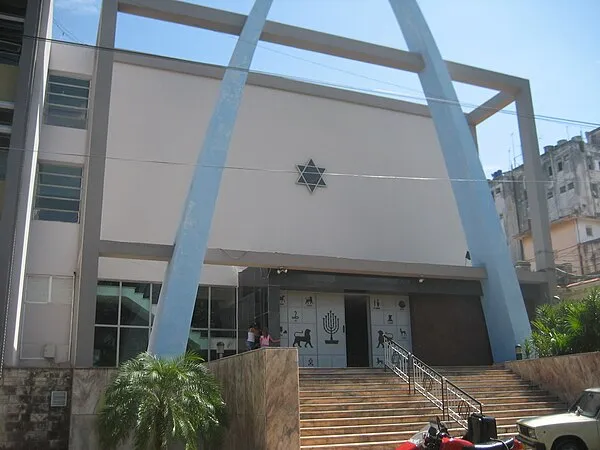
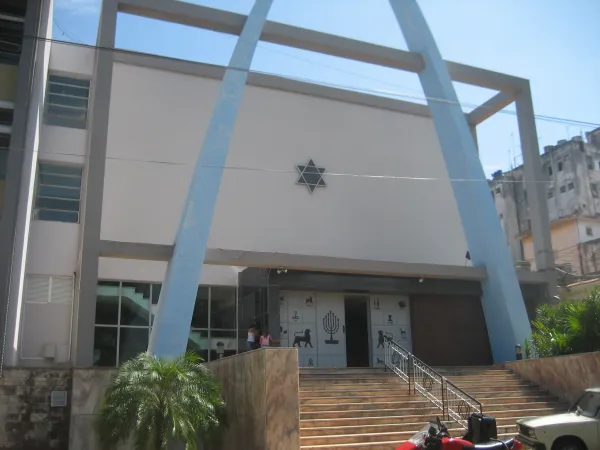
The response from within Cuba was remarkable. People who had been quietly Jewish for decades — or who had discovered Jewish ancestry they hadn’t known about — began showing up at synagogues. The Patronato (Beth Shalom) in Havana, the community’s main synagogue, was restored with international help. Shabbat services resumed. A Jewish pharmacy and a Sunday school were established. Young Cubans began studying Hebrew and Jewish history.
Some of the “new” Jews were people of mixed heritage who felt drawn to the Jewish part of their identity. Under the community’s welcoming approach — which has been notably inclusive — they were embraced. A few dozen Cuban Jews have made aliyah to Israel. Others have studied at Jewish institutions abroad and returned to serve the community.
A Community Unlike Any Other
Cuban Jews today are a community unlike any other in the Jewish world. They are overwhelmingly of mixed heritage — the result of decades of intermarriage in a small, isolated community. They are culturally Cuban in every sense: they speak Spanish, dance salsa, drink rum, and follow baseball with an intensity that rivals any nation on earth. And they are Jewish — attending services, celebrating holidays, teaching their children, maintaining a tradition against extraordinary odds.
The community operates without a permanent rabbi, though visiting rabbis come regularly. Joint Distribution Committee support provides medications, food packages, and educational materials. Birthright-style trips bring young Cuban Jews to Israel. The Patronato hosts Shabbat dinners that are open to the community and to visitors — and if you happen to be in Havana on a Friday night, you are welcome.
There is something moving about the persistence of Jewish life in Cuba — a community that was supposed to vanish, that had every reason to vanish, and that chose not to. In a world where Jewish communities have often been destroyed by violence, the Jews of Cuba faced a different kind of threat: irrelevance, isolation, the quiet erosion of identity over decades of separation from the wider Jewish world. That they survived at all is a small miracle. That they are growing, however modestly, is something more.
Frequently Asked Questions
How many Jews live in Cuba today?
Approximately 1,000-1,500 Jews live in Cuba today, down from a peak of about 15,000 before the 1959 revolution. The community is concentrated in Havana, with small groups in Santiago de Cuba and other cities. Despite its small size, the community has experienced a modest revival since the 1990s, with restored synagogues, regular services, and support from international Jewish organizations.
Why did Jews leave Cuba?
Most Cuban Jews left after Fidel Castro's 1959 revolution and the subsequent nationalization of private businesses. As a predominantly middle-class and merchant community, Cuban Jews were disproportionately affected by the economic changes. The vast majority emigrated to the United States (particularly Miami), with others going to Israel, Mexico, and other Latin American countries.
Are there synagogues in Cuba?
Yes, there are three active synagogues in Havana: the Patronato (Beth Shalom), which is the community's main center; the Adath Israel (Orthodox Ashkenazi); and the Centro Sefaradi. The Patronato was restored with help from international Jewish organizations and serves as both a house of worship and a community center.
Sources & Further Reading
Related Articles
The Jewish Diaspora: 2,000 Years Across the Globe
How the destruction of the Second Temple scattered the Jewish people across continents, creating diverse communities united by faith.
The Inquisition and the Jews: Conversos, Crypto-Jews, and Survival
The story of the Spanish and Portuguese Inquisitions — forced conversion, crypto-Judaism, auto-da-fé, and the remarkable survival of secret Jewish communities across five centuries.
Jews of Latin America: From Conversos to Community
From the secret Jews who fled the Inquisition to the vibrant communities of Buenos Aires, Sao Paulo, and Mexico City, Latin American Jewry is a story of reinvention, resilience, and cultural richness.