Jewish Supreme Court Justices: From Brandeis to Kagan
From Louis Brandeis in 1916 to Elena Kagan — the Jewish justices who shaped American law, each bringing their background and values to the nation's highest court.
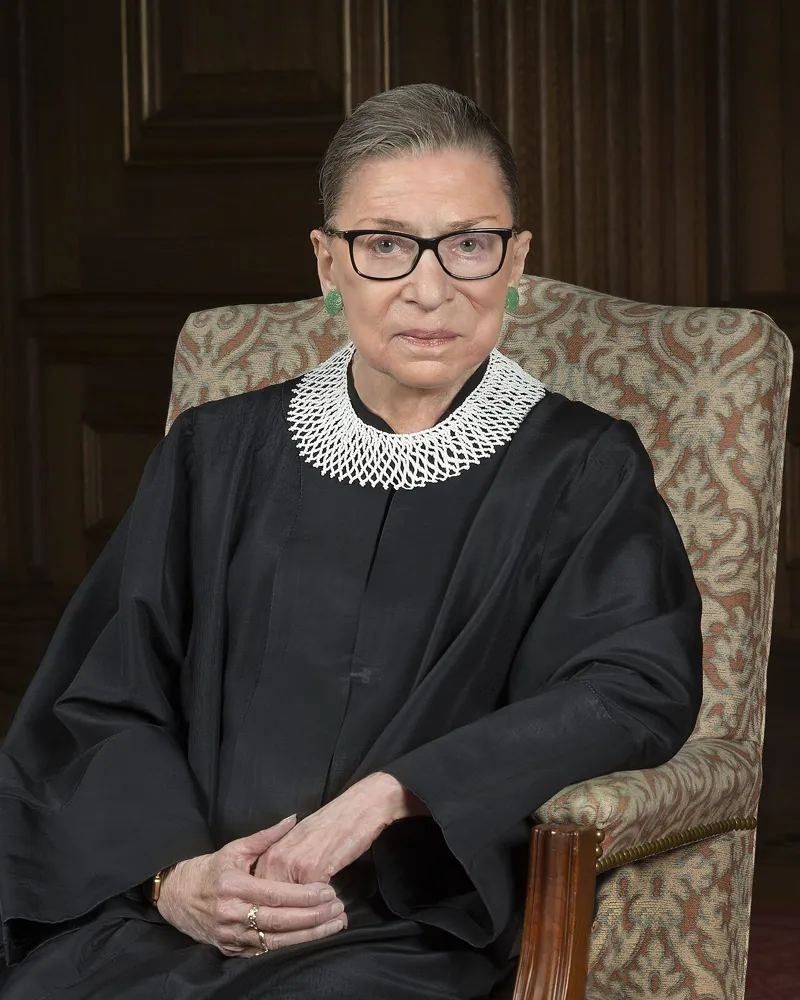
Justice, Justice Shall You Pursue
“Tzedek, tzedek tirdof” — “Justice, justice shall you pursue.” This phrase from Deuteronomy 16:20 has been quoted by more than one Jewish Supreme Court justice, and it captures something essential about the relationship between Jewish tradition and American law. From Louis Brandeis’s appointment in 1916 to the present day, Jewish justices have helped shape the Constitution’s meaning, often bringing a perspective informed by the experience of being outsiders who became insiders.
The story of Jewish justices on the Supreme Court is also the story of American Jewry itself — its struggles against discrimination, its embrace of education and the professions, and its ongoing negotiation between particularist identity and universal ideals.
Louis D. Brandeis (1916–1939): The People’s Lawyer
Louis Brandeis was the first Jew appointed to the Supreme Court, and his nomination fight was brutal. President Woodrow Wilson nominated him in January 1916. The Senate did not confirm him until June — four months of hearings during which opposition came from corporate interests who feared his progressive views and from antisemites who objected to his religion.
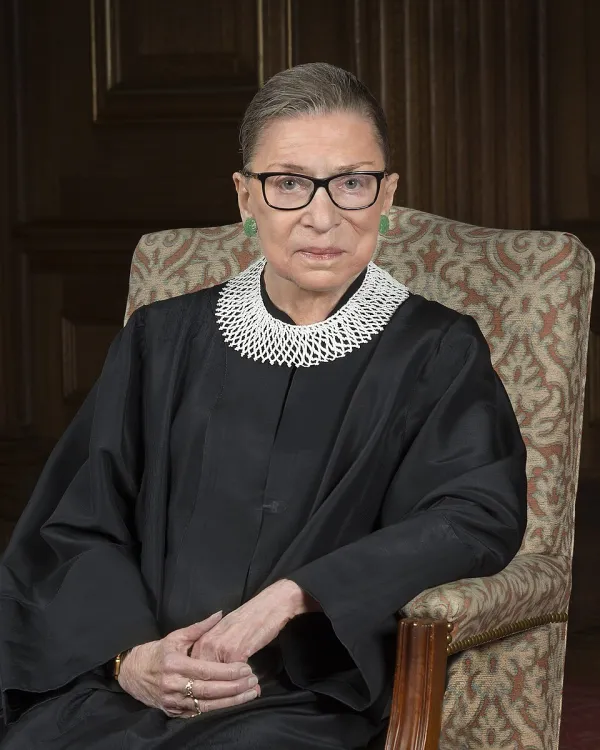
Before joining the Court, Brandeis was known as “the People’s Lawyer” for his pro-bono work defending consumers, workers, and small businesses against corporate monopolies. He pioneered the “Brandeis brief” — a legal argument that relied not just on precedent but on social and economic data to demonstrate the real-world impact of laws.
On the Court, Brandeis championed individual rights, free speech, and the right to privacy — which he famously called “the right to be let alone.” He also became a passionate Zionist, seeing in the movement an expression of the democratic and social justice values he cherished.
Brandeis University in Waltham, Massachusetts, is named in his honor.
Benjamin Cardozo (1932–1938): The Scholar’s Judge
Benjamin Cardozo came from a distinguished Sephardi Jewish family with roots in colonial America. He was appointed to the Court by President Herbert Hoover in 1932, and despite the fact that Brandeis was already serving (there were concerns about having two Jewish justices), his reputation as one of the finest legal minds of his generation made his confirmation virtually unanimous.
Cardozo’s judicial philosophy emphasized the evolving nature of law — that precedent should guide but not imprison judges, and that law must adapt to changing social conditions. His book The Nature of the Judicial Process remains a classic of legal philosophy.
Felix Frankfurter (1939–1962): The Complicated Conservative
Felix Frankfurter, an Austrian Jewish immigrant, was one of the most influential legal scholars in American history before joining the Court. He co-founded the American Civil Liberties Union, advised President Franklin Roosevelt during the New Deal, and was a passionate advocate for civil liberties.
Yet on the Court, Frankfurter became known for judicial restraint — the belief that judges should defer to the elected branches of government unless the Constitution clearly prohibited their actions. This put him at odds with some liberal colleagues who wanted the Court to take a more active role in protecting civil rights.
Frankfurter’s journey from progressive activist to judicial conservative remains a fascinating case study in how the responsibilities of the bench can transform a legal mind.
Arthur Goldberg (1962–1965): The Brief Tenure
Arthur Goldberg, the son of Russian Jewish immigrants, served as Secretary of Labor before President Kennedy appointed him to the Court in 1962. In his brief tenure, Goldberg was a reliable liberal voice, and he authored the concurrence in Griswold v. Connecticut that articulated a broad right to privacy.
Goldberg left the Court in 1965 at President Johnson’s request to become U.S. Ambassador to the United Nations — a decision he later regretted, calling it “the biggest mistake of my life.”
Abe Fortas (1965–1969): The Fall
Abe Fortas, a brilliant lawyer from Memphis who had argued the landmark Gideon v. Wainwright case (establishing the right to counsel), was appointed by President Johnson in 1965. When Johnson tried to elevate him to Chief Justice in 1968, opposition mounted — partly political, partly tinged with antisemitism. The nomination was withdrawn.
In 1969, Fortas resigned from the Court amid an ethics scandal involving payments from a foundation. He remains the only Supreme Court justice to resign under the threat of impeachment.
Ruth Bader Ginsburg (1993–2020): The Notorious RBG
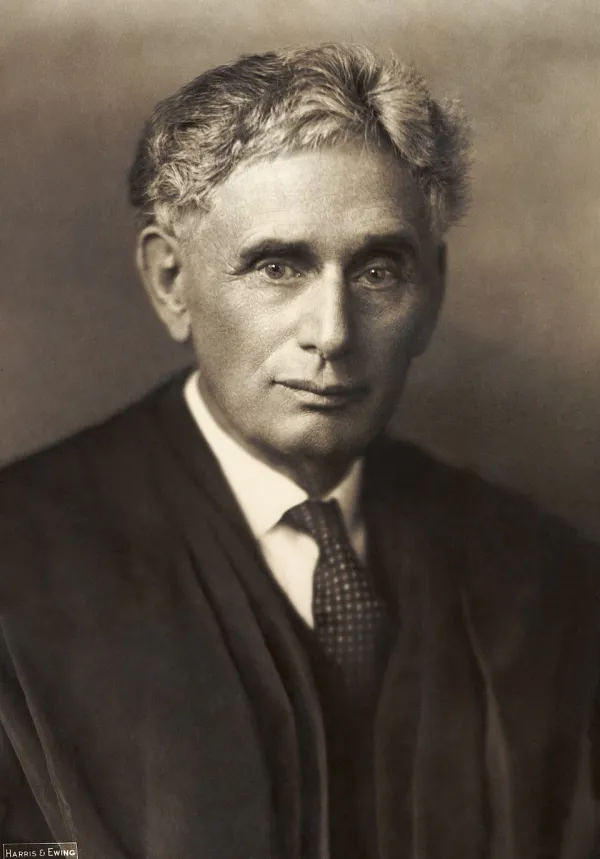
Ruth Bader Ginsburg transformed American law before she ever joined the Court. As a litigator for the ACLU Women’s Rights Project in the 1970s, she argued six landmark cases before the Supreme Court, systematically dismantling legal barriers based on sex.
Appointed by President Clinton in 1993, Ginsburg served for 27 years, becoming an icon of legal progressivism and — in her later years — a full-blown cultural phenomenon. “Notorious RBG” appeared on T-shirts, mugs, and tattoos. Her fierce dissents became rallying cries.
Ginsburg spoke openly about how her Jewish identity shaped her worldview. She kept a framed copy of “Tzedek, tzedek tirdof” in her chambers. She drew on the immigrant experience to empathize with those denied equal treatment. And she embodied the Jewish commitment to justice with a tenacity that inspired millions.
Stephen Breyer (1994–2022): The Pragmatist
Stephen Breyer, appointed by President Clinton in 1994, brought a pragmatic, institutionalist approach to the Court. He emphasized the practical consequences of legal decisions and advocated for what he called “active liberty” — the idea that the Constitution should be interpreted to promote democratic participation.
Breyer, the son of a San Francisco Jewish family, often cited his Jewish background’s emphasis on education, argument, and the search for workable solutions.
Elena Kagan (2010–present): The Fourth Woman
Elena Kagan, nominated by President Obama in 2010, was the first woman to serve as Solicitor General of the United States. Her confirmation made her the fourth woman to serve on the Supreme Court and contributed to a historic moment when three of the nine justices were Jewish.
Kagan is known for her sharp questioning during oral arguments, her clear writing, and her ability to build coalitions among the justices.
The “Jewish Seat” and Beyond
For decades, commentators spoke of a “Jewish seat” on the Supreme Court — the assumption that at least one justice should be Jewish, just as there was informally a “Catholic seat.” The reality has been more complicated. There have been periods with no Jewish justices (1969–1993) and periods with three simultaneously.
What matters is not the number but the impact. Jewish justices have shaped American law on privacy, free speech, equal protection, criminal justice, and the role of government. They have done so not as representatives of a religion but as Americans whose heritage — a tradition that values argument, learning, justice, and the dignity of every person — has enriched the nation’s highest court.
Frequently Asked Questions
Who was the first Jewish Supreme Court justice?
Louis D. Brandeis, nominated by President Woodrow Wilson in 1916 and confirmed after a contentious four-month battle. His nomination was controversial both because of his progressive views and because of antisemitic opposition to having a Jew on the Court. He served with distinction until 1939.
How many Jewish Supreme Court justices have there been?
As of the mid-2020s, eight Jewish justices have served on the Supreme Court: Louis Brandeis, Benjamin Cardozo, Felix Frankfurter, Arthur Goldberg, Abe Fortas, Ruth Bader Ginsburg, Stephen Breyer, and Elena Kagan. At one point (2010-2020), three of the nine justices were Jewish.
Did being Jewish influence how these justices approached the law?
Many of the Jewish justices have spoken about how their heritage influenced their judicial philosophy. Ruth Bader Ginsburg cited the Jewish commitment to justice and the immigrant experience. Brandeis's passion for social justice reflected prophetic Jewish values. However, these justices have spanned the ideological spectrum from progressive to conservative, so Jewish identity alone does not predict judicial philosophy.
Key Terms
Sources & Further Reading
Related Articles
Jewish Ethics: A Guide to Moral Living
From Hillel's golden rule to the Mussar movement, Jewish ethics offers a comprehensive framework for moral living — covering speech, the environment, labor rights, medical decisions, and the obligation to repair the world.
Jews in America: Four Centuries of History
From 23 refugees arriving in New Amsterdam in 1654 to a thriving community of nearly seven million, the story of Jews in America is a story of reinvention, contribution, and enduring identity.
Ruth Bader Ginsburg: The Quiet Revolutionary Who Changed American Law
She was five feet tall, spoke in a near-whisper, and dismantled the legal framework of gender discrimination in America case by case. Ruth Bader Ginsburg became a Supreme Court justice, a cultural icon, and a Jewish hero — proving that persistence is its own form of power.