Jewish Medical Pioneers: Healers Who Changed the World
From Maimonides to Jonas Salk, Jewish physicians and medical researchers have shaped the history of healing — driven by a tradition that places the saving of life above all else.
A Tradition of Healing
There is a remarkable passage in the Talmud that states: “It is forbidden to live in a city that does not have a physician.” This is not merely practical advice — it reflects a theological conviction that healing is a sacred obligation. The preservation of life (pikuach nefesh) is, in Jewish law, the supreme value — overriding Shabbat, overriding fasting, overriding virtually every other commandment.
This reverence for healing, combined with Judaism’s emphasis on learning and its historical circumstances, produced a disproportionate number of medical pioneers. From medieval court physicians to modern Nobel laureates, Jewish doctors and researchers have shaped the history of medicine in ways that extend far beyond the Jewish community.
Maimonides: The Physician-Philosopher
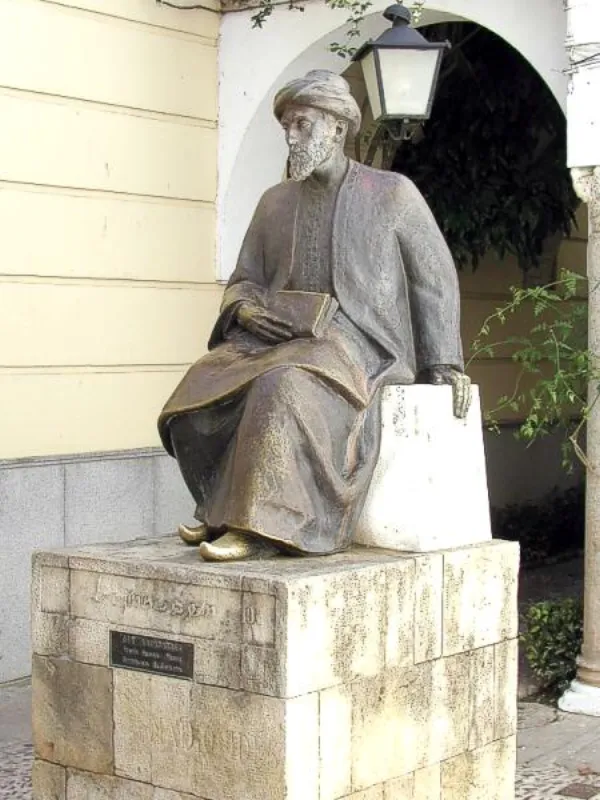
Moses ben Maimon — Maimonides, or the Rambam (1138–1204) — is best known as the greatest Jewish philosopher and legal authority of the medieval period. But he was also a practicing physician, and he approached medicine with the same rigor and systematization that characterized his religious writings.
Born in Córdoba, Spain, Maimonides fled the Almohad persecutions and eventually settled in Egypt, where he became the personal physician to al-Fadil, the vizier of Sultan Saladin. He wrote ten medical treatises, covering topics from asthma to diet to the treatment of poisoning. His Regimen of Health emphasized moderation, exercise, fresh air, and proper diet — principles that would not be out of place in a modern wellness guide.
In a famous letter to his student Samuel ibn Tibbon, Maimonides described his brutal schedule: seeing patients from morning until late afternoon, barely eating, then turning to his rabbinical and philosophical work at night. “I am always weak,” he wrote. The dual identity — healer and scholar — defined his life.
Paul Ehrlich (1854–1915): The Magic Bullet
Paul Ehrlich, a German Jewish scientist, revolutionized medicine with his concept of the “magic bullet” — a drug that would target a specific pathogen without harming the patient’s body. In 1909, he developed Salvarsan, the first effective treatment for syphilis — a disease that had ravaged Europe for centuries.
Ehrlich’s work laid the foundation for chemotherapy (the use of chemicals to treat disease) and earned him the 1908 Nobel Prize in Physiology or Medicine. He also made groundbreaking contributions to immunology, developing staining techniques that allowed scientists to distinguish different types of blood cells.
Sigmund Freud (1856–1939): Mapping the Mind
While not a “medical pioneer” in the traditional sense, Sigmund Freud transformed the understanding of mental illness and the human psyche. Born in Moravia to a Jewish family, Freud trained as a neurologist in Vienna and developed psychoanalysis — a method of treating mental disorders through dialogue, dream interpretation, and the exploration of unconscious processes.
Freud’s ideas — the unconscious mind, the Oedipus complex, the interpretation of dreams, defense mechanisms — became foundational to psychology, psychiatry, and Western culture at large. Whether one accepts his specific theories or not, Freud’s insistence that mental suffering could be treated through understanding rather than punishment or confinement was revolutionary.
Freud was forced to flee Vienna after the Nazi annexation of Austria in 1938. Four of his sisters were murdered in concentration camps.
Jonas Salk (1914–1995): The Man Who Conquered Polio
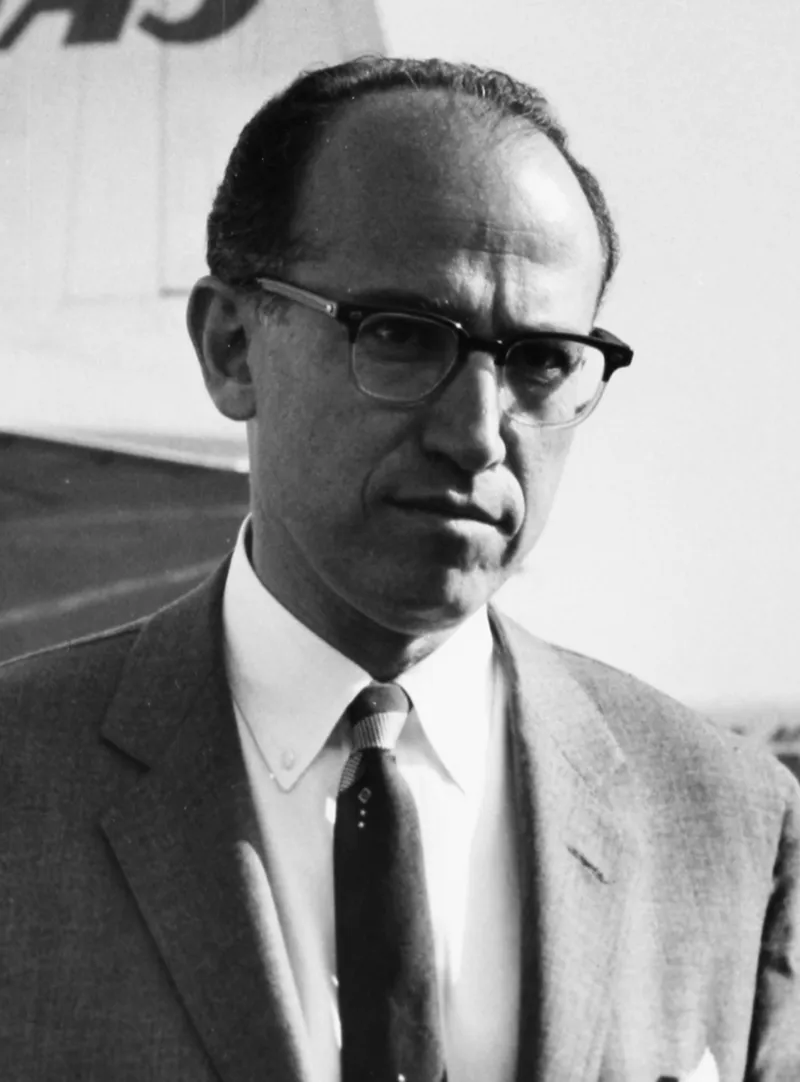
In the early 1950s, polio terrorized American families. Every summer brought a new wave of the disease — paralysis, iron lungs, children in wheelchairs. Jonas Salk, the son of Russian Jewish immigrants in New York, developed the first effective polio vaccine, tested it on himself and his family, and announced its success in 1955.
The news was greeted with something approaching national ecstasy. Church bells rang. Schools closed for celebration. Salk was hailed as a miracle worker.
When asked who owned the patent on the vaccine, Salk gave an answer that has become legendary: “The people. Could you patent the sun?” He never patented the vaccine, forgoing an estimated $7 billion in personal profit. He believed that the vaccine belonged to humanity.
Salk’s commitment to public health over personal wealth reflected a deeply Jewish sensibility — the idea that knowledge and healing are not commodities to be hoarded but gifts to be shared.
Albert Sabin (1906–1993): The Oral Vaccine
Albert Sabin, born in Białystok (in what is now Poland) and raised in a Jewish household, developed the oral polio vaccine — the sugar-cube vaccine that eventually replaced Salk’s injectable version in most of the world. The oral vaccine was cheaper, easier to administer, and provided longer-lasting immunity.
Sabin, like Salk, refused to patent his vaccine. “I could have become a millionaire,” he said, “but I wanted to be a scientist.”
Gertrude Elion (1918–1999): Nobel Laureate
Gertrude Belle Elion, the daughter of Lithuanian Jewish immigrants, shared the 1988 Nobel Prize in Physiology or Medicine for developing a new approach to drug design. Rather than relying on trial and error, Elion and her colleague George Hitchings studied the biochemical differences between normal cells and pathogens, then designed drugs to exploit those differences.
Her work produced treatments for leukemia (6-mercaptopurine), organ transplant rejection (azathioprine), gout (allopurinol), and herpes (acyclovir). The anti-HIV drug AZT was also developed using her methods. Elion, who was denied admission to graduate school because she was a woman, went on to become one of the most consequential pharmaceutical scientists of the 20th century.
Others Who Changed Medicine
The list of Jewish medical pioneers extends far beyond these profiles:
- Karl Landsteiner (1868–1943) — discovered the ABO blood group system, making safe blood transfusions possible. Nobel Prize, 1930.
- Selman Waksman (1888–1973) — discovered streptomycin, the first antibiotic effective against tuberculosis. Nobel Prize, 1952.
- Baruch Blumberg (1925–2011) — discovered the hepatitis B virus and developed its vaccine. Nobel Prize, 1976.
- Stanley Prusiner (born 1942) — discovered prions, the cause of mad cow disease and related disorders. Nobel Prize, 1997.
The Thread That Connects
What links Maimonides treating patients in medieval Cairo to Jonas Salk refusing a patent in 1955? What connects Paul Ehrlich’s magic bullet to Gertrude Elion’s rational drug design?
The connection is not genetic or ethnic — it is cultural. Jewish tradition enshrines the preservation of life as the highest value. It insists on education, intellectual rigor, and the obligation to use knowledge for the benefit of others. And it operates with a concept — tikkun olam, repair of the world — that frames human achievement not as self-glorification but as contribution to something larger.
Not every Jewish doctor or researcher is motivated by religious principles. Many are secular. But the cultural soil in which they grew — a tradition that celebrates healers, demands learning, and measures success by how many lives are saved rather than how much wealth is accumulated — has produced an extraordinary harvest of medical achievement.
Frequently Asked Questions
Why are there so many Jewish doctors?
Several factors contribute: Jewish tradition's emphasis on learning and education, the Talmudic principle of pikuach nefesh (saving life overrides almost all other commandments), historical restrictions that pushed Jews toward professions requiring portable expertise, and a cultural reverence for healing that goes back to Maimonides and earlier.
Did Jonas Salk patent the polio vaccine?
No. When asked who owned the patent, Salk famously replied: 'The people. Could you patent the sun?' He deliberately chose not to patent the vaccine, forgoing an estimated $7 billion in personal profit. His decision saved countless lives by making the vaccine widely and cheaply available worldwide.
Was Maimonides really a practicing physician?
Yes. Moses Maimonides (1138-1204) served as the personal physician to the Sultan Saladin's vizier in Egypt. He wrote extensively on medicine, including treatises on asthma, diet, poisons, and hemorrhoids. He practiced medicine during the day and wrote his philosophical and legal works at night, famously describing his exhaustion in personal letters.
Key Terms
Sources & Further Reading
Related Articles
Jewish Nobel Prize Winners: A Remarkable Legacy
Jewish laureates have won roughly 22% of all Nobel Prizes despite representing 0.2% of the world's population. Explore the remarkable Jewish contribution across physics, chemistry, medicine, literature, peace, and economics — and why.
Jewish Contributions to Science: From Ancient Physicians to Nobel Laureates
Jews represent 0.2% of the world's population but have won over 20% of all Nobel Prizes in science. The reasons go deeper than talent — they involve a culture built on questioning, learning, and argument.
Jonas Salk: The Man Who Conquered Polio and Gave the Cure Away
When Jonas Salk developed the polio vaccine in 1955, he was asked who held the patent. His answer — 'Could you patent the sun?' — captured the essence of a man who believed that healing the world mattered more than profiting from it.