Jewish Contributions to Science: From Ancient Physicians to Nobel Laureates
Jews represent 0.2% of the world's population but have won over 20% of all Nobel Prizes in science. The reasons go deeper than talent — they involve a culture built on questioning, learning, and argument.
The Numbers That Demand Explanation
Here is a fact that, once you see it, is impossible to unsee: Jews make up roughly 0.2 percent of the world’s population. That is one in every five hundred people on earth. Yet Jewish scientists, mathematicians, and physicians have won over 22 percent of all Nobel Prizes in the sciences. In physics, the figure is closer to 26 percent. In medicine, 27 percent.
These are not small differences. This is a hundredfold overrepresentation. If Nobel Prizes were distributed randomly across the world’s populations, Jews would have won approximately two in the prize’s entire history. Instead, they have won over two hundred.
The question is: why?
The answer is complicated, contested, and probably involves multiple factors working together over centuries. But understanding it tells us something important — not just about Jewish history, but about what happens when a culture decides that learning is the highest human activity.
Ancient Roots: Physicians and Scholars
Jewish engagement with science and medicine is not a modern phenomenon. It has ancient roots.
In the medieval period, Jewish physicians were sought after across the Mediterranean world. Maimonides — Rabbi Moses ben Maimon, the greatest Jewish philosopher — was also a practicing physician who served as court doctor to the Sultan Saladin in 12th-century Egypt. His medical writings covered everything from asthma to hemorrhoids to the regulation of diet, and they reflected a systematic, empirical approach to healing.
Medieval Jews served as translators of scientific texts between Arabic, Hebrew, and Latin — playing a crucial role in transmitting Greek and Arab scientific knowledge to Christian Europe. The Ibn Tibbon family of Provence translated Maimonides, Aristotle, and Galen into Hebrew. Abraham bar Hiyya wrote influential works on astronomy and mathematics in the 12th century. These scholars were not working in a vacuum; they were part of a culture that valued intellectual achievement and had the literacy infrastructure to support it.
The connection between Jewish learning and scientific inquiry is not coincidental. Talmud study — the central intellectual activity of traditional Jewish life — develops skills that transfer remarkably well to scientific thinking: close reading of texts, logical argumentation, the habit of questioning received wisdom, comfort with unresolved contradictions, and the ability to hold multiple interpretive frameworks simultaneously.
The Modern Explosion
The emancipation of European Jews in the 18th and 19th centuries — when legal barriers to Jewish participation in wider society began to fall — unleashed a torrent of intellectual achievement that has not abated.
Physics
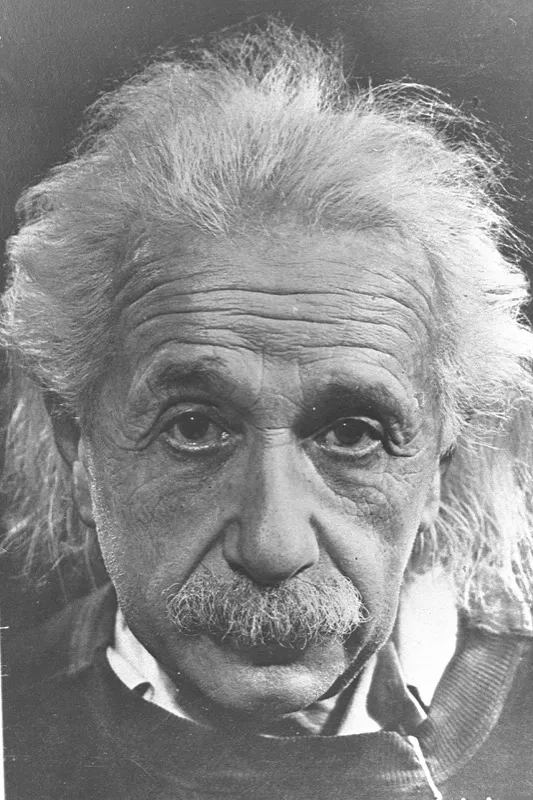
Albert Einstein (1879-1955) needs no introduction. His theories of special and general relativity transformed our understanding of space, time, gravity, and the universe itself. He won the Nobel Prize in 1921 for the photoelectric effect, not for relativity — a reminder that even his “minor” contributions were revolutionary.
But Einstein was far from alone:
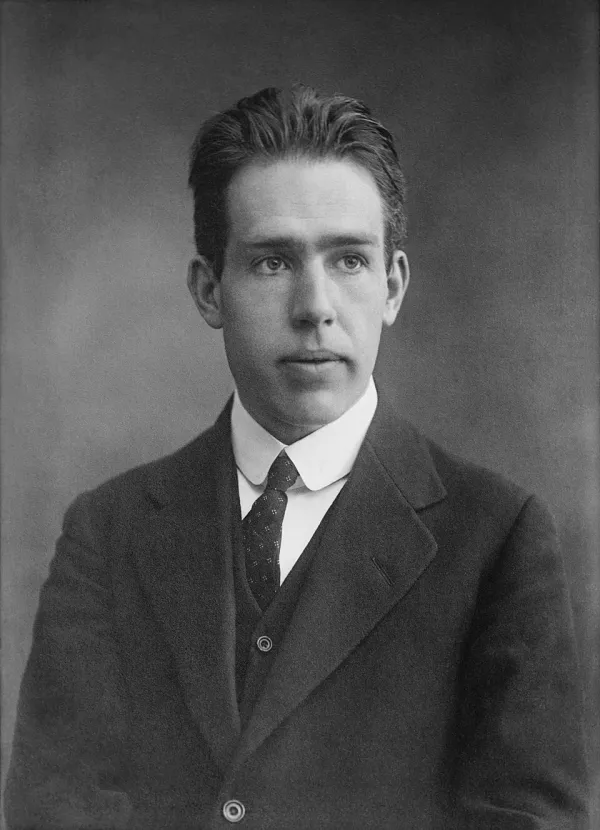
- Niels Bohr (1885-1962, Jewish mother) — foundational contributions to quantum mechanics
- Richard Feynman (1918-1988) — quantum electrodynamics, one of the greatest physicists of the 20th century and one of its greatest communicators of science
- Murray Gell-Mann (1929-2019) — the quark model of particle physics
- Lev Landau (1908-1968) — Soviet physicist whose textbooks taught a generation of physicists worldwide
Medicine and Biology
Jonas Salk (1914-1995) developed the polio vaccine that saved millions of lives. When asked who owned the patent, he answered: “Could you patent the sun?” He never profited from the vaccine.
- Paul Ehrlich (1854-1915) — pioneered chemotherapy and coined the concept of the “magic bullet”
- Selman Waksman (1888-1973) — discovered streptomycin, the first antibiotic effective against tuberculosis, and coined the word “antibiotic”
- Baruch Blumberg (1925-2011) — discovered the hepatitis B virus and developed its vaccine
Mathematics
Emmy Noether (1882-1935) — arguably the most important woman in the history of mathematics. Her theorem connecting symmetries to conservation laws is foundational to modern physics. Einstein called her “the most significant creative mathematical genius thus far produced since the higher education of women began.” She fled Nazi Germany and spent her final years at Bryn Mawr College.
- John von Neumann (1903-1957) — contributions to quantum mechanics, game theory, computer science, and nuclear physics that are staggering in their breadth
- Paul Erdős (1913-1996) — the most prolific mathematician of the 20th century, who published over 1,500 papers and collaborated so widely that “Erdős number” became a measure of mathematical connectedness
Chemistry
- Fritz Haber (1868-1934) — developed the process for synthesizing ammonia from nitrogen, making modern agriculture possible (feeding billions) while also developing chemical weapons (killing thousands) — one of the most morally complex figures in scientific history
- Ilya Prigogine (1917-2003) — Nobel-winning work on dissipative structures and the thermodynamics of irreversible processes
Why? The Culture of Learning
The disproportionate Jewish contribution to science is not genetic. There is no “science gene.” The explanation lies in culture — specifically, in a set of cultural values and historical circumstances that created an unusually fertile environment for intellectual achievement.
Literacy. Jews have been a literate people since antiquity. The expectation that every boy would learn to read — in order to study Torah — meant that Jewish communities maintained literacy rates far above those of surrounding populations for over two thousand years. Literacy is the foundation on which all further intellectual achievement is built.
The value of learning. In Jewish culture, the scholar has traditionally been the most respected member of the community — more than the warrior, the merchant, or the priest. Parents wanted their daughters to marry scholars. Communities supported their brightest students. This created a powerful incentive structure that channeled talent toward intellectual pursuits.
The culture of questioning. Judaism is unusual among religions in its comfort with argument. The Talmud is not a book of answers — it is a book of questions, debates, and unresolved disagreements. Studying it teaches you not to accept authority uncritically, to ask “why?” and “what if?”, and to see disagreement not as failure but as the engine of deeper understanding. These habits of mind are precisely what science requires.
Historical circumstance. For centuries, Jews in Europe were barred from owning land, joining guilds, and entering many professions. This pushed them toward the few occupations that were available — commerce, finance, medicine, law — and created a population that was urban, educated, and accustomed to navigating complex systems. When universities opened their doors in the 19th century, Jews were positioned to take advantage.
The immigrant drive. Many of the greatest Jewish scientists were immigrants or children of immigrants — people who had crossed oceans and continents, often fleeing persecution. The immigrant experience — the hunger to prove oneself, the awareness of opportunity’s fragility, the determination to build a life through education — is a powerful motivator.
The Responsibility of Achievement
Jewish tradition does not celebrate knowledge for its own sake. It celebrates knowledge in the service of tikkun olam — the repair of the world. Salk’s refusal to patent the polio vaccine, Einstein’s advocacy for peace and civil rights, the countless Jewish physicians who served communities that could not pay — these reflect a tradition that insists knowledge carries responsibility.
The disproportionate Jewish contribution to science is not a source of triumphalism. It is a reminder of what any culture can achieve when it values learning, encourages questioning, and invests in the education of its children. The Jewish case is extraordinary, but the lesson is universal.
A culture that teaches its children to ask questions will, sooner or later, produce people who find answers.
Frequently Asked Questions
How many Jewish Nobel Prize winners are there?
As of 2025, Jewish laureates have won over 210 Nobel Prizes, representing approximately 22% of all individual prizes — despite Jews comprising less than 0.2% of the world's population. This includes roughly 26% of all prizes in Physics, 27% in Medicine/Physiology, and 19% in Chemistry. The disproportion is one of the most striking statistical anomalies in the history of human achievement.
Why have Jews won so many Nobel Prizes?
Scholars point to several interconnected factors: a religious culture that values learning, questioning, and textual analysis (Talmud study develops analytical reasoning); historical emphasis on literacy when most populations were illiterate; urbanization and concentration in intellectual professions partly due to restrictions on land ownership; cultural expectation that children will pursue education; and the tradition of argument and debate as a positive intellectual value rather than a social disruption.
Did Judaism ever conflict with science?
Judaism has generally maintained a more comfortable relationship with science than some other religious traditions. Maimonides (12th century) argued that scientific knowledge enhances rather than contradicts religious understanding. The tradition's emphasis on this-worldly engagement (as opposed to otherworldly mysticism) and its respect for rational inquiry created space for scientific exploration. That said, tensions exist — particularly around evolution and cosmology in some Orthodox communities.
Key Terms
Sources & Further Reading
- Jewish Virtual Library — Nobel Prize Laureates ↗
- Nobel Prize Official Website ↗
- Charles Murray, Human Accomplishment
Related Articles
Jewish Inventors Who Changed the World
From the polio vaccine to blue jeans, from nuclear science to Google — Jewish inventors and entrepreneurs have shaped the modern world. Meet the innovators whose work touches daily life in ways most people never realize.
Jewish Nobel Prize Winners: A Remarkable Legacy
Jewish laureates have won roughly 22% of all Nobel Prizes despite representing 0.2% of the world's population. Explore the remarkable Jewish contribution across physics, chemistry, medicine, literature, peace, and economics — and why.
Judaism and Science: A Relationship of Curiosity, Not Conflict
Judaism has rarely experienced the faith-versus-science wars familiar in Christianity. From Maimonides embracing Aristotle to Jewish Nobel laureates, explore why Judaism sees scientific inquiry as a form of worship.