Jewish Mathematicians: Giants of Modern Mathematics
Emmy Noether, John von Neumann, Paul Erdős, Benoit Mandelbrot, and more — the Jewish mathematicians who shaped modern math, from abstract algebra to fractals to game theory.
The Art of Abstraction
Mathematics, at its core, is the art of abstraction — taking the messy, particular world and finding the hidden patterns beneath it. It is, in a sense, a deeply Jewish activity. The Talmud is itself an exercise in rigorous logical reasoning: given these premises, what follows? If this case, then what about that case? The skills honed over centuries of textual analysis — precision, logical deduction, comfort with abstraction, willingness to follow an argument wherever it leads — translate naturally to mathematical thinking.
Jewish mathematicians have been disproportionately represented among the giants of modern mathematics. Their contributions span virtually every branch of the discipline: abstract algebra, topology, game theory, computer science, fractal geometry, and number theory. Here are some of the most important.
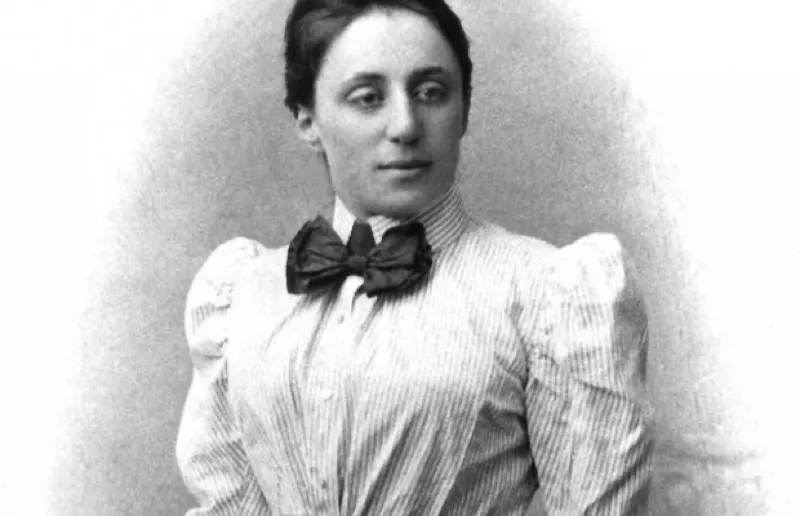
Emmy Noether (1882–1935): The Mother of Modern Algebra
Emmy Noether was born in Erlangen, Germany, the daughter of mathematician Max Noether. She faced extraordinary barriers — German universities did not officially admit women, and she was only allowed to audit classes. When she finally earned her doctorate, she could not hold a formal teaching position because of her gender. She lectured under a male colleague’s name.
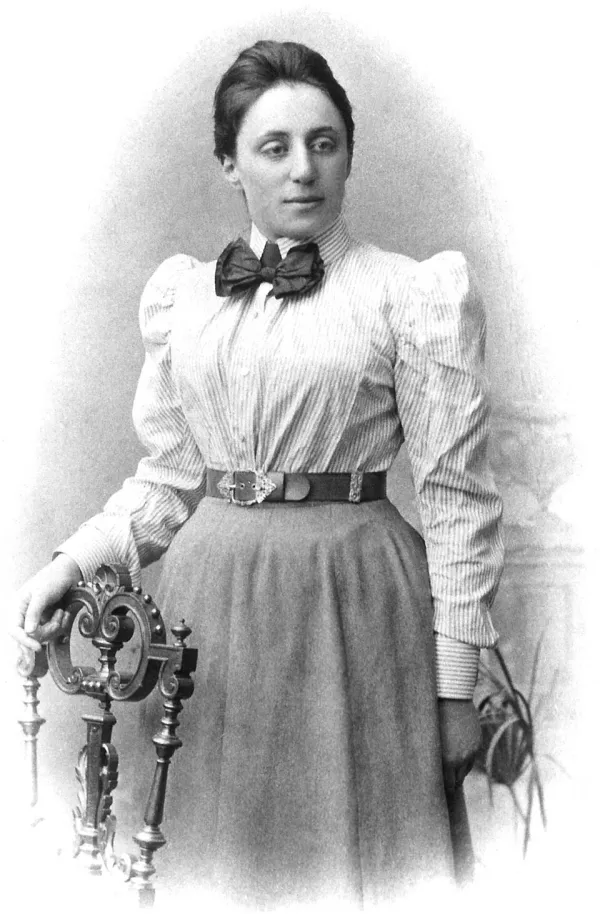
None of this stopped her. Noether’s work in abstract algebra — particularly her development of the theory of rings, ideals, and modules — revolutionized the field. Her approach, emphasizing structural properties over computational details, became the standard methodology of modern algebra.
Her most famous contribution to physics is Noether’s Theorem (1918), which proves that every symmetry in nature corresponds to a conservation law. Symmetry under time translation gives conservation of energy. Symmetry under spatial translation gives conservation of momentum. The theorem is so fundamental that physicists consider it one of the most important results in theoretical physics.
When the Nazis came to power in 1933, Noether was dismissed from her position because she was Jewish. She emigrated to the United States and joined the faculty at Bryn Mawr College, where she continued her groundbreaking work until her sudden death in 1935 at age 53.
Einstein wrote in her obituary: “In the judgment of the most competent living mathematicians, Fräulein Noether was the most significant creative mathematical genius thus far produced since the higher education of women began.”
John von Neumann (1903–1957): The Last Polymath
John von Neumann, born in Budapest to a wealthy Jewish family, may have been the most brilliant mind of the 20th century. His contributions span an almost absurd range of fields:
- Set theory and logic — foundational work on the axioms of mathematics
- Quantum mechanics — the rigorous mathematical framework still used today
- Game theory — co-authored the founding text with Oskar Morgenstern
- Computer science — designed the architecture (the “von Neumann architecture”) used by virtually every computer in existence
- The atomic bomb — key contributions to the Manhattan Project’s implosion design
- Cellular automata — pioneering work in artificial life
Von Neumann’s colleagues were in awe of his speed. He could solve complex problems in his head that took others hours on paper. When the first electronic computer, ENIAC, was tested, one of the operators remarked that von Neumann could calculate faster than the machine.
He was also, by all accounts, charming, witty, and given to hosting legendary parties. His combination of genius, warmth, and productivity makes him one of the most remarkable figures in the history of science.
Paul Erdős (1913–1996): The Wandering Problem-Solver
Paul Erdős was mathematics incarnate — a Hungarian Jewish mathematician who owned no home, carried all his possessions in two suitcases, and spent his life traveling from university to university, collaborating with anyone who would work with him. “My brain is open,” he would announce upon arriving at a colleague’s doorstep.
Erdős published approximately 1,500 mathematical papers — more than any other mathematician in history. He worked in number theory, combinatorics, probability, and graph theory. The “Erdős number” — measuring a person’s collaborative distance from Erdős — became a famous cultural concept in mathematics.
Born in Budapest to Jewish parents (both mathematics teachers), Erdős fled Hungary before the Holocaust. His mother survived; several other family members did not. He lived the rest of his life as a mathematical nomad, fueled by coffee and amphetamines, giving away his prize money to students and charities.
“Property is a nuisance,” he said. “Possessions are a nuisance.”
Norbert Wiener (1894–1964): The Father of Cybernetics
Norbert Wiener, the son of a Russian Jewish immigrant and Harvard professor Leo Wiener, was a child prodigy who entered college at 11 and earned his PhD from Harvard at 18. He developed cybernetics — the study of communication and control in machines and living organisms — which laid the intellectual groundwork for the information age.
Wiener’s ideas influenced fields from robotics to neuroscience to management theory. He was also among the first scientists to raise ethical concerns about the social impact of automation, warning that machines replacing human workers could lead to suffering if not managed wisely.
Benoit Mandelbrot (1924–2010): The Fractal Man
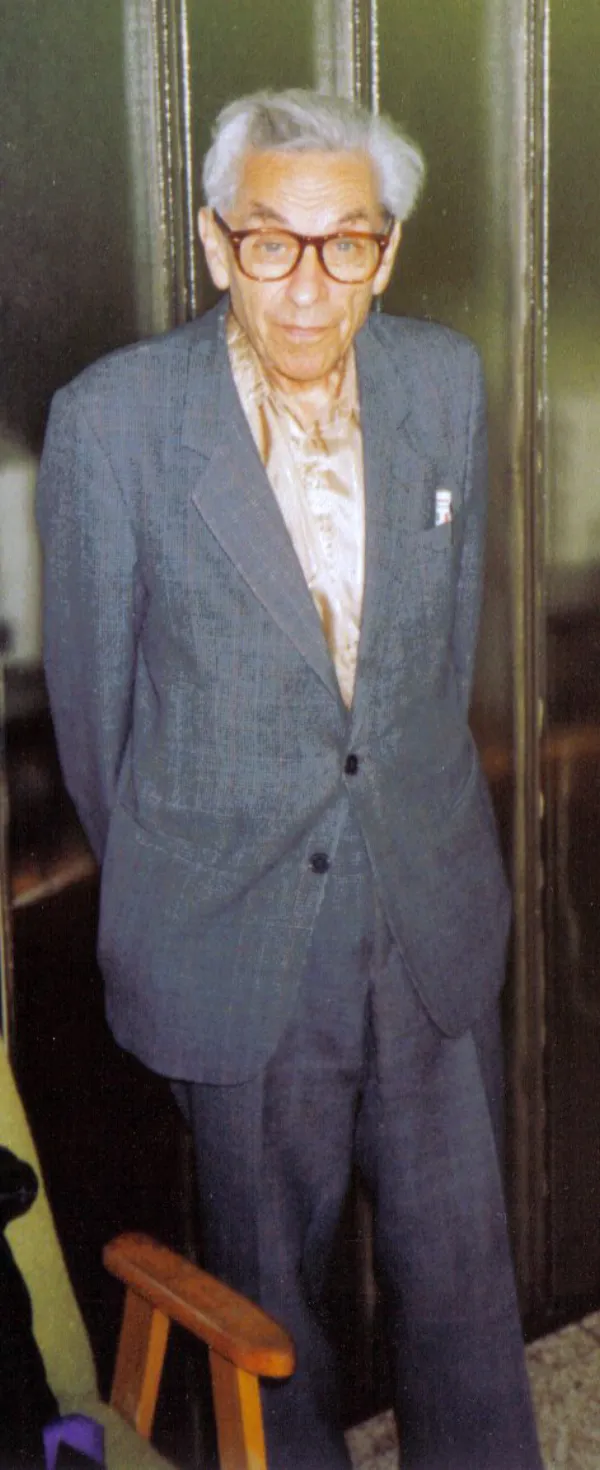
Benoit Mandelbrot was born in Warsaw to a Lithuanian Jewish family and grew up in France, where he survived the Holocaust by hiding in the countryside. He eventually joined IBM’s research center in New York, where he made his revolutionary discovery.
Mandelbrot noticed that many phenomena dismissed as “irregular” or “random” — the shape of coastlines, the distribution of galaxy clusters, the fluctuation of financial markets, the branching of blood vessels — actually followed mathematical patterns. He called these patterns fractals — shapes whose complexity repeats at every scale.
The Mandelbrot set, the iconic visualization of his mathematics, reveals a universe of infinite complexity generated by the simplest possible formula. Zoom in on any edge, and you find new patterns, new structures, new beauty — endlessly. The image became a cultural phenomenon, appearing on posters, T-shirts, and screensavers, making mathematics visible and beautiful to millions.
Grigori Perelman (born 1966): The Reluctant Genius
Grigori Perelman, born in Leningrad (now St. Petersburg) to a Jewish family, solved the Poincaré Conjecture — one of the seven Millennium Prize Problems and arguably the most important unsolved problem in topology. He posted his proof online in 2002–2003, without fanfare.
When the mathematical community verified his proof, Perelman was awarded the Fields Medal (the “Nobel Prize of mathematics”) in 2006 and the $1 million Millennium Prize in 2010. He refused both. He declined all interviews. He withdrew from the mathematical community entirely.
“I know how to control the universe,” he reportedly told a journalist. “Why would I run to get a million dollars?”
A Culture of Proof
The Jewish contribution to mathematics is not a coincidence. A culture that spent two thousand years developing the most rigorous argumentative tradition in human history — the Talmudic method of logical analysis, where every proposition is questioned, every exception is explored, and every argument must withstand challenge from every direction — produced minds ideally suited for mathematical reasoning.
These mathematicians came from different countries, different centuries, and different circumstances. What they shared was a willingness to follow ideas wherever they led, a comfort with abstraction, and a conviction that the patterns hidden beneath the surface of reality are not only real but beautiful. They found, in mathematics, what their ancestors found in Torah: an infinite text that rewards infinite study.
Frequently Asked Questions
Why have so many mathematicians been Jewish?
Multiple factors contribute: the Jewish tradition of intense textual study and logical argumentation (Talmudic reasoning mirrors mathematical proof), a cultural reverence for intellectual achievement, historical exclusion from land ownership and trades that pushed Jews toward intellectual professions, and the concentration of Jewish communities in urban centers with access to universities.
What did Emmy Noether contribute to mathematics?
Emmy Noether (1882-1935) transformed abstract algebra, developing the theory of rings and ideals that became foundational to modern mathematics. Her 'Noether's Theorem' connects symmetry to conservation laws in physics — Einstein called her the most significant creative mathematical genius since the beginning of higher education for women.
What are Mandelbrot fractals?
Benoit Mandelbrot (1924-2010) discovered that many irregular shapes in nature — coastlines, clouds, blood vessels, mountains — follow mathematical patterns he called 'fractals.' The famous Mandelbrot set, a visualization of a simple mathematical formula, reveals infinite complexity at every scale and became one of the most recognized images in mathematics.
Key Terms
Sources & Further Reading
Related Articles
Jewish Nobel Prize Winners: A Remarkable Legacy
Jewish laureates have won roughly 22% of all Nobel Prizes despite representing 0.2% of the world's population. Explore the remarkable Jewish contribution across physics, chemistry, medicine, literature, peace, and economics — and why.
Jewish Contributions to Science: From Ancient Physicians to Nobel Laureates
Jews represent 0.2% of the world's population but have won over 20% of all Nobel Prizes in science. The reasons go deeper than talent — they involve a culture built on questioning, learning, and argument.
Why Jews Value Education: Two Thousand Years of 'Study Is Equal to All'
Judaism made universal education a religious obligation two millennia before any other civilization. Explore why the Jewish obsession with learning shaped everything from Nobel Prizes to the 'my son the doctor' stereotype.