Jewish Humor: A Tradition of Laughter
Jewish humor is a survival tool, a coping mechanism, and an art form — from the wise fools of Chelm to the Borscht Belt, from Groucho Marx to Jerry Seinfeld, laughter has been a Jewish tradition.

Laughing to Survive
There is an old Jewish joke: “How many Jewish mothers does it take to change a light bulb? None. ‘Don’t worry about me, I’ll just sit here in the dark.’”
That joke — self-deprecating, psychologically sharp, delivered with a shrug and a sigh — captures something essential about Jewish humor. It is humor born not from comfort but from adversity. It is the laughter of a people who have faced persecution for centuries and decided that the alternative to crying was telling jokes about it.
Jewish humor is not merely entertainment. It is, as the scholar Ruth Wisse has argued, a form of cultural intelligence — a way of navigating a hostile world with wit instead of weapons.
The Roots of Jewish Wit
Humor runs deep in Jewish tradition. The Bible itself contains moments of sharp irony — the prophet Elijah mocking the priests of Baal (“Perhaps your god is sleeping, or on a journey, or busy in the bathroom”), Sarah laughing at the angel’s promise that she would bear a child at age 90.
The Talmud is full of clever wordplay, absurdist logic, and jokes embedded in legal discourse. The rabbis understood that humor was a teaching tool — a way to make difficult ideas accessible and to keep students engaged through hours of study.
But the humor tradition that most people associate with “Jewish humor” emerged primarily from the Yiddish-speaking world of Eastern Europe — the shtetl, the marketplace, the study hall, and eventually the immigrant neighborhoods of New York.
The Wise Fools of Chelm
Among the most beloved traditions in Jewish humor are the stories of Chelm — a fictional town populated entirely by fools who consider themselves geniuses.
In Chelm, the town council decided to build a new synagogue. They used the lumber from the old synagogue. When they finished, they realized they had forgotten to save the architectural plans, so they tore down the new building to study how the old one had been constructed.
In Chelm, a man was sent to the next town with an urgent message. “How will I know when I’ve arrived?” he asked. “When you see houses you don’t recognize,” they told him. He walked for hours, then returned home. Looking at his own town, he saw houses he didn’t recognize (it was dark). “I must be there!” he announced.
Chelm stories work on multiple levels. On the surface, they are simple, silly tales for children. Beneath the surface, they satirize human foolishness, communal decision-making, and the gap between logic and wisdom. They also carry a gentle, affectionate quality — the fools of Chelm are never malicious, just gloriously, innocently wrong.
Humor as Survival
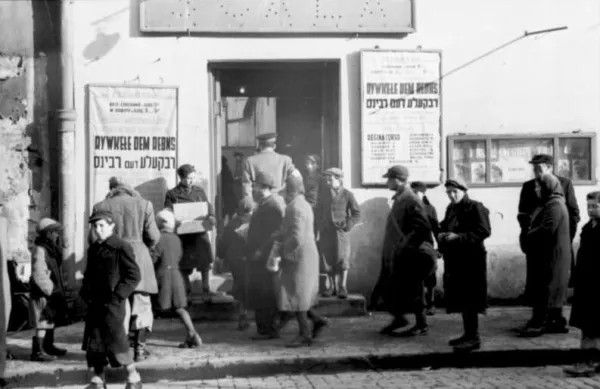
Yiddish humor developed under conditions of persecution, poverty, and powerlessness. When you cannot fight your oppressors with arms, you fight them with laughter. The classic structure of Jewish humor involves a reversal — the weak outsmarting the strong, the poor outwitting the rich, the ordinary person talking back to God.
A famous example: A poor Jew is caught stealing a chicken. He is brought before the local lord, who sentences him to hang. On the gallows, the Jew tells the lord: “I know a secret — I can teach a horse to talk in one year. Spare my life and I will prove it.” The lord agrees. A friend asks the Jew: “Are you crazy? You can’t teach a horse to talk!” The Jew replies: “In one year, many things can happen. The lord could die. The horse could die. I could die. And who knows — maybe the horse will talk.”
That joke encapsulates the Jewish survival strategy: stay alive, keep hope, and never underestimate the possibility of the unexpected. It is gallows humor in the literal sense — humor on the gallows.
The Great Migration and the Borscht Belt
When millions of Eastern European Jews immigrated to America between 1880 and 1920, they brought their humor with them. In the crowded tenements of the Lower East Side, Yiddish comedy thrived in theaters, newspapers, and on street corners.
As immigrant families prospered, they began vacationing in the Catskill Mountains of upstate New York. The Jewish resort hotels there — Grossinger’s, the Concord, Kutsher’s, and dozens of smaller places — became known as the Borscht Belt (after the beet soup served in abundance).
Entertainment was a major draw. Every hotel had a comedian — the tummler (a Yiddish term for someone who makes a commotion) — who was expected to keep guests laughing from morning to night. The Borscht Belt became the training ground for an extraordinary generation of comedians:
- Jerry Lewis — physical comedy genius
- Mel Brooks — master of parody and irreverence
- Joan Rivers — razor-sharp observational humor
- Woody Allen — the neurotic intellectual
- Don Rickles — the insult comic
- Henny Youngman — “Take my wife… please”
- Rodney Dangerfield — “I don’t get no respect”
The comedy that emerged from the Borscht Belt shaped American humor for the rest of the 20th century. Timing, delivery, the setup-punchline structure, the callback — these techniques were refined in the Catskills and exported to television, film, and stand-up stages across America.
Stand-Up and Beyond
Jewish comedians have been wildly overrepresented in American comedy — a fact that has generated scholarly analysis and more than a few jokes itself. (“Jews make up 2% of the American population but 80% of professional comedians” — the number is exaggerated, but the trend is real.)
The list is staggering: Lenny Bruce pushed the boundaries of free speech and social commentary. Seinfeld created a show “about nothing” that was really about everything. Larry David turned Jewish neurosis into Curb Your Enthusiasm’s comic masterpiece. Sarah Silverman, Amy Schumer, and Seth Rogen carry the tradition forward. The Marvelous Mrs. Maisel dramatized the world of 1950s Jewish comedy for a new generation.
What Makes It Jewish?
Scholars have identified several recurring features of Jewish humor:
Self-deprecation: Laughing at yourself before others can laugh at you. “I’m not a complete idiot — some parts are missing.”
Intellectual wordplay: Humor that rewards intelligence. The Jewish joke often turns on a logical twist, a Talmudic-style argument, or a play on words.
Questioning authority: Including questioning God. A Jew shipwrecked on a desert island builds two synagogues. When rescued, he is asked why two. “That one I go to,” he says, pointing to the first. “That one I wouldn’t set foot in.” The joke captures the Jewish relationship with religion — devout and defiant simultaneously.
Ironic acceptance: A kind of cosmic shrug at the absurdity of existence. “If I am a rich man’s son, why is my life so hard? Because God wanted to show that even a rich man’s son can suffer.”
Survival humor: Jokes that transform pain into laughter. During the Holocaust, prisoners in concentration camps told jokes — not because anything was funny, but because humor was a last assertion of humanity.
The Serious Side
Jewish humor matters because it tells the truth. Behind every joke is an observation about human nature, social dynamics, or the absurdity of the human condition. The best Jewish humor is simultaneously hilarious and devastating — you laugh, and then you think, and then you laugh again for a different reason.
As the writer Leo Rosten put it: “Humor is the affectionate communication of insight.” Jewish humor, at its best, offers insight into what it means to be human — and specifically what it means to be Jewish: chosen and persecuted, blessed and burdened, laughing and weeping, all at the same time.
Frequently Asked Questions
Why is Jewish humor so distinctive?
Jewish humor is distinctive for several reasons: it often involves self-deprecation (laughing at yourself before others can), intellectual wordplay, questioning authority (including God), finding absurdity in suffering, and a deeply ironic worldview. Scholars argue that Jewish humor developed as a survival mechanism — a way to cope with persecution, powerlessness, and the gap between Jewish ideals and harsh reality.
What are the stories of Chelm?
Chelm stories are a genre of Yiddish folk tales about a fictional town populated entirely by fools who believe themselves to be geniuses. The 'wise men of Chelm' make absurd decisions with perfect logic — building a new synagogue from the lumber of the old one, then tearing down the new one because they forgot to save the plans. Chelm stories are a beloved Jewish tradition of gentle, absurdist humor.
What was the Borscht Belt?
The Borscht Belt was a group of resort hotels and bungalow colonies in the Catskill Mountains of New York that catered to Jewish vacationers from the 1920s through the 1970s. Entertainment was central to the resort experience, and the Borscht Belt became the training ground for generations of Jewish comedians including Jerry Lewis, Mel Brooks, Joan Rivers, Woody Allen, and many others. The name comes from borscht, the beet soup associated with Eastern European Jewish cuisine.
Sources & Further Reading
Related Articles
Jews in America: Four Centuries of History
From 23 refugees arriving in New Amsterdam in 1654 to a thriving community of nearly seven million, the story of Jews in America is a story of reinvention, contribution, and enduring identity.
Life in the Shtetl: Eastern European Jewish Towns
For centuries, millions of Jews lived in small towns across Eastern Europe — communities rich in tradition, learning, and culture that shaped modern Jewish identity.
Yiddish: The Language of the Ashkenazi Heart
A thousand years of humor, wisdom, and survival — Yiddish is far more than a language, it's a worldview.