Israeli Culture & Society
Israeli culture is a dynamic fusion of ancient tradition and modern innovation — a melting pot of Jewish communities from 70+ countries, secular and religious, startup nation and ancient homeland.
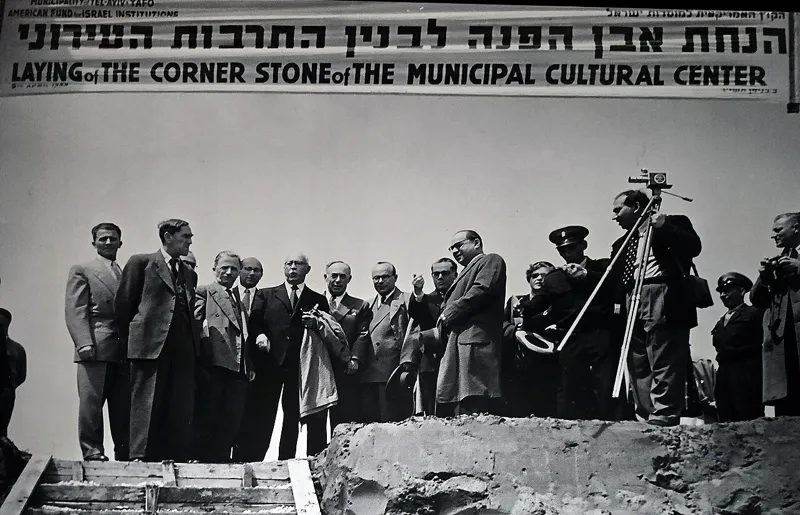
A Country Like No Other
Israel is a country of contradictions. It is ancient and brand-new. It is smaller than New Jersey but looms larger in the world’s consciousness than countries a hundred times its size. It is a democracy that has been in a state of conflict since its founding. It is a high-tech powerhouse where ultra-Orthodox families live without smartphones. It is, in short, endlessly fascinating.
Understanding Israeli culture requires understanding that this is a society built by immigrants from over 70 countries, united by a shared Jewish identity but divided by almost everything else — ethnicity, religiosity, politics, cuisine, music, and the fundamental question of what kind of country Israel should be.
The Ingathering of Exiles
When Israel declared independence in 1948, its Jewish population was about 650,000. Within three years, it doubled — absorbing Holocaust survivors from Europe, entire Jewish communities from Iraq, Yemen, Libya, and other Arab countries, and immigrants from everywhere between Argentina and Australia.
This kibbutz galuyot (ingathering of exiles) created a society of extraordinary diversity. Ashkenazi Jews from Eastern Europe brought Yiddish, socialist politics, and a European cultural orientation. Mizrahi Jews from the Middle East and North Africa brought Arabic, traditional religious observance, and cuisines that would eventually transform Israeli food culture. Ethiopian Jews brought ancient traditions and Amharic. Soviet Jews brought classical music training and engineering expertise.
The early state’s approach to this diversity was the melting pot (kur hitukh): everyone would become Israeli, speak Hebrew, serve in the army, and shed their Diaspora identities. The Ashkenazi-dominated establishment often treated Mizrahi culture as inferior. This created deep wounds — social, economic, and political — that Israel is still processing.
Today, the melting pot ideology has given way to a more multicultural approach. Mizrahi culture — music, food, religious traditions — is celebrated. Ethiopian heritage is recognized. The diversity that was once seen as a problem is increasingly seen as a strength.
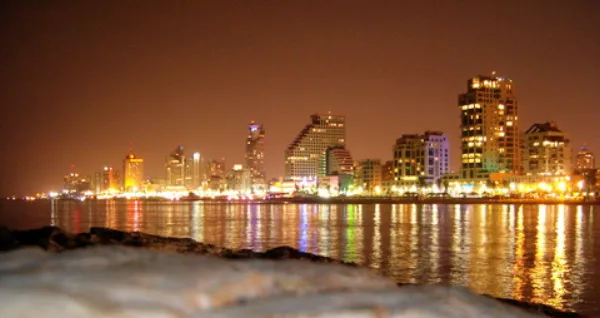
The Startup Nation
Israel has more startups per capita than any other country on earth. It attracts more venture capital per person than the United States. Israeli innovations include Waze (navigation), Mobileye (autonomous driving), the USB flash drive, the PillCam (capsule endoscopy), cherry tomatoes (yes, really — developed at the Volcani Institute), and drip irrigation technology that has transformed agriculture worldwide.
How did a tiny country with no natural resources and hostile neighbors become a global technology powerhouse? Dan Senor and Saul Singer’s book Start-up Nation identifies several factors:
- Military service: The IDF, particularly elite intelligence and technology units like Unit 8200, trains young Israelis in cutting-edge tech, leadership, and problem-solving. Veterans of these units go on to found startups
- Chutzpah culture: Israeli culture rewards questioning authority, challenging assumptions, and taking risks. A junior employee contradicting a CEO is normal — even expected
- Immigration: Immigrants are natural risk-takers. A country of immigrants is a country of people comfortable with uncertainty
- Necessity: Surrounded by enemies and lacking resources, Israel had to innovate or perish. Desalination, missile defense, and agricultural technology were born from existential need
- University research: Institutions like the Technion, Weizmann Institute, and Hebrew University produce world-class research
The IDF Experience
Mandatory military service is perhaps the single most defining feature of Israeli society. At age 18, most Jewish Israelis enter the Israel Defense Forces — men for about 32 months, women for about 24 months. They then serve in the reserves for years afterward.
The IDF is not just a military; it is a social institution. It is where Israelis from different backgrounds — kibbutznik and city kid, Ashkenazi and Mizrahi, rich and poor — are thrown together and forced to cooperate. Lifelong friendships and business partnerships are forged in military service. The social networks created in the IDF are a crucial component of the startup ecosystem.
The military experience also shapes Israeli character. Israelis are famously direct — blunt to the point of rudeness by American standards. They are comfortable with improvisation and skeptical of rigid hierarchy. A culture in which 19-year-olds make life-and-death decisions produces adults who are decisive, assertive, and sometimes impatient with bureaucracy.
Food Culture
Israeli food has become one of the world’s most exciting cuisines — a fusion of Middle Eastern, Mediterranean, North African, and Eastern European traditions, reinvented with local ingredients and modern technique.
The foundations are Middle Eastern: hummus, falafel, shakshuka (eggs poached in spiced tomato sauce), tahini, and the fresh salads that appear at every meal. Add Mizrahi influences — Yemenite jachnun (slow-baked pastry), Iraqi kubbeh (stuffed dumplings), Moroccan chraime (spiced fish) — and the Ashkenazi traditions of challah, schnitzel (adopted and adapted), and baked goods.
The shuk (market) is the cathedral of Israeli food culture. Jerusalem’s Machane Yehuda and Tel Aviv’s Carmel Market are sensory experiences — mountains of spices, fresh-baked bread, dried fruits, olives, and cheese. In recent years, Israeli chefs like Yotam Ottolenghi (based in London) and Michael Solomonov (based in Philadelphia) have introduced Israeli cuisine to the global stage.

Religious Diversity and Tension
Israeli society is divided along a religious spectrum that profoundly shapes politics and daily life:
- Hiloni (secular): About 45% of Jewish Israelis identify as secular. Many observe some traditions (Passover seder, Yom Kippur fast) while rejecting religious authority
- Masorti (traditional): About 25% — observant of many traditions but not strictly halakhic. Disproportionately Mizrahi
- Dati (religious/Modern Orthodox): About 16% — Shabbat-observant, engaged with modern society, often wearing kippot
- Haredi (ultra-Orthodox): About 14% — strictly observant, often living in separate communities, with high birth rates that are changing Israel’s demographics
The relationship between these groups is Israel’s deepest internal fault line. Disputes over Shabbat observance, military service exemptions for the ultra-Orthodox, marriage law (there is no civil marriage in Israel), and control of religious institutions are constant sources of political conflict.
Arts and Entertainment
Israeli culture punches far above its weight:
- Literature: Writers like Amos Oz, David Grossman, and Etgar Keret are internationally acclaimed
- Film: Israeli cinema has produced Oscar-nominated works like Waltz with Bashir, Foxtrot, and The Band’s Visit
- Television: Fauda, Shtisel, and Tehran have found global audiences. Many American hits (Homeland, In Treatment) are based on Israeli originals
- Music: From the Yemenite-influenced Ofra Haza to the electronic scene of Tel Aviv’s clubs, Israeli music is diverse and innovative
The Israeli Paradox
Israel is a society that lives with extraordinary intensity. The proximity of danger — the memory of wars, the reality of terrorism, the ongoing conflict — creates a culture that values the present moment. Israelis work hard, play hard, argue passionately, and build families with an urgency shaped by history.
The contradictions are real: a democracy with an occupation, a startup nation with deep inequality, a Jewish state where the meaning of “Jewish” is fiercely contested. But the energy, creativity, and sheer stubbornness of Israeli society make it one of the most dynamic cultures on earth. Love it or argue with it — and Israelis would tell you that arguing with it is a form of loving it.
Frequently Asked Questions
Why is Israel called the 'startup nation'?
Israel has more startups per capita than any other country and attracts more venture capital per person than anywhere else. This phenomenon is attributed to several factors: mandatory military service (especially in tech units like 8200), a culture that encourages risk-taking and questioning authority, immigration-driven innovation, strong university research, and government investment in technology. Israeli tech companies and innovations include Waze, Mobileye, the USB flash drive, and drip irrigation.
Do all Israelis serve in the army?
Most Jewish Israelis serve in the Israel Defense Forces (IDF) — men for approximately 32 months and women for approximately 24 months, beginning at age 18. Arab citizens are exempt (though Druze men serve and Bedouin may volunteer). Ultra-Orthodox men have historically received deferrals for yeshiva study, though this policy is increasingly contested. Military service is a defining shared experience that shapes Israeli culture, social networks, and identity.
What languages are spoken in Israel?
Hebrew is Israel's primary official language, revived from ancient liturgical use to become a modern spoken language. Arabic was an official language until 2018 and retains a 'special status.' English is widely spoken and taught in schools. Due to immigration, you'll also hear Russian (about 1 million Russian-speaking Israelis), Amharic (Ethiopian community), French, and Spanish. Israeli society is remarkably multilingual.
Sources & Further Reading
Related Articles
Hebrew: The Language of the Torah and Israel
From an ancient sacred tongue to a modern spoken language — the remarkable story of Hebrew's revival.
The Birth of Modern Israel
From the rise of Zionism to the declaration of independence in 1948 — the story of how the Jewish homeland was reestablished.
Sephardi vs Ashkenazi: Two Streams of Jewish Life
Sephardi and Ashkenazi Jews share the same Torah but developed distinct languages, liturgies, foods, and customs across centuries of separation — two rivers from one source.