Israel: The Complete Guide to the Jewish Homeland
Everything you need to know about Israel — from ancient history to modern culture, from Jerusalem to Tel Aviv, from the founding to the present day. A comprehensive guide linking all Israel-related content.
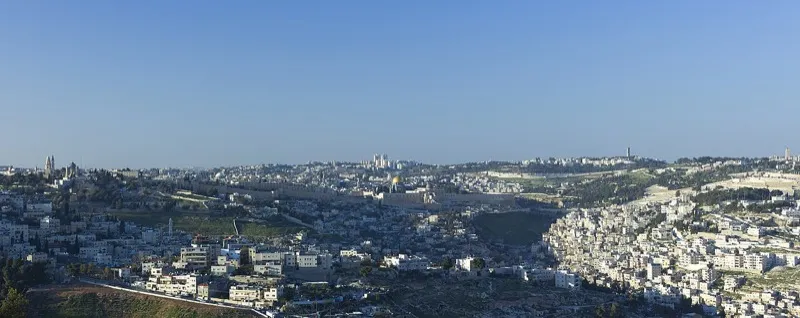
The Land and Its Meaning
For nearly two thousand years, Jews prayed to return to the land of Israel. Three times daily, in the Amidah prayer, they asked God to gather the exiles and restore Jerusalem. At the Passover Seder, they declared: “Next year in Jerusalem.” The land was not just a geographic location — it was a theological promise, a historical memory, and an unbreakable hope.
This complete guide covers every aspect of Israel — from its ancient roots to its modern reality. Use the links throughout to dive deeper into any topic.
Ancient Israel
The story begins with Abraham, to whom God promised the land of Canaan as an inheritance for his descendants. The patriarchs and matriarchs — Abraham and Sarah, Isaac and Rebecca, Jacob and Rachel and Leah — lived in the land. Their descendants became slaves in Egypt, were freed in the Exodus, and after forty years in the wilderness, entered the Promised Land under Joshua.
Key periods include:
- The Judges — a tribal period described in the Book of Judges
- The United Monarchy — David and Solomon, builders of Jerusalem and the First Temple
- The Divided Kingdom — Israel and Judah, the prophets
- Exile and Return — the Babylonian exile and Second Temple
- Roman Period — Masada, Bar Kokhba, destruction of the Temple
The Zionist Movement
Modern Israel’s founding begins with the Zionist movement of the late nineteenth century. Key topics include:
- Theodor Herzl and political Zionism
- The Balfour Declaration of 1917
- Chaim Weizmann and diplomatic Zionism
- The British Mandate period
- David Ben-Gurion and the declaration of independence
Modern Israel
Israel today is a vibrant, complex democracy. Explore its many dimensions:
- Cities: Jerusalem, Tel Aviv, Haifa
- Regions: The Galilee, The Negev and Eilat, the Dead Sea
- Culture: Israeli culture, Israeli food, Israeli music
- Military: The IDF, Operation Entebbe
- Politics: Israeli politics, the peace process
- Wars: 1948 War, Six-Day War, Yom Kippur War
- Innovation: Israeli startups and the “Start-Up Nation”
Living in Israel
For those considering a deeper connection:
- Making Aliyah — the immigration process
- Kibbutz life and volunteering
- Birthright Israel — free trips for young Jews
- Visiting Israel for the first time
Key Historical Events
- Camp David Accords — peace with Egypt
- Oslo Accords — the peace process
- Yitzhak Rabin — the peace-seeking prime minister
- Menachem Begin — from militant to peacemaker
Leaders and Figures
Israel’s story is told through its people:
- David Ben-Gurion — founding father
- Golda Meir — Israel’s first female prime minister
- Yitzhak Rabin — soldier turned peacemaker
- Gal Gadot — cultural ambassador to the world
Israel and Jewish Identity
The relationship between Israel and world Jewry is one of the most important dynamics in modern Jewish life. Israel is both a physical refuge and a spiritual center — but it is also a source of debate, disagreement, and passionate argument. Like the Jewish tradition itself, Israel is not a simple story. It is a conversation — ongoing, unresolved, and absolutely essential.
For the full historical timeline, see our Jewish History: Complete Timeline.
Frequently Asked Questions
When was Israel founded?
The State of Israel declared independence on May 14, 1948 (5 Iyar 5708 on the Hebrew calendar). David Ben-Gurion read the Declaration of Independence in Tel Aviv. The United States recognized Israel within minutes, and the new state was immediately attacked by five Arab armies in the 1948 War of Independence.
What is the significance of Jerusalem?
Jerusalem is Judaism's holiest city — the site of the First and Second Temples, the location of the Western Wall, and the spiritual center of Jewish prayer for over three thousand years. Jews around the world pray facing Jerusalem, and the Passover Seder ends with 'Next year in Jerusalem.' The city is also sacred to Christians and Muslims.
What is the relationship between Israel and diaspora Jews?
Israel serves as a spiritual homeland and potential refuge for Jews worldwide. The Law of Return grants any Jew the right to immigrate (make aliyah) to Israel. The relationship between Israel and diaspora communities is complex, involving deep emotional bonds alongside political disagreements about Israeli policies.
Sources & Further Reading
Related Articles
Jerusalem: 3,000 Years of Faith, Conflict, and Hope
For three millennia, Jerusalem has been the spiritual heart of the Jewish people — and a city sacred to three faiths. Its story is one of devotion, destruction, and enduring hope.
The Birth of Modern Israel
From the rise of Zionism to the declaration of independence in 1948 — the story of how the Jewish homeland was reestablished.
Tel Aviv: The First Hebrew City and Israel's Beating Heart
From sand dunes to skyscrapers — how a small neighborhood north of Jaffa became the vibrant, secular, tech-driven capital of Israeli nightlife, cuisine, and innovation.