Jewish Wine and Kiddush Wine: A Complete Guide
Wine is woven into Jewish ritual — from Shabbat kiddush to the Passover seder's four cups. Here is everything you need to know about kosher wine, mevushal, Israeli wine regions, and Elijah's cup.
The Fruit of the Vine
Wine is not optional in Judaism — it is commanded. You cannot make kiddush without it. You cannot conduct a Passover seder without four cups. A wedding requires wine. A circumcision requires wine. Wine marks virtually every significant moment in Jewish life, from the joyful to the solemn.
The blessing over wine — “Borei pri ha-gafen” (“Creator of the fruit of the vine”) — is recited more frequently than almost any other blessing in the Jewish liturgy. Wine elevates the ordinary to the sacred. It transforms a Friday night dinner into Shabbat. It turns a meal into a ceremony.
But Jewish wine is also a world of rules, traditions, controversies, and — in recent decades — an extraordinary quality revolution. Here is what you need to know.
Wine in Jewish Ritual
Kiddush (Shabbat and Holidays)
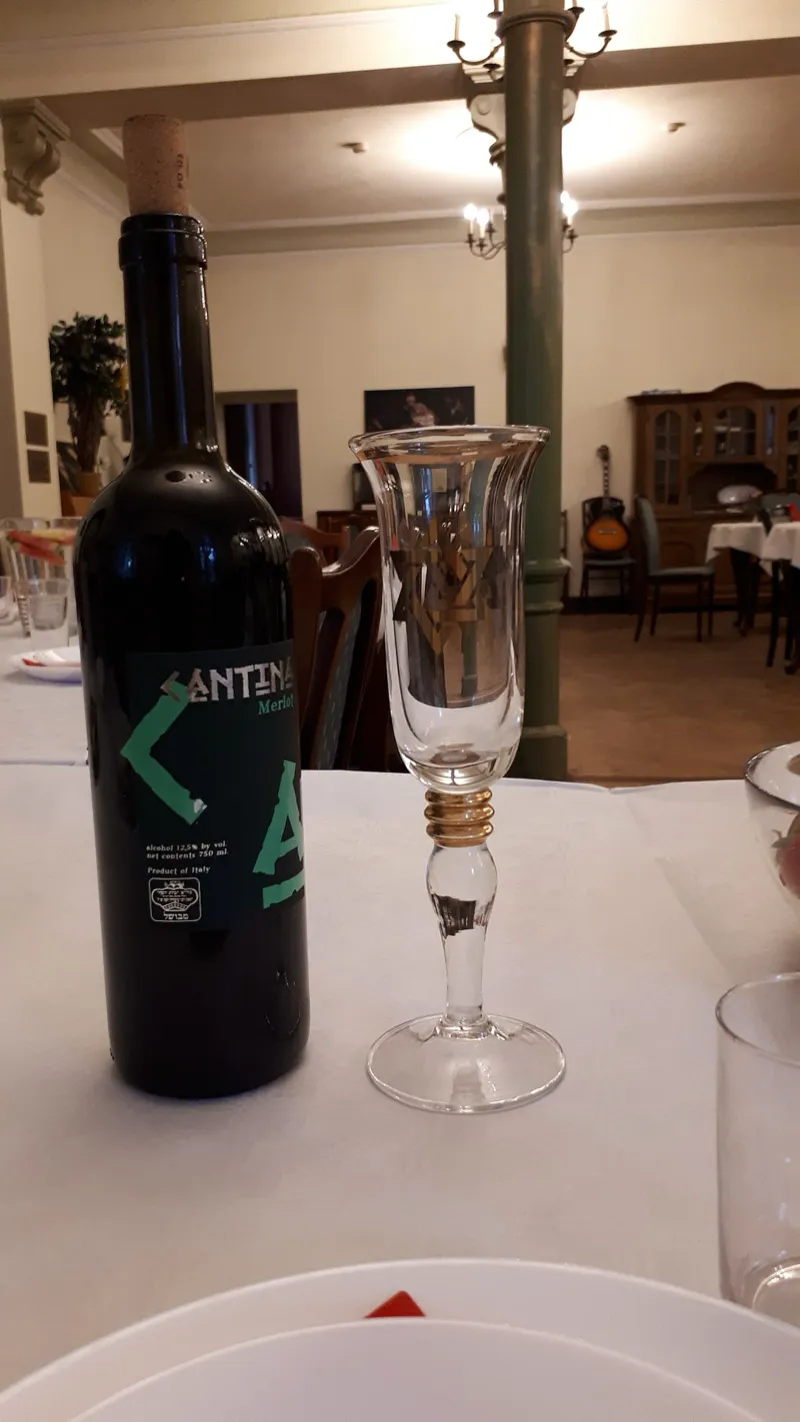
Every Shabbat begins with kiddush — a blessing recited over a full cup of wine (or grape juice) that sanctifies the day. Friday night kiddush includes a passage from Genesis about God resting on the seventh day, followed by the blessing over wine. Shabbat morning kiddush is shorter.
The kiddush cup should hold at least a revi’it — approximately 3.3 fluid ounces (98 ml). The person making kiddush drinks most of the cup, and the rest is shared.
The Four Cups (Passover Seder)
The seder requires four cups of wine, corresponding to four expressions of redemption in Exodus 6:6-7. Each cup is drunk at a specific point in the seder — after kiddush, after the Maggid (telling), after grace, and after Hallel (psalms).
The wine should be red (representing the blood of the Passover sacrifice and the blood of the Israelite babies killed by Pharaoh), though white wine is acceptable. Each cup must contain at least a revi’it, and most of it should be drunk.
Elijah’s Cup
A fifth cup — Kos shel Eliyahu (Elijah’s Cup) — is filled but not drunk. It sits in the center of the table, and toward the end of the seder, the door is opened for the prophet Elijah, who tradition says will announce the coming of the Messiah. In some families, everyone pours a little wine from their own cup into Elijah’s cup, symbolizing that redemption is a collective effort.
Other Occasions
Wine is also used at:
- Weddings — the couple drinks from a shared cup under the chuppah
- Brit milah — a drop of wine is placed on the baby’s lips
- Havdalah — the ceremony ending Shabbat includes wine
- Blessings and celebrations — any seudat mitzvah (commanded meal) includes wine
What Makes Wine Kosher?

Kosher wine is not blessed by a rabbi. The kosher certification involves specific production requirements:
The Rules
- Sabbath-observant Jews must handle the wine from the time the grapes are crushed until the wine is bottled. Non-Jewish workers can tend the vineyard and harvest the grapes, but once juice flows, only observant Jews may touch the wine or the equipment.
- All ingredients and equipment must be kosher. Fining agents (used to clarify wine) cannot include gelatin (animal-derived) or casein (dairy) unless specifically certified. Many kosher wines use bentonite clay or egg whites instead.
- No non-kosher additives. Some winemaking processes use non-kosher products; kosher production avoids them.
- Sabbatical year (Shmita). In Israel, grapes grown during the seventh year (shmita) have special holiness and require additional handling rules.
Mevushal (Cooked)
Under Jewish law, wine that has been touched or poured by a non-Jew (or a non-observant Jew) may lose its kosher status. To solve this practical problem, wine can be made mevushal — flash-pasteurized to a specific temperature. Mevushal wine can be handled by anyone without affecting its kosher status.
Modern flash-pasteurization is done so quickly (using plate heat exchangers) that the impact on wine quality is minimal — far less than the old practice of literally boiling the wine. Many high-quality kosher wines are now mevushal.
Israeli Wine Regions
Israel has become a serious player in the global wine world. The key regions:
Golan Heights
High altitude, volcanic soil, cool nights. Home to the Golan Heights Winery (Yarden, Gamla), which launched Israel’s quality wine revolution in the 1980s. Known for excellent Cabernet Sauvignon, Merlot, and Chardonnay.
Upper Galilee
Mediterranean climate with significant elevation. Produces elegant reds and crisp whites. Home to Galil Mountain, Dalton, and numerous boutique wineries.
Judean Hills
The region around Jerusalem, with ancient winemaking roots. The modern wine industry here is relatively young but producing exceptional results. Domaine du Castel is one of Israel’s most acclaimed wineries.
Negev Desert
High desert conditions with extreme temperature swings. Surprising quality — wineries like Ramat Negev and Carmey Avdat produce distinctive wines in one of the world’s most unlikely wine regions.
Coastal Plain (Shimshon/Samson)
The largest wine region by volume, though not the most prestigious. Many of the large-scale kosher wine brands (Carmel, Barkan) produce much of their wine here.
A Brief History
Wine and the Jewish people go back to the beginning — literally. Noah’s first act after the flood was to plant a vineyard (Genesis 9:20). The Land of Israel was praised in the Torah as a land of “vines and fig trees.” The ancient Israelites were avid winemakers, and wine libations were part of the Temple service.
During the diaspora, Jewish winemakers played significant roles in European viticulture — particularly in Spain before the expulsion, in Bordeaux, and in parts of Germany and Eastern Europe. The modern kosher wine industry began in the late 19th century with Baron Edmond de Rothschild’s investment in Israeli wineries (Carmel).
For much of the 20th century, “kosher wine” in America meant sweet Concord grape wine — Manischewitz and Kedem were household names. The quality revolution began in the 1980s with the Golan Heights Winery and has accelerated dramatically since. Today, kosher wines win international awards and compete with the best non-kosher wines in the world.
Choosing Wine for Jewish Occasions
For kiddush: Any kosher wine or grape juice works. If using wine, a good medium-bodied red (Cabernet, Merlot) or a crisp white is appropriate. The sweet stuff is fine if that is what you like.
For the seder: Red wine is traditional. You will drink four cups, so choose something you enjoy but pace yourself. Many people dilute the wine or alternate between wine and grape juice.
For gifts: A quality Israeli wine makes an excellent gift for a Jewish host. Look for Golan Heights Winery (Yarden), Recanati, Psagot, or Covenant (from California). Budget-friendly: Barkan Reserve or Galil Mountain.
Summing Up
Wine in Judaism is never just a drink — it is a vessel for sanctification, celebration, and memory. From the kiddush that welcomes Shabbat to the four cups that retell the Exodus to the cup that waits for Elijah, wine carries the weight of Jewish time and hope. And thanks to a quality revolution spanning Israeli hillsides and kosher wineries worldwide, that vessel has never been more delicious.
Frequently Asked Questions
Why does kosher wine have a reputation for being sweet?
Historically, many American kosher wines were made from Concord grapes — a native American variety that produces a sweet, grapey wine. Brands like Manischewitz and Kedem became synonymous with kosher wine, and their sweet style shaped the perception. Today, the kosher wine world has exploded. World-class dry wines are produced in Israel, France, California, and beyond. The sweet stuff is still available (and some people love it), but it no longer defines the category.
What does mevushal mean and why does it matter?
Mevushal means 'cooked' or 'boiled.' Under Jewish law, wine that has been flash-pasteurized (heated to a specific temperature) loses its status as 'stam yayin' (ordinary wine) and can be handled and poured by anyone — Jewish or not — without losing its kosher status. Non-mevushal kosher wine can only be opened and poured by Sabbath-observant Jews. For catered events and restaurants, mevushal wines are much more practical. Modern flash-pasteurization is so quick that it has minimal impact on wine quality.
Can grape juice be used instead of wine for kiddush?
Yes. Grape juice is a perfectly valid substitute for wine in kiddush and at the Passover seder. This is especially common for children, people who do not drink alcohol, and those with health concerns. The key requirement is that the beverage be made from grapes. Some authorities prefer wine because the blessing specifically mentions 'the fruit of the vine,' but grape juice qualifies as the fruit of the vine.
Sources & Further Reading
Related Articles
Kashrut: The Jewish Dietary Laws
More than just 'no pork' — kashrut is a comprehensive system that transforms eating into a sacred act.
Passover (Pesach): The Festival of Freedom
The story of the Exodus comes alive each spring as Jewish families gather for the Seder — the most widely observed Jewish ritual.
Shabbat: The Weekly Day of Rest
Every week, Jewish life pauses for 25 hours of rest, reflection, and togetherness — discover the beauty of Shabbat.