Ashkenazi Cuisine: The Soul Food of Eastern European Jewry
Gefilte fish, brisket, kugel, cholent, matzo ball soup, and rugelach — Ashkenazi cuisine turned poverty into creativity and created some of the most iconic comfort foods in the world.
Cooking with What You Had
Ashkenazi cuisine — the food tradition of Jews from Germany, Poland, Russia, Lithuania, Hungary, Romania, and the rest of Eastern Europe — is not fancy. It was never meant to be. It was the cuisine of people who were often poor, frequently persecuted, and always constrained by the rules of kashrut in climates where fresh ingredients were seasonal at best.
And yet, from these limitations came some of the most iconic comfort foods in the world. Chicken soup that heals the sick. Brisket that falls apart under a fork. Challah that glows golden on a Friday night table. Bagels that conquered New York. Deli sandwiches that stack pastrami to absurd heights. Rugelach that disappear from the plate before you can take a second one.
This is food born from necessity, elevated by ingenuity, and preserved by love.
The Foundations
Schmaltz: The Essential Fat
You cannot understand Ashkenazi cooking without understanding schmaltz — rendered chicken fat. Because kashrut prohibits mixing meat and dairy, Ashkenazi cooks could not use butter in meat dishes. Olive oil was expensive and hard to find in Eastern Europe. Lard was treif (non-kosher). So chicken fat became the all-purpose cooking medium.
Schmaltz was used for frying, baking, sauteing, and even spreading on bread (schmaltz on rye bread with a sprinkle of salt was a common snack). The crispy bits of skin and onion left after rendering — gribenes — were a coveted treat, essentially Jewish cracklings.
The flavor schmaltz imparts is unmistakable: rich, savory, deeply comforting. It is the secret ingredient in the best matzah balls, the best chopped liver, and the best roasted potatoes in the Ashkenazi repertoire.
Onions: The Other Essential
If schmaltz is the fat of Ashkenazi cooking, onions are its backbone. Cheap, available year-round, and infinitely versatile, onions appear in virtually every Ashkenazi dish — raw, sauteed, caramelized, or roasted. The combination of onions slowly cooked in schmaltz is the aroma of an Ashkenazi kitchen.
Root Vegetables and Potatoes
Eastern European Jews cooked with what grew in cold climates: potatoes, carrots, beets, turnips, parsnips, and cabbage. These sturdy vegetables stored well through long winters and formed the base of soups, stews, and side dishes. The potato, in particular, became central after its introduction to Eastern Europe in the 18th century — latkes, kugel, knishes, and mashed potatoes with schmaltz are all testament to its versatility.
The Classic Dishes
Challah
The braided bread of Shabbat — enriched with eggs and sweetened slightly with honey or sugar. Ashkenazi challah is eggy, slightly sweet, and pillowy soft. It is pulled apart at the Shabbat table after the blessing over bread, and the leftovers become French toast, bread pudding, or croutons.
Chicken Soup (Jewish Penicillin)
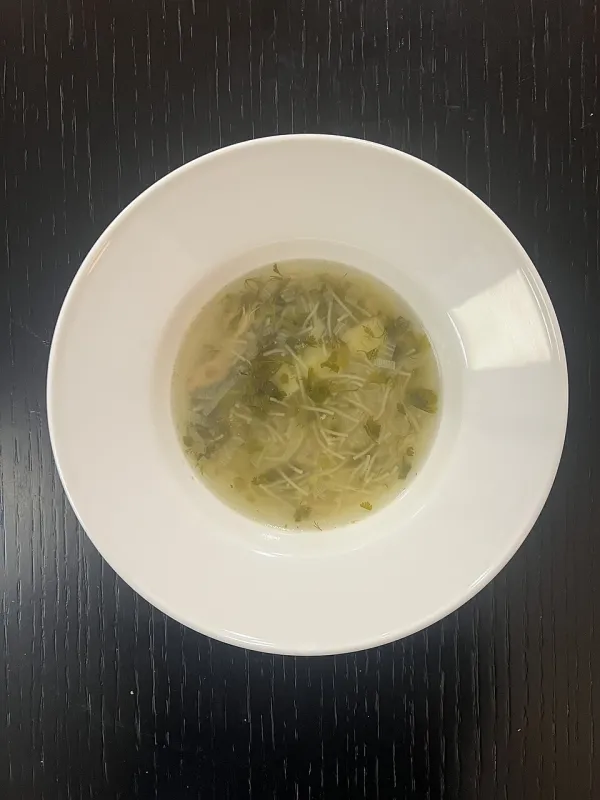
The Ashkenazi cure-all. A whole chicken simmered for hours with carrots, celery, onions, parsnip, dill, and sometimes parsley root. The broth is golden, clear, and restorative. Served with matzah balls, egg noodles (lokshen), or kreplach (dumplings). There is a reason it is called Jewish penicillin — and some scientific evidence that it actually helps with colds.
Gefilte Fish
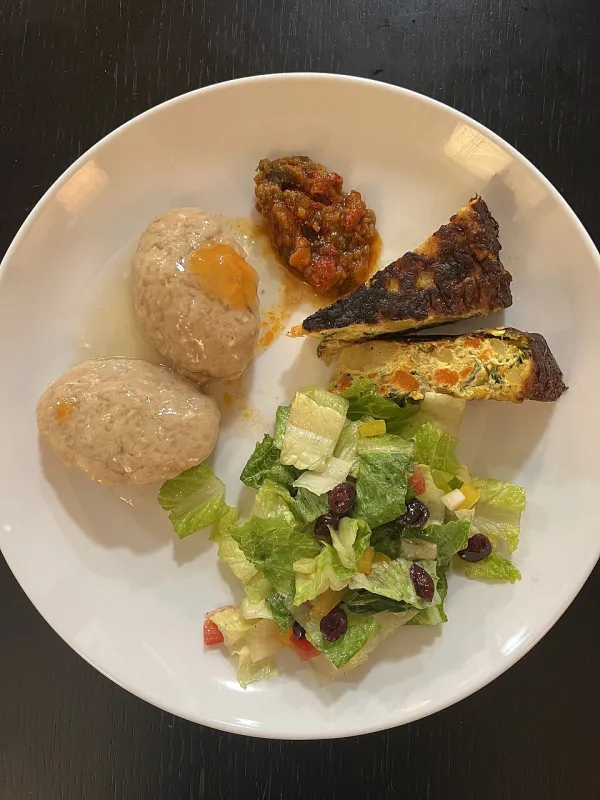
Perhaps the most polarizing dish in Jewish cuisine. Originally, gefilte fish was a whole fish stuffed with a seasoned ground fish mixture — the name means “filled fish” in Yiddish. Over time, the preparation simplified: the fish mixture is formed into balls or loaves and poached in fish stock.
Traditional gefilte fish uses a combination of whitefish, pike, and carp. It is served cold with horseradish (the spicier the better). People either love it or have strong opinions about it. There is no middle ground.
Brisket
The centerpiece of every Jewish holiday table. Brisket is a tough, cheap cut of beef that becomes extraordinarily tender with long, slow cooking. Ashkenazi brisket is typically braised with onions, carrots, and a sweet-savory sauce (tomato-based, onion-based, or both). It cooks for hours — sometimes overnight — and the result is meat that falls apart with a fork.
Every family has a brisket recipe. Every family’s brisket recipe is the best. This is non-negotiable.
Kugel
A baked pudding that can be sweet or savory. Lokshen kugel (noodle kugel) is the most common — egg noodles baked with eggs, sugar, cinnamon, and sometimes raisins or cottage cheese. Potato kugel is grated potatoes baked with eggs and onions until crispy on top and creamy inside. Yerushalmi (Jerusalem) kugel is made with caramelized sugar and black pepper — sweet and spicy simultaneously.
Cholent
The ultimate Shabbat food. Because cooking is prohibited on Shabbat, Ashkenazi Jews developed cholent — a stew of meat, potatoes, barley, beans, and onions that goes into the oven before Shabbat on Friday afternoon and slow-cooks overnight until Saturday lunch.
Twelve-plus hours of cooking transforms the ingredients into something greater than the sum of its parts. The meat shreds, the potatoes melt, the barley absorbs everything, and the whole thing develops a deep, caramelized intensity that no other cooking method can achieve.
Cholent traditions vary — some families add kishke (stuffed derma), eggs in the shell (which turn brown after hours of cooking), or sweet potatoes. The Sephardic equivalent is called hamin or dafina and includes different spices and ingredients.
Chopped Liver
Chicken livers sauteed with onions in schmaltz, then chopped (or processed) with hard-boiled eggs. Rich, savory, and deeply unfashionable — which is exactly what makes it great. Served on matzah, rye bread, or crackers.
Rugelach
Cream-cheese dough rolled around fillings of cinnamon-sugar, chocolate, nuts, or jam, then shaped into crescents and baked. Rugelach is the Ashkenazi cookie that conquered the world. See our rugelach recipe for details.
Deli Culture
The Ashkenazi deli — from New York’s Katz’s to Montreal’s Schwartz’s — is one of the great American food institutions. Built by Jewish immigrants in the late 19th and early 20th centuries, the deli tradition includes:
- Pastrami — beef brisket cured, smoked, and steamed, piled high on rye bread
- Corned beef — salt-cured brisket, also served on rye
- Smoked fish — lox (cold-smoked salmon), whitefish, sable, kippered salmon
- Knishes — pastry pockets filled with potato, meat, or kasha (buckwheat)
- Pickles — half-sour and full-sour, a staple of every deli table
- Matzo ball soup — the deli version of grandmother’s chicken soup
The deli tradition is both cultural landmark and endangered species. Many legendary delis have closed in recent decades, but a new generation of Jewish food entrepreneurs is reviving and reimagining the tradition.
Poverty Into Creativity
The genius of Ashkenazi cuisine is transformation. Take the cheapest ingredients — chicken carcasses, tough brisket, potatoes, onions — and through patience, technique, and schmaltz, turn them into dishes that people crave across generations. Every classic Ashkenazi dish tells the same story: we had very little, and we made it magnificent.
That story is worth preserving — not as nostalgia, but as a living tradition that continues to evolve while honoring the kitchens and the cooks who came before.
Summing Up
Ashkenazi cuisine is Jewish soul food — humble, hearty, and built on the foundation of making do with what you have. It was shaped by cold climates, deep poverty, the demands of kashrut, and the weekly miracle of Shabbat. The result is a food tradition that punches far above its weight: comfort food that defines a culture, sustains a community, and — at its best — tastes like home.
Frequently Asked Questions
What is the difference between Ashkenazi and Sephardic cuisine?
Ashkenazi cuisine developed in the cold climates of Eastern Europe — think hearty, heavy, and preserved. Root vegetables, potatoes, cabbage, rye bread, and preserved fish. Sephardic cuisine developed in the warmer Mediterranean, North Africa, and Middle East — lighter, spicier, with more fresh vegetables, olive oil, herbs, rice, and legumes. Both are shaped by kashrut but adapted to completely different ingredients and climates.
Why is Ashkenazi food so heavy?
Three reasons: climate, poverty, and Shabbat. Cold Eastern European winters demanded calorie-dense food. Poverty meant stretching cheap ingredients (potatoes, onions, chicken fat) as far as possible. And Shabbat prohibits cooking, so dishes like cholent were designed to cook overnight and stay warm. Heavy food was not a choice — it was survival.
What is schmaltz and why is it important?
Schmaltz is rendered chicken fat — the Ashkenazi cooking fat of necessity and choice. Because kashrut prohibits mixing meat and dairy, butter could not be used in meat dishes. And olive oil was expensive and scarce in Eastern Europe. So Ashkenazi Jews rendered chicken fat into schmaltz, using it for frying, baking, and spreading on bread. The crackling bits left after rendering are called gribenes — essentially Jewish chicharrones. Schmaltz gives Ashkenazi food its distinctive rich, savory flavor.
Sources & Further Reading
Related Articles
Challah: The Bread of Shabbat
Golden, braided, and fragrant — challah is the crown jewel of the Shabbat table and a beloved symbol of Jewish life.
Kashrut: The Jewish Dietary Laws
More than just 'no pork' — kashrut is a comprehensive system that transforms eating into a sacred act.
Shabbat Foods: A Culinary Journey Through the Day of Rest
From Friday night chicken soup to Saturday afternoon cholent — discover the beloved dishes that make Shabbat the most delicious day of the week.