Rosh Hashanah: The Complete Guide to the Jewish New Year
Everything about Rosh Hashanah — the shofar, teshuvah, tashlich, the meals, the prayers, the customs, and why the Jewish New Year is less celebration and more soul-searching.
The Birthday of the World
On the first day of the Hebrew month of Tishrei — usually falling in September or early October — Jews around the world observe Rosh Hashanah, the Jewish New Year. But unlike the champagne-soaked celebrations of January 1st, Rosh Hashanah is not primarily a party. It is a courtroom.
According to Jewish tradition, on Rosh Hashanah, God opens three books: one for the thoroughly righteous, one for the thoroughly wicked, and one for everyone in between. The righteous are inscribed immediately for a good year. The wicked are sealed for a difficult one. And the vast majority — the in-between — have ten days (until Yom Kippur) to tip the balance through teshuvah (repentance), tefillah (prayer), and tzedakah (charity).
This is not a myth the tradition takes lightly. The greeting on Rosh Hashanah is Shanah Tovah (“A Good Year”) or L’shanah tovah tikateivu — “May you be inscribed for a good year.” The metaphor of inscription is woven through every prayer, every meal, every custom.
Quick Facts About Rosh Hashanah
- Hebrew name: Rosh Hashanah (“Head of the Year”)
- Duration: 2 days (1-2 Tishrei), observed everywhere including Israel
- Alternative names: Yom Hadin (Day of Judgment), Yom Teruah (Day of Blowing the Shofar)
- Shofar blasts: 100 sounds traditionally blown during services
- Symbolic foods: 7+ traditional simanim (symbolic foods) eaten
- Talmudic tractate: Entire tractate Rosh Hashanah (35 pages) dedicated to the holiday
- Global observance: Celebrated by 15+ million Jews worldwide
- Hebrew calendar: Marks year 5787 (as of 2026) since creation
- Ten Days of Repentance: Period from Rosh Hashanah through Yom Kippur
- Liturgy: Over 50 additional prayers and poems added to services
- Historical span: Observed for over 2,500 years since Second Temple period
Before Rosh Hashanah: The Month of Elul
Preparation begins a full month before the holiday. During Elul — the month preceding Tishrei — Jews engage in spiritual preparation. Sephardi communities recite Selichot (penitential prayers) for the entire month. Ashkenazi communities begin Selichot the Saturday night before Rosh Hashanah (or two Saturdays before, if the holiday falls early in the week).
The shofar is sounded every morning during Elul in many communities, serving as a spiritual alarm clock: wake up, examine your life, prepare for judgment.
The Shofar: The Sound That Shatters
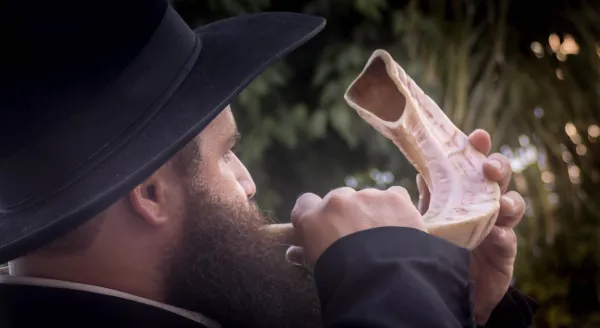
The shofar — a ram’s horn — is the central ritual object of Rosh Hashanah. Its sound is unlike any musical instrument: raw, primal, sometimes faltering, always urgent. The Torah calls Rosh Hashanah Yom Teruah — “the day of the blast.”
One hundred shofar blasts are traditionally sounded during Rosh Hashanah services, in three types:
- Tekiah — a single, long blast
- Shevarim — three medium, broken blasts
- Teruah — nine or more short, staccato blasts
- Tekiah Gedolah — an extended final blast, held as long as the blower’s breath allows
Maimonides wrote that the shofar carries a message: “Awake, sleepers, from your sleep! Examine your deeds, return in repentance, and remember your Creator.”
The Prayers
Rosh Hashanah services are the longest of the Jewish year — often lasting five or more hours. The central prayer (Musaf) is organized around three themes:
- Malkhuyot (Sovereignty) — declaring God as King of the universe
- Zikhronot (Remembrance) — God remembers every deed, every thought, every person
- Shofarot (Shofar blasts) — the sound of revelation at Sinai and the future redemption
The most famous prayer of Rosh Hashanah is Unetanneh Tokef: “On Rosh Hashanah it is written, and on Yom Kippur it is sealed — who will live and who will die, who by fire and who by water…” This prayer, according to legend composed by an 11th-century martyr, is among the most emotionally powerful in all of Jewish liturgy.
The Meals
Symbolic Foods (Simanim)
Rosh Hashanah meals are built around symbolic foods — each accompanied by a brief prayer expressing a hope for the new year:
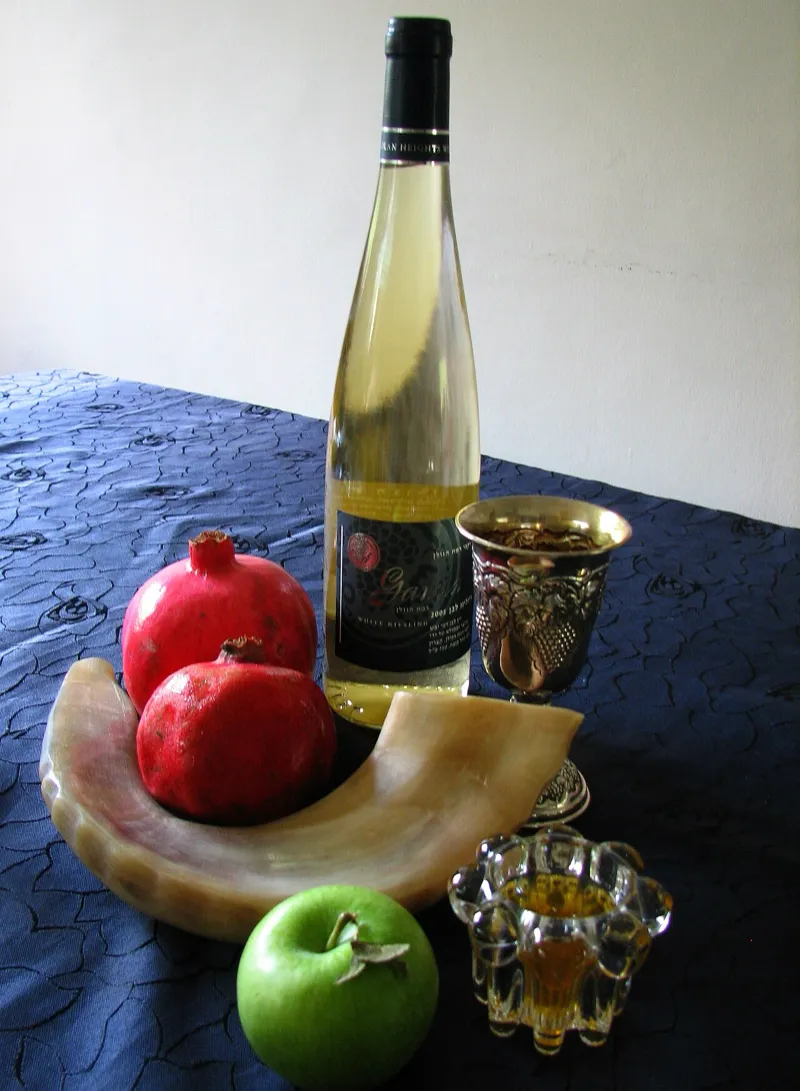
- Apple dipped in honey — “May it be Your will to renew for us a good and sweet year”
- Round challah — symbolizing the cycle of the year (and often enriched with raisins for sweetness)
- Pomegranate — “May our merits be as plentiful as the seeds of the pomegranate”
- Fish head — “May we be as the head and not the tail”
- Dates (tamar) — “May our enemies be consumed” (a play on the Hebrew root)
- Leeks or beets — “May our adversaries be cut off”
- New fruit — a fruit not yet eaten that season, over which the Shehecheyanu blessing is recited
Sephardi communities have particularly elaborate seder tables for Rosh Hashanah night, with dozens of symbolic foods.
The Meals Themselves
The festive meals are warm, generous, and sweet. Honey cake replaces the usual desserts. Apple cake fills the house with the smell of cinnamon. Fish, meat, and salads crowd the table. The mood is hopeful but sober — this is not a holiday of abandon but of intention.
Tashlich: Casting Away Sins
On the first afternoon of Rosh Hashanah (or the second, if the first falls on Shabbat), many Jews perform Tashlich — walking to a body of flowing water (a river, stream, or ocean) and symbolically casting breadcrumbs into the water while reciting verses from the prophet Micah: “You will cast (tashlikh) all their sins into the depths of the sea.”
The custom is not mentioned in the Talmud and may have folk origins, but it has become a beloved tradition. The image of sins carried away by water — dissolving, disappearing — is powerfully cathartic.
The Ten Days of Repentance
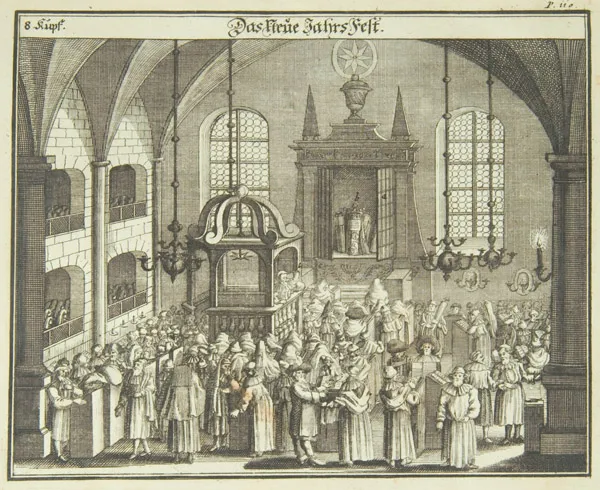
Rosh Hashanah opens a ten-day period called the Aseret Yemei Teshuvah — the Ten Days of Repentance — which culminates on Yom Kippur. During these days, Jews are encouraged to:
- Examine their behavior from the past year
- Seek forgiveness from anyone they have wronged (God can forgive sins against God, but sins against other people require the injured party’s forgiveness)
- Make concrete commitments to change
- Increase prayer, charity, and acts of kindness
Special additions are made to the daily prayers, and the phrase “inscribe us in the Book of Life” recurs throughout.
The Deeper Meaning
Rosh Hashanah is not about guilt — it is about agency. The tradition insists that human beings have the power to change. No one is permanently defined by their worst moments. Teshuvah — often translated as “repentance” but literally meaning “return” — suggests that wrongdoing is a departure from your true self, and that you can always return.
The shofar is the sound of that return — wordless, because words are too small for what the soul needs to say. It bypasses the intellect and speaks directly to the heart. And when the final tekiah gedolah fades into silence, the message is clear: the book is open. The pen is in your hand. What will you write?
Frequently Asked Questions
What is the main purpose of Rosh Hashanah?
Rosh Hashanah is the Jewish Day of Judgment — the day when, according to tradition, God reviews the deeds of every human being and inscribes their fate for the coming year. It is a time for teshuvah (repentance), self-examination, and spiritual renewal. Unlike secular New Year celebrations, Rosh Hashanah is solemn and introspective.
Why do Jews eat apples and honey on Rosh Hashanah?
Dipping apple slices in honey symbolizes the hope for a sweet new year. The custom is accompanied by the prayer: 'May it be Your will to renew for us a good and sweet year.' Many other symbolic foods (simanim) are also eaten, including pomegranates (for merits), dates (for sweetness), and fish heads (to be 'the head and not the tail').
How many days is Rosh Hashanah?
Rosh Hashanah is observed for two days — the 1st and 2nd of the Hebrew month of Tishrei. Unlike other holidays that are observed for one day in Israel and two in the diaspora, Rosh Hashanah is two days everywhere, including Israel. The two days are considered 'one long day' (yoma arichta) in Jewish law.
Test Your Knowledge
Think you know this topic? Try our quiz!
Take the Jewish Holidays: Advanced Quiz →Key Terms
Sources & Further Reading
Related Articles
High Holiday Preparation: A Complete Guide for Elul and Beyond
The High Holidays don't start on Rosh Hashanah — they start a month earlier, in Elul. Here's your complete guide to spiritual and practical preparation, from selichot prayers to meal planning to the inner work of teshuvah.
Rosh Hashanah: The Jewish New Year
The sound of the shofar marks the beginning of the Jewish New Year — a time of reflection, prayer, and hope for the year ahead.
The Shofar: Everything You Need to Know About the Ram's Horn
The shofar — a ram's horn blown on Rosh Hashanah and Yom Kippur — is one of the oldest musical instruments in continuous use. Four distinct sounds, deep spiritual meaning, and a surprisingly difficult technique.