The Patriarchs: Abraham, Isaac, and Jacob — Fathers of a People
Abraham, Isaac, and Jacob — three men, three generations, three distinct personalities who became the spiritual DNA of the Jewish people and whose stories still shape Jewish identity today.

Three Men, One Story
Every Jewish prayer begins with them. “Blessed are You, Lord our God, God of Abraham, God of Isaac, and God of Jacob.” Three names. Three generations. Three utterly different men whose relationship with God established the spiritual DNA of an entire people.
The patriarchs are not distant mythological figures in Judaism. They are family. Jewish tradition speaks of them with a startling intimacy — their flaws as well as their virtues, their domestic quarrels alongside their divine encounters. They argue with God, deceive each other, play favorites among their children, and stumble through crises of faith. They are, in other words, deeply human. And that is precisely the point. The Jewish story begins not with gods or demigods but with a family — complicated, passionate, and profoundly real.
Abraham: The Revolutionary
Smashing the Idols
The Torah introduces Abraham (originally Abram) abruptly. God says: “Go forth from your land, your birthplace, and your father’s house to the land I will show you” (Genesis 12:1). No explanation of why Abraham was chosen. No backstory. Just a command and a leap of faith.
The Midrash fills in what the Torah leaves out. The most famous story tells of young Abraham in his father Terah’s idol shop. Left alone, Abraham smashes all the idols except the largest, then places a stick in the large idol’s hand. When Terah returns and demands an explanation, Abraham says the big idol destroyed the others. “That’s impossible,” Terah says. “They’re just statues.” Abraham replies: “Then why do you worship them?”
Whether or not this literally happened, the story captures Abraham’s essence. He was the first iconoclast — the first person, according to Jewish tradition, to look at a world full of gods and recognize that there could only be One.
The Covenant
God’s promises to Abraham are breathtaking in scope: “I will make of you a great nation, and I will bless you, and make your name great, and you shall be a blessing. I will bless those who bless you, and curse those who curse you, and through you all the families of the earth shall be blessed” (Genesis 12:2-3).
The covenant is sealed in a mysterious ritual (Genesis 15) where God passes between split animals as a smoking torch and flaming fire. Later, it is ratified through circumcision (Genesis 17) — the brit milah that marks every Jewish male to this day.
Chesed: Loving-Kindness
In Kabbalistic thought, Abraham embodies chesed — loving-kindness, generosity, outward-reaching love. His tent was open on all four sides so that travelers approaching from any direction would see they were welcome. When three strangers appeared in the heat of the day (Genesis 18), Abraham — ninety-nine years old and recovering from his own circumcision — ran to greet them, prepared a feast, and served them personally.
Abraham’s chesed extended even to arguing with God on behalf of the wicked cities of Sodom and Gomorrah. “Shall the Judge of all the earth not do justice?” (Genesis 18:25). He bargained God down from fifty righteous people to ten. It was not enough to save the cities, but the audacity of the argument — a human challenging God’s justice — became foundational to Jewish theology.
Isaac: The Quiet Patriarch
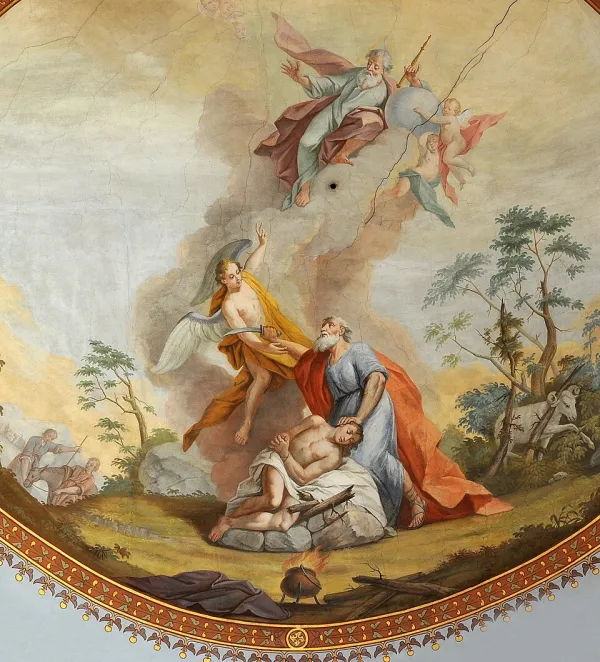
Isaac is the most enigmatic of the three. He speaks less than Abraham or Jacob. He initiates less. His most defining moment — the Binding of Isaac (Akeidah) — is something that happens to him rather than something he does. And yet Isaac is essential, and his quietness is itself a teaching.
The Akeidah’s Aftermath
After Abraham nearly sacrificed him on Mount Moriah, Isaac disappears from the narrative for a time. When he reemerges, he is digging wells — re-digging the wells his father had dug, which the Philistines had filled with dirt. When conflicts arise over the wells, Isaac moves on and digs new ones rather than fighting. He names one well Rehovot — “spacious” — saying “Now the Lord has made room for us” (Genesis 26:22).
This is not weakness. This is gevurah — strength, restraint, the courage to hold back. In Kabbalistic thought, Isaac represents the quality of din (judgment) and gevurah (strength) — not the strength of aggression but the strength of discipline, of self-containment, of enduring what must be endured.
Isaac was nearly killed by his own father in obedience to God. He did not become bitter. He did not rebel. He dug wells. He sustained what Abraham had started. In every generation, there are those whose role is not to launch revolutions but to maintain them — to do the quiet, unglamorous work of keeping the wells open. Isaac is their patriarch.
A Marriage Arranged by God
Isaac’s marriage to Rebecca is one of the Torah’s most beautiful stories. Abraham sends his servant to find a wife for Isaac from among his relatives in Mesopotamia. The servant devises a test: the right woman will not only give him water but will volunteer to water his camels — an act of extraordinary generosity (camels drink a lot). Rebecca passes the test spectacularly, and the match is made.
When Isaac first sees Rebecca, the text says he “brought her into the tent of Sarah his mother, and he took Rebecca, and she became his wife, and he loved her, and Isaac was comforted after his mother” (Genesis 24:67). It is one of the few explicit mentions of love in the Torah.
Jacob: The Complex One
If Abraham is the pioneer and Isaac is the sustainer, Jacob is the one who wrestles — with his brother, with his father-in-law, with his own nature, and ultimately with God.
The Stolen Blessing
Jacob’s story begins in conflict. He and his twin Esau struggled in the womb. Esau emerged first — red and hairy — and Jacob came out gripping Esau’s heel (the name Yaakov is related to akev, heel). Esau became a hunter; Jacob was a quiet man who dwelt in tents.
The pivotal episode: Rebecca, who had received a divine oracle that “the elder shall serve the younger,” engineers a deception. She dresses Jacob in Esau’s garments and covers his smooth skin with goat hair so that the blind Isaac will mistake him for Esau and give him the firstborn’s blessing. The deception works — and launches a family crisis that nearly gets Jacob killed.
Wrestling with God
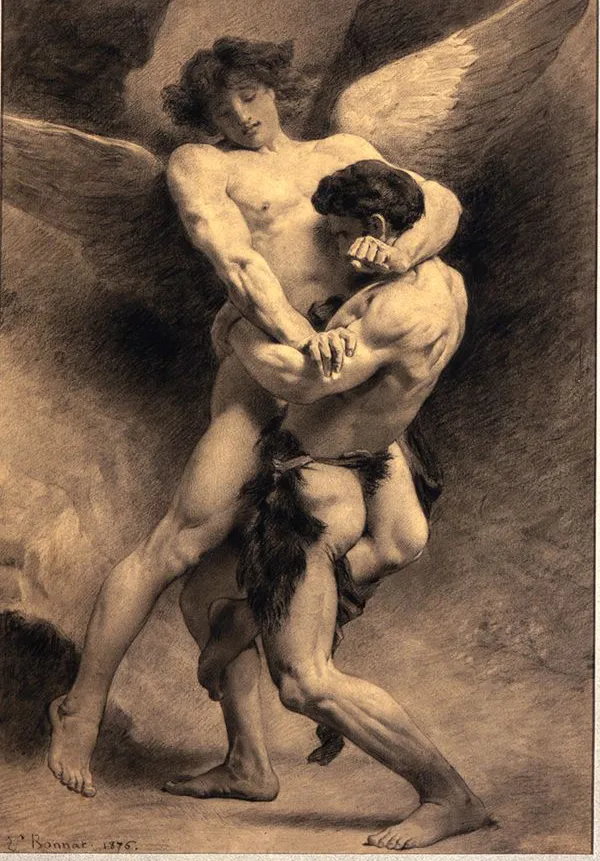
Jacob flees to his uncle Laban, works fourteen years for the woman he loves (Rachel), is himself deceived by Laban, fathers twelve sons and a daughter, and eventually returns home. On the night before his reunion with Esau, alone by the River Jabbok, Jacob wrestles with a mysterious figure until dawn.
“Let me go, for dawn is breaking,” the figure says. Jacob replies: “I will not let you go unless you bless me.” The figure gives him a new name: Israel — Yisrael — meaning “one who wrestles with God” (Genesis 32:29).
This is the name that would define an entire people. Not “one who obeys God” or “one who submits to God” but “one who wrestles with God.” The Jewish relationship with the divine is not passive. It is a struggle — an ongoing, passionate, sometimes agonizing engagement with questions that have no easy answers.
Tiferet: Beauty and Harmony
In Kabbalistic thought, Jacob embodies tiferet — beauty, harmony, the synthesis of chesed and gevurah. He integrates Abraham’s boundless love with Isaac’s disciplined restraint. He is the balanced center, the one who takes the extremes and weaves them together.
Jacob’s twelve sons become the twelve tribes of Israel — the foundation of the nation. Each tribe has its own character, its own territory, its own destiny. The diversity within unity is itself a reflection of Jacob/Israel’s complex character.
The God of Abraham, Isaac, and Jacob
Jewish prayer does not say “the God of Abraham, Isaac, and Jacob” as a mere formula. The deliberate listing of all three names carries a teaching: each patriarch discovered God differently. Abraham found God through love and hospitality. Isaac found God through awe and sacrifice. Jacob found God through struggle and perseverance.
The repetition of “God of” before each name — not “the God of Abraham, Isaac, and Jacob” but “the God of Abraham, the God of Isaac, and the God of Jacob” — teaches that each person must find God in their own way. You cannot inherit your parents’ relationship with the divine. You must build your own.
This is the legacy of the patriarchs: not a rigid theology but a living relationship. Not answers but questions. Not a finished story but an ongoing wrestling match — as fierce and as intimate as Jacob’s struggle by the river, continuing in every generation that carries the name Israel.
Frequently Asked Questions
Who are the three patriarchs of Judaism?
The three patriarchs (Avot) are Abraham, Isaac, and Jacob — three generations of forefathers whose covenant with God established the Jewish people. In Jewish theology, each patriarch embodies a different spiritual quality: Abraham represents chesed (loving-kindness), Isaac represents gevurah (strength and awe), and Jacob represents tiferet (beauty/harmony). Together, they form the spiritual foundation upon which Judaism is built.
What is the significance of the covenant with the patriarchs?
The covenant (brit) established between God and the patriarchs is the foundational agreement of Judaism. God promised Abraham three things: descendants as numerous as the stars, a special relationship with God, and the land of Israel. In return, Abraham and his descendants would follow God's ways and serve as a blessing to all nations. This covenant was renewed with Isaac and Jacob, and it remains the theological basis for Jewish identity, the relationship with the land of Israel, and the sense of mission that pervades Jewish thought.
Why are the matriarchs (Sarah, Rebecca, Rachel, Leah) also important?
Jewish tradition recognizes four matriarchs (Imahot) alongside the three patriarchs: Sarah (wife of Abraham), Rebecca (wife of Isaac), and Rachel and Leah (wives of Jacob). The matriarchs are not passive figures — they actively shape the covenant's trajectory. Sarah insists Ishmael be sent away to protect Isaac's inheritance, Rebecca engineers Jacob's blessing, and Rachel and Leah together mother the twelve tribes. In many traditional prayers, the matriarchs are invoked alongside the patriarchs.
Sources & Further Reading
Related Articles
The Binding of Isaac (Akedah): Abraham's Ultimate Test
Genesis 22 tells of God commanding Abraham to sacrifice his son Isaac — then stopping him at the last moment. The Akedah is read on Rosh Hashanah and has been debated by Jewish thinkers for three thousand years.
The Covenant: The Bond Between God and Israel
The covenant — brit in Hebrew — is the foundational relationship between God and the Jewish people. From Abraham's circumcision to the revelation at Sinai, explore what it means to live in covenant with the divine.
Genesis (Bereishit): The Book Where Everything Begins
Genesis opens the Torah with the creation of the world, the first humans, and the founding families of Israel — Abraham, Isaac, Jacob, and Joseph. Fifty chapters of origins, promises, and family drama.