Jewish Symbols: A Complete Visual Guide
Ten essential Jewish symbols explained — Star of David, Menorah, Hamsa, Chai, Tree of Life, Lion of Judah, Tablets, Pomegranate, Dove, and Shofar, each with history, meaning, and significance.
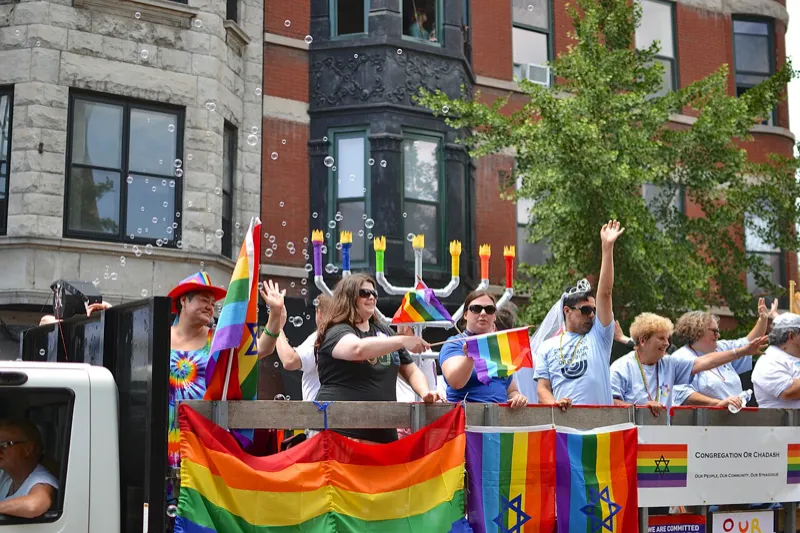
The Language of Jewish Symbols
Judaism is often described as a religion of words — of Torah, of prayer, of study and debate. But it is also a religion of powerful visual symbols. A six-pointed star on a pendant. A seven-branched candelabrum on a synagogue wall. A hand-shaped amulet hanging in a doorway. These images communicate instantly, crossing language barriers and connecting Jews to each other and to history.
Jewish symbols are not icons to be worshipped — Judaism is firmly opposed to idolatry. They are, instead, visual shorthand for deep ideas: protection, covenant, light, life, freedom, and the ongoing relationship between a people and their God.
Here are ten essential Jewish symbols, each with its history, meaning, and place in Jewish life.
1. Star of David (Magen David)
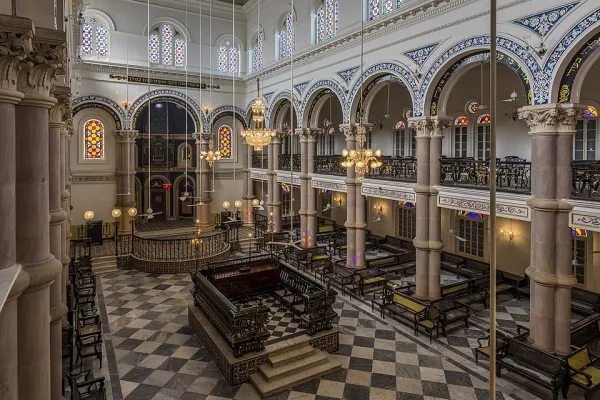
What it looks like: Two overlapping triangles forming a six-pointed star.
History: Despite its name, the Star of David has no direct connection to King David. The hexagram appeared in ancient cultures worldwide, and its association with Judaism developed gradually. It appeared on Jewish tombstones in southern Italy as early as the third century CE, was used by kabbalists in the Middle Ages, and became the official symbol of the Jewish community of Prague in the 17th century. The Nazis forced Jews to wear a yellow Star of David during the Holocaust. After the war, Jews reclaimed it as a symbol of pride, and it appears on the flag of Israel.
Meaning: The interlocking triangles have been interpreted as representing the relationship between God and humanity, the union of male and female, or the connection between heaven and earth. Today it is the universal symbol of Jewish identity.
2. Menorah
What it looks like: A seven-branched candelabrum.
History: The Menorah is described in detail in the Torah (Exodus 25:31-40) and stood in the ancient Temple in Jerusalem. After the Temple’s destruction in 70 CE, the menorah became a symbol of Jewish hope for restoration. It appears on the Arch of Titus in Rome, where it is depicted being carried away as spoils. Today, the seven-branched menorah is the official emblem of the State of Israel.
Meaning: The menorah symbolizes divine light, wisdom, and the eternal presence of God. The nine-branched Hanukkah menorah (hanukkiah) is a separate symbol, commemorating the miracle of the oil.
3. Hamsa
What it looks like: An open hand, often with an eye in the center.
History: Used by both Jewish and Muslim communities across North Africa and the Middle East for centuries. In Jewish tradition, it is called the Hand of Miriam. Sephardi and Mizrachi Jews have a particularly strong tradition of Hamsa use.
Meaning: Protection against the evil eye (ayin hara). The five fingers may also represent the five books of the Torah.
4. Chai
What it looks like: The Hebrew letters Chet (ח) and Yod (י), spelling the word “chai” (life).
History: The word chai has deep significance in Jewish thought, and the symbol became popular as jewelry and decoration in the 18th century. The numerical value of Chai is 18, which is why Jews traditionally give gifts and charitable donations in multiples of 18.
Meaning: Life — the supreme value in Judaism. The toast “L’chaim!” (To life!) captures the Jewish emphasis on living fully in this world.
5. Tree of Life (Etz Chaim)
What it looks like: A stylized tree, often depicted with spreading roots and branches.
History: The Tree of Life appears in Genesis in the Garden of Eden and in Proverbs as a metaphor for Torah: “It is a tree of life for those who grasp it.” In Kabbalah, the Tree of Life is an elaborate diagram of ten sefirot (divine attributes) through which God interacts with the world.
Meaning: Torah, wisdom, connection to the divine, the sustaining power of Jewish learning.
6. Lion of Judah
What it looks like: A lion, often rampant (standing on hind legs), sometimes holding a tablet or crown.
History: Jacob blessed his son Judah by comparing him to a lion (Genesis 49:9). The tribe of Judah, from which King David descended, used the lion as its symbol. Lions appear extensively in synagogue art — flanking the ark, embroidered on Torah covers, carved into doors.
Meaning: Strength, royalty, the tribe of Judah, and the Davidic line.
7. Tablets of the Law (Luchot)
What it looks like: Two rounded-top stone tablets, usually inscribed with the first words of each of the Ten Commandments in Hebrew.
History: The original tablets were given to Moses at Mount Sinai (the first set was broken; the second was placed in the Ark of the Covenant). The distinctive rounded-top shape actually comes from medieval and Renaissance art — the original shape is not specified in the Torah.
Meaning: The covenant between God and Israel, the centrality of law and ethics in Judaism.
8. Pomegranate (Rimon)

What it looks like: The fruit itself, often depicted in art, textiles, and as Torah scroll ornaments (rimonim).
History: The pomegranate is one of the Seven Species of the Land of Israel mentioned in Deuteronomy. Pomegranate motifs adorned the hem of the High Priest’s robe and decorated King Solomon’s Temple.
Meaning: According to tradition, the pomegranate contains 613 seeds, corresponding to the 613 commandments. It symbolizes righteousness, fertility, and abundance. It is traditionally eaten on Rosh Hashanah with the prayer for a year “full of mitzvot as the pomegranate is full of seeds.”
9. Dove (Yonah)
What it looks like: A white dove, often depicted carrying an olive branch.
History: After the Great Flood, Noah sent a dove that returned with an olive branch, signaling that the waters had receded and the earth was habitable again (Genesis 8:11). The image has become universal.
Meaning: Peace, hope, renewal, and God’s promise never to destroy the world again.
10. Shofar
What it looks like: A curved ram’s horn, used as a musical instrument.
History: The shofar has been sounded since biblical times — at Mount Sinai, at the walls of Jericho, and to announce the new month and the coronation of kings. Today it is most associated with Rosh Hashanah and Yom Kippur.
Meaning: A call to spiritual awakening, repentance, and renewal. The raw, primal sound of the shofar is designed to shake the listener out of complacency and inspire return to God.
Symbols and Identity
Jewish symbols serve as bridges — between individuals and community, between the present and the past, between the visible and the invisible. Wearing a Star of David, hanging a mezuzah on your door, or lighting a menorah in your window are all ways of declaring: I am part of this story. The symbols do not require explanation among Jews. They speak the language of belonging.
Frequently Asked Questions
What is the most important symbol in Judaism?
The Menorah is arguably the oldest and most authentically Jewish symbol, described in the Torah and used in the ancient Temple. The Star of David, while more widely recognized today, only became a Jewish symbol in the Middle Ages. The Torah scroll itself could also be considered the most significant Jewish symbol, as it represents the covenant and the foundation of Jewish life.
Is the Hamsa a Jewish symbol or an Arabic symbol?
Both. The Hamsa (hand-shaped amulet) is shared across Jewish and Muslim cultures, particularly in North Africa and the Middle East. In Jewish tradition, it is called the Hand of Miriam (after Moses' sister). In Muslim tradition, it is the Hand of Fatima (after Muhammad's daughter). Both communities have used it for centuries as a symbol of protection against the evil eye.
Why do Jewish symbols appear on jewelry and art?
Wearing and displaying Jewish symbols serves multiple purposes: it identifies the wearer as Jewish, serves as a reminder of faith and values, functions as protective amulets (in some traditions), and expresses pride in Jewish identity. Since the Second Commandment limits figurative religious art, abstract symbols became an important form of Jewish artistic expression.
Sources & Further Reading
- My Jewish Learning — Jewish Symbols ↗
- Jewish Virtual Library — Symbols ↗
- Encyclopedia Judaica — Symbols in Judaism
Related Articles
The Menorah: Judaism's Oldest Symbol, from the Temple to the State of Israel
The seven-branched menorah is Judaism's most ancient symbol — described in Exodus, crafted for the Temple, carved on the Arch of Titus, and chosen as the emblem of the modern State of Israel. Its light has never gone out.
The Mezuzah: What's Inside, How to Hang It, and Why It Matters
A small scroll on the doorpost, containing the most important words in Judaism. The mezuzah marks every Jewish home as sacred space — and the rules for writing, placing, and caring for it are as precise as they are meaningful.
The Star of David: How a Simple Hexagram Became Judaism's Most Recognized Symbol
The Star of David is everywhere — on the Israeli flag, on synagogues, on jewelry. But it was not always a Jewish symbol. Its journey from decorative motif to the universal emblem of Judaism is a surprising story of history, identity, and reclamation.