High Holiday Music Guide
The music of the High Holidays — from the haunting Kol Nidre to the thundering Unetaneh Tokef — carries some of the most powerful melodies in Jewish tradition, shaping the emotional landscape of Rosh Hashanah and Yom Kippur.

Sound and Soul
If you have ever walked into a synagogue on the evening Yom Kippur begins, you know: the music changes everything. The melodies of the High Holidays are not like the music of any other time in the Jewish year. They are more solemn, more ancient-sounding, more emotionally intense. They carry the weight of centuries — and the weight of the moment.
The High Holidays — Rosh Hashanah and Yom Kippur — are the most musically rich period in the Jewish calendar. From the blast of the shofar to the final notes of the Neilah service, music shapes every moment of these ten days of repentance, judgment, and renewal.
The High Holiday Nusach
Every season of the Jewish year has its own nusach — a system of musical modes and melodic patterns that create the distinctive sound of that season’s prayers. The High Holiday nusach is immediately recognizable: it tends toward minor keys, long melodic lines, and a quality that is simultaneously mournful and majestic.
The cantor (chazzan) who leads High Holiday services bears an extraordinary responsibility. They are not performing — they are praying on behalf of the congregation, serving as shaliach tzibbur (emissary of the community). The melodies they use are not arbitrary choices but mi-Sinai melodies — tunes so old and so deeply embedded in tradition that the community considers them virtually sacred. Changing them would be like rewriting the prayers themselves.
Key elements of the High Holiday musical palette include:
- Special trope (ta’amei hamikra): The Torah and Haftarah readings on the High Holidays use distinctive cantillation patterns different from the regular Shabbat readings
- Modal character: The prayers move between several characteristic modes that evoke specific emotional states — awe, supplication, resolve
- Congregational melodies: Certain tunes are sung by the entire congregation, creating powerful moments of communal participation
Kol Nidre: The Holiest Melody
Kol Nidre is, for many Jews, the single most emotionally powerful moment of the entire year. It is not technically a prayer but a legal formula — a declaration that annuls personal vows made rashly or under duress. The text is in Aramaic, not Hebrew. Legally, it is rather dry.
And yet the melody transforms it into something transcendent.
The Kol Nidre melody as most Ashkenazi Jews know it dates to at least the 16th century, though elements may be much older. It is chanted three times, traditionally with increasing volume and intensity, as the sun sets on Yom Kippur eve. The Torah scrolls are removed from the ark and held aloft by honored congregants, flanking the cantor. The congregation stands.
The melody moves through a series of emotional arcs — beginning with a quiet, almost tentative statement, building through increasingly passionate phrases, and resolving in a declaration of faith. Beethoven quoted it. Max Bruch composed a famous cello arrangement. It has been performed in concert halls around the world. But it belongs in the synagogue, at sunset, on the threshold of the holiest day.
Unetaneh Tokef: Who Shall Live?
If Kol Nidre is the most emotionally powerful moment, Unetaneh Tokef is the most dramatically confrontational. Recited during the Musaf (additional) service on both Rosh Hashanah and Yom Kippur, it describes God sitting in judgment and determining the fate of every living soul:
“On Rosh Hashanah it is written, and on Yom Kippur it is sealed: How many shall pass away, and how many shall be born; who shall live, and who shall die; who at their full age, and who before their time; who by fire, and who by water; who by sword, and who by beast…”
The poem is attributed to Rabbi Amnon of Mainz (11th century), who, according to legend, composed it as he lay dying after being tortured for refusing to convert to Christianity. Whether the attribution is historical or legendary, the poem’s power is undeniable.
The musical settings of Unetaneh Tokef vary by community, but all share a quality of mounting intensity. The congregation listens in near-silence as the cantor intones the terrifying litany of fates — then joins together for the resolution: “But repentance, prayer, and charity avert the severe decree.”
In recent decades, Israeli composer Yair Rosenblum’s 1968 setting — originally written for a kibbutz memorial ceremony — has become widely popular, adding a contemporary emotional dimension to the ancient text.
Avinu Malkeinu: Our Father, Our King
Avinu Malkeinu (“Our Father, Our King”) is a series of supplications recited during the Ten Days of Repentance. Each line begins with the same phrase — “Avinu Malkeinu” — followed by a different plea: “inscribe us in the book of good life,” “hear our voice,” “accept our prayer with mercy and favor.”
The melody most associated with this prayer — at least in its concluding line — is one of the most singable in the entire liturgy. Congregations join together to sing the final verse: “Avinu Malkeinu, choneinu va’aneinu, ki ein banu ma’asim, aseh imanu tzedakah vachesed v’hoshieinu” — “Our Father, Our King, be gracious to us and answer us, for we have no worthy deeds; deal with us charitably and kindly, and save us.”
The melody is both humble and hopeful — an acknowledgment of human inadequacy coupled with trust in divine mercy.
The Shofar: Primal Sound
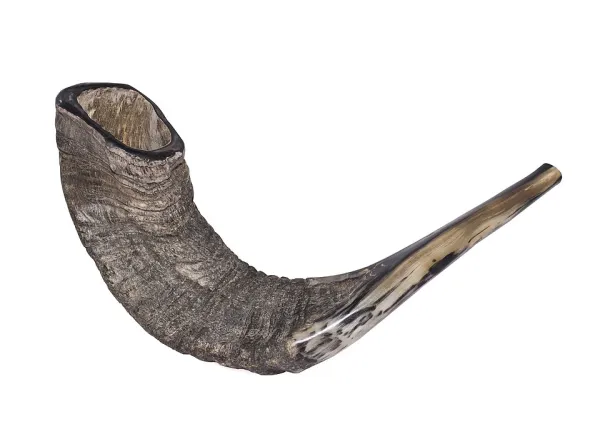
The shofar — a ram’s horn — is the most distinctive sound of the High Holiday season. It is blown extensively on Rosh Hashanah (except when Rosh Hashanah falls on Shabbat) and once at the conclusion of Yom Kippur.
The shofar produces four types of blasts:
- Tekiah: A single, clear, sustained blast
- Shevarim: Three medium wailing sounds — traditionally described as sighing or groaning
- Teruah: Nine rapid, staccato blasts — described as sobbing or alarm
- Tekiah gedolah: An extended, sustained blast that concludes each sequence
The Talmud debates the exact sounds these terms describe, and different communities have slightly different traditions. But the effect is universal: the shofar bypasses the rational mind and speaks to something deeper. Maimonides wrote that the shofar’s message is: “Awake, you sleepers, from your sleep! Arise, you slumberers, from your slumber! Examine your deeds, return in repentance, and remember your Creator.”
Other Key Musical Moments
The High Holiday season is filled with additional musical highlights:
- Selichot: Penitential prayers chanted in the weeks before Rosh Hashanah (in Ashkenazi tradition, beginning the Saturday night before). The late-night Selichot services have their own distinctive, haunting melodies
- Hineni: The cantor’s personal prayer before the Musaf service — “Here I am, impoverished in deeds, trembling and afraid” — often one of the most moving moments of cantorial art
- Al Chet: The communal confession of sins, chanted while beating one’s chest — a rhythmic, repetitive melody that creates a hypnotic quality of collective honesty
- Neilah: The closing service of Yom Kippur, when the “gates of heaven” are about to close. The music shifts from supplication to urgency to, finally, triumphant resolution as the congregation declares: “Hear, O Israel, the Lord is our God, the Lord is One!” followed by a single, resounding blast of the shofar
Music as Teshuvah
The music of the High Holidays is not decoration. It is not entertainment. It is a vehicle for teshuvah — repentance, return, transformation. The melodies carry the words deeper into the heart than words alone could reach. They connect individual worshippers to centuries of Jews who have stood in the same season, sung the same notes, and wrestled with the same questions: Who am I? What have I done? Who do I want to become?
That is the power of High Holiday music: it makes the invisible audible. The sound of the shofar, the cantor’s Kol Nidre, the congregation’s Avinu Malkeinu — these are the sounds of a people standing before the mystery of existence and responding not with silence but with song.
Frequently Asked Questions
Why is Kol Nidre so powerful?
Kol Nidre — chanted at the opening of Yom Kippur — is widely considered the most emotionally powerful moment in Jewish liturgy. Its power comes from several sources: the hauntingly beautiful melody (dating to at least the 16th century), the dramatic setting (the Torah scrolls are removed from the ark and held by congregants), the fact that it is chanted three times with increasing intensity, and the weight of the moment — the beginning of the holiest day in Judaism.
What is Unetaneh Tokef?
Unetaneh Tokef ('Let us speak of the power') is a medieval liturgical poem recited during the Musaf service on Rosh Hashanah and Yom Kippur. It describes God opening the Book of Life and judging every soul: 'Who shall live and who shall die, who by fire and who by water...' The poem is attributed to Rabbi Amnon of Mainz, who according to legend composed it as he was being tortured for refusing to convert. Its unflinching confrontation with mortality makes it one of the most dramatic moments in the High Holiday service.
What is the shofar's role in High Holiday music?
The shofar (ram's horn) is the defining sound of Rosh Hashanah and also marks the end of Yom Kippur. It produces four types of blasts: tekiah (a single long blast), shevarim (three short wailing sounds), teruah (nine rapid staccato blasts), and tekiah gedolah (an extra-long blast). The shofar is not a musical instrument in the conventional sense but a primal sound — the Talmud calls it a 'cry' that bypasses the intellect and speaks directly to the soul.
Sources & Further Reading
Related Articles
Jewish Liturgical Music: The Sound of Prayer
From the haunting chant of Kol Nidre to joyful Shabbat melodies — liturgical music is the soundtrack of Jewish spiritual life.
Rosh Hashanah: The Jewish New Year
The sound of the shofar marks the beginning of the Jewish New Year — a time of reflection, prayer, and hope for the year ahead.
Yom Kippur: The Day of Atonement
The holiest day in the Jewish calendar — a 25-hour fast devoted to prayer, repentance, and spiritual renewal.