Righteous Among the Nations: The Non-Jews Who Saved Jewish Lives
Over 28,000 non-Jews have been recognized by Yad Vashem for risking their lives to save Jews during the Holocaust. Their stories — from Oskar Schindler to Irena Sendler to Chiune Sugihara — illuminate the best of humanity in its darkest hour.
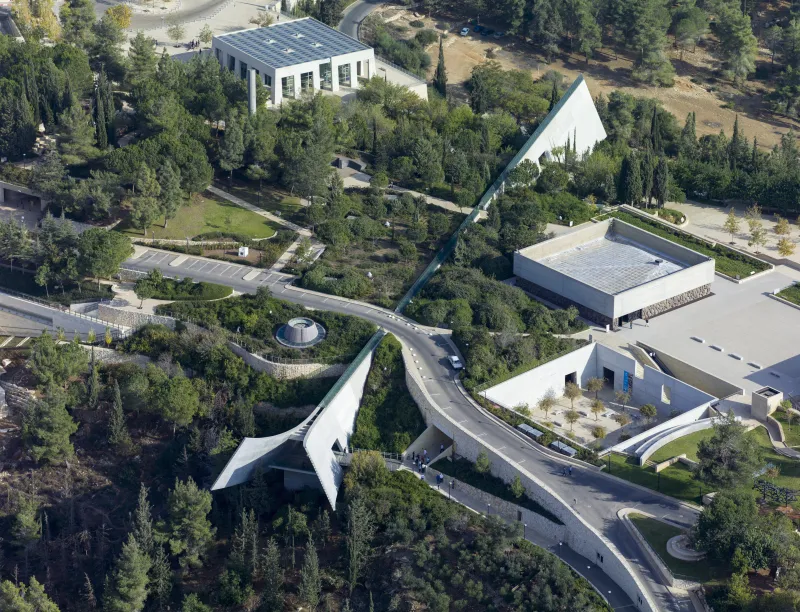
Points of Light
In the vast darkness of the Holocaust — six million murdered, communities erased, a civilization destroyed — there were points of light. Individual men and women, non-Jews, who looked at the machinery of genocide and said: not if I can help it. They hid families in attics, forged documents, smuggled children, issued visas, shared food from their own meager rations, and lied to soldiers with guns. Many paid with their lives.
They are called Chasidei Umot HaOlam — the Righteous Among the Nations. It is a title drawn from Jewish tradition, which has always recognized that righteousness is not limited to Jews. The Talmud teaches: “The righteous of all nations have a share in the World to Come” (Tosefta Sanhedrin 13:2). During the Holocaust, some non-Jews proved that teaching true — at the cost of everything they had.
As of 2025, Yad Vashem — Israel’s Holocaust memorial authority — has recognized over 28,000 individuals from more than 50 countries as Righteous Among the Nations. The number grows each year as new stories come to light. But researchers estimate that the true number of rescuers was far higher — many were never identified, some died before they could be recognized, and others operated in regions where documentation was destroyed.
The Recognition Process
Yad Vashem established the Righteous Among the Nations program in 1963, fulfilling a mandate in the law that created the memorial. A commission, traditionally headed by a Supreme Court justice, examines each case based on strict criteria:
- The rescuer must have been non-Jewish
- The rescue involved genuine risk to the rescuer’s life, liberty, or safety
- The rescuer acted without seeking financial compensation
- The facts must be supported by testimony from survivors and/or documentary evidence
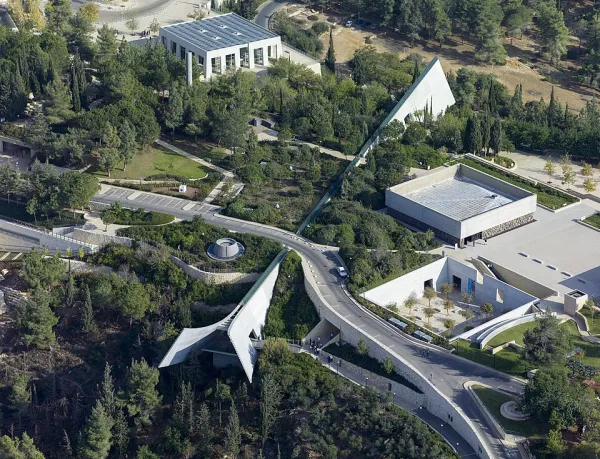
Recognized individuals receive a specially minted medal and a certificate of honor. Their names are engraved on the Wall of Honor in the Garden of the Righteous at Yad Vashem. They — or their heirs — are offered honorary Israeli citizenship. A tree was traditionally planted in their honor along the Avenue of the Righteous, though space constraints have shifted this practice to the wall.
The recognition is not symbolic. It is Israel’s official statement that during the darkest chapter of Jewish history, some non-Jews upheld the dignity of the human race.
Oskar Schindler: The Unlikely Rescuer
Oskar Schindler (1908–1974) was an ethnic German from Moravia (now Czech Republic) — a businessman, womanizer, heavy drinker, war profiteer, and member of the Nazi Party. He was, by most conventional measures, not a good man. And yet he saved approximately 1,200 Jewish lives.
Schindler arrived in Kraków in 1939, took over a confiscated enamelware factory, and staffed it with Jewish workers from the nearby ghetto — initially because Jewish labor was cheap. But as the horror of the Holocaust became clear, something shifted. Schindler began using his factory as a refuge, employing Jews who would otherwise have been deported to death camps.
When the Kraków ghetto was liquidated and its inhabitants sent to the Płaszów concentration camp, Schindler negotiated to keep “his” workers. When the camp was closed and prisoners were to be sent to Auschwitz, Schindler compiled the famous “Schindler’s List” — a roster of over 1,100 workers he claimed were essential to his factory operations. He relocated the entire group to a new factory in Brünnlitz (now Czech Republic), where they survived until liberation.
Schindler spent his entire fortune on bribes to keep his workers alive. After the war, he was penniless. The Jews he saved — and their descendants, now numbering over 8,000 — supported him for the rest of his life. He was recognized as Righteous Among the Nations in 1962 and is buried in Jerusalem, on Mount Zion.
Raoul Wallenberg: The Diplomat Who Vanished
Raoul Wallenberg (1912–disappeared 1945) was a Swedish businessman and diplomat who was sent to Budapest in July 1944 — as the deportation of Hungary’s Jews to Auschwitz was in full swing — with a mandate to save as many lives as possible.
Wallenberg designed a “Schutzpass” (protective passport) — an official-looking document bearing Sweden’s coat of arms that declared the bearer to be under Swedish diplomatic protection. The passes had no legal standing, but Wallenberg used his force of personality, his diplomatic immunity, and his willingness to take extraordinary risks to make them effective.
He issued thousands of Schutzpasses. He established “Swedish houses” — buildings flying the Swedish flag that served as safe havens. He personally confronted Nazi and Arrow Cross (Hungarian fascist) officials, at one point climbing onto the roof of a deportation train and handing Schutzpasses through the slotted windows to prisoners inside, while Hungarian guards shot at him.
Wallenberg is credited with saving tens of thousands of lives — estimates range from 20,000 to 100,000. When Soviet forces entered Budapest in January 1945, Wallenberg went to meet Soviet commanders and was never seen again. He is believed to have been arrested by the Soviets, who may have suspected him of being a spy, and to have died in Soviet custody. His fate remains one of the great unsolved mysteries of the 20th century.
Irena Sendler: The Angel of the Warsaw Ghetto
Irena Sendler (1910–2008) was a Polish social worker who, as a member of the underground resistance organization Żegota, smuggled approximately 2,500 children out of the Warsaw Ghetto between 1940 and 1943.
Sendler used her position as a nurse with access to the ghetto to smuggle children out by every means imaginable: in ambulances (sedated to keep them quiet), in coffins, in suitcases, through sewer pipes, and through a courthouse that had entrances on both the ghetto and “Aryan” sides. She placed children with Polish families, in orphanages, and in convents.
Crucially, Sendler kept a meticulous record of each child’s real name and the name of their foster family — hidden in jars buried under a tree in a neighbor’s yard. Her intention was to reunite children with their families after the war. Most of those families had been murdered, but the records preserved the children’s identities.
In 1943, Sendler was arrested by the Gestapo, tortured (her legs and feet were broken), and sentenced to death. Żegota bribed a guard to allow her escape, and she continued her work underground for the rest of the war.
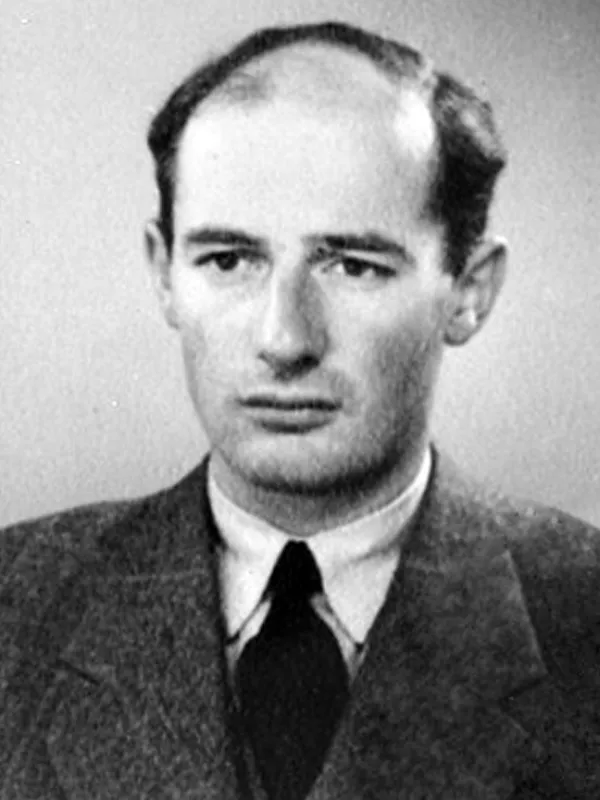
Chiune Sugihara: The Japanese Schindler
Chiune Sugihara (1900–1986) was the Japanese vice-consul in Kaunas, Lithuania, in 1940. When thousands of Jewish refugees — many of them students from Polish yeshivot — arrived at the consulate seeking transit visas to escape through Japan, Sugihara faced a choice. Tokyo had refused his requests for permission to issue the visas.
Sugihara issued them anyway.
For twenty-nine days, working eighteen hours a day, Sugihara and his wife Yukiko hand-wrote transit visas. He continued writing even as he boarded the train to leave his post, handing the last visas through the train window. He reportedly threw his consul stamp to a refugee on the platform, saying: “Keep issuing visas.”
Sugihara’s visas saved approximately 6,000 Jewish lives. After the war, he was dismissed from Japan’s diplomatic service. He lived in obscurity until 1985, when he was recognized as Righteous Among the Nations — one of the few non-European honorees.
The Ordinary Rescuers
Not all rescuers were diplomats or industrialists. Many were ordinary people — farmers, teachers, priests, nuns, factory workers — who made the extraordinary decision to risk their lives for strangers.
In Le Chambon-sur-Lignon, a small French village, the entire community — led by Pastor André Trocmé and his wife Magda — sheltered an estimated 3,000-5,000 Jews throughout the war. The village received the only collective recognition of Righteous Among the Nations.
In the Netherlands, approximately 25,000 Jews were hidden by Dutch families — though the country’s overall rescue rate was tragically low (75% of Dutch Jews were murdered). The most famous hiding place was the Secret Annex where Anne Frank and her family were sheltered by Miep Gies and other helpers for over two years.
In Poland — where the penalty for helping Jews was death for the entire family — over 7,000 individuals have been recognized as Righteous, the highest number of any country. Their courage was extraordinary: in a country under the most brutal Nazi occupation, where informers were everywhere and the punishment was absolute, thousands of Poles chose to hide Jews in basements, barns, forests, and double-walled rooms.
What Made Them Different?
Researchers have long studied what distinguished rescuers from bystanders. The findings are both encouraging and sobering.
Rescuers came from every social class, education level, and religious background. There was no single “rescuer personality.” However, certain patterns emerged:
- Many had a strong moral upbringing that emphasized the equal worth of all people
- Many had personal relationships with Jews before the war — a neighbor, a colleague, a friend
- Many described a moment of moral clarity — seeing a deportation, witnessing violence — that compelled action
- Many acted incrementally — hiding someone for a night, then a week, then indefinitely
- Most said they had no choice — that their conscience would not allow them to stand by
Perhaps the most consistent finding: rescuers did not see themselves as heroes. They saw themselves as people who did what any decent person would do. The tragedy is that so few did.
A Legacy of Moral Courage
The Righteous Among the Nations are honored not because they succeeded in stopping the Holocaust — they did not — but because they proved that moral choice was possible even in the most extreme circumstances. Every person who says “there was nothing anyone could do” is answered by the existence of those who did something.
Their legacy is not comfort. It is challenge. If they could risk their lives in occupied Europe, what risks are we willing to take for justice in our own time? If they could see the humanity of the persecuted when millions looked away, what are we refusing to see?
The trees along the Avenue of the Righteous at Yad Vashem grow taller each year. The Wall of Honor grows longer. And the question they pose — what would you have done? — grows no easier to answer. The Righteous Among the Nations did not save the world. But they saved the idea that the world was worth saving.
Frequently Asked Questions
What is the Righteous Among the Nations program?
Righteous Among the Nations (Chasidei Umot HaOlam) is an honorific bestowed by Yad Vashem, Israel's Holocaust memorial, on non-Jews who risked their lives to save Jews during the Holocaust. The program was established in 1963 as part of Yad Vashem's founding mandate. To be recognized, a person must have provided help in direct response to the danger of death or deportation, without receiving payment or material reward, and the rescue must be substantiated by survivors' testimony or documentation. As of 2025, over 28,000 individuals from more than 50 countries have been recognized.
Who are the most famous Righteous Among the Nations?
Some of the most widely known include: Oskar Schindler (Germany), a factory owner who saved approximately 1,200 Jews by employing them in his factories; Raoul Wallenberg (Sweden), a diplomat who issued protective passports saving tens of thousands of Hungarian Jews; Irena Sendler (Poland), a social worker who smuggled approximately 2,500 children out of the Warsaw Ghetto; Chiune Sugihara (Japan), a consul who issued transit visas to thousands of Jewish refugees despite orders; and Corrie ten Boom (Netherlands), who hid Jews in her home and survived a concentration camp.
How does someone get recognized as Righteous Among the Nations?
Recognition requires a formal application, usually submitted by the survivor or their descendants. A commission headed by a Supreme Court justice examines the evidence. The criteria are: the rescuer was non-Jewish; the rescue involved actual risk to the rescuer's life, liberty, or position; the rescuer was not motivated by financial gain; and the facts are supported by testimony and/or documentation. Recognized individuals receive a certificate and medal, their names are engraved on the Wall of Honor at Yad Vashem, and they (or their heirs) are granted honorary Israeli citizenship.
Sources & Further Reading
Related Articles
The Holocaust: Remembering the Six Million
The systematic murder of six million Jews during World War II — the darkest chapter in human history and its lasting impact on Jewish identity.
The Noahide Laws: Judaism's Universal Moral Code for All Humanity
Judaism does not expect everyone to become Jewish. Instead, it teaches that all of humanity is bound by seven basic moral laws given to Noah — the Noahide laws — which form a universal ethical framework.
Yom HaShoah: Holocaust Remembrance Day
Each spring, a siren sounds across Israel and the nation stands still — remembering the six million. Yom HaShoah is a day of solemn witness, survivor testimony, and the sacred obligation to never forget.