The Noahide Laws: Judaism's Universal Moral Code for All Humanity
Judaism does not expect everyone to become Jewish. Instead, it teaches that all of humanity is bound by seven basic moral laws given to Noah — the Noahide laws — which form a universal ethical framework.
Not Just for Jews
Here is something many people do not know about Judaism: it does not believe that everyone should be Jewish. In fact, Judaism actively discourages conversion — not because it does not welcome converts, but because it teaches that non-Jews have their own perfectly valid path to righteousness.
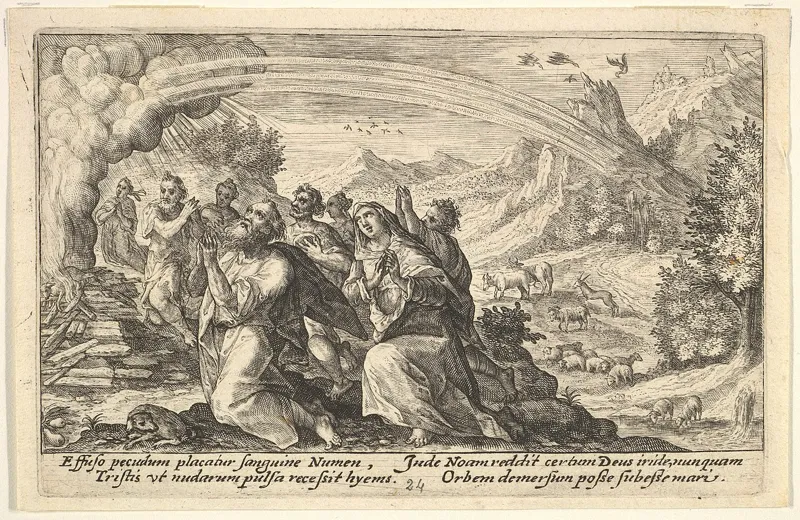
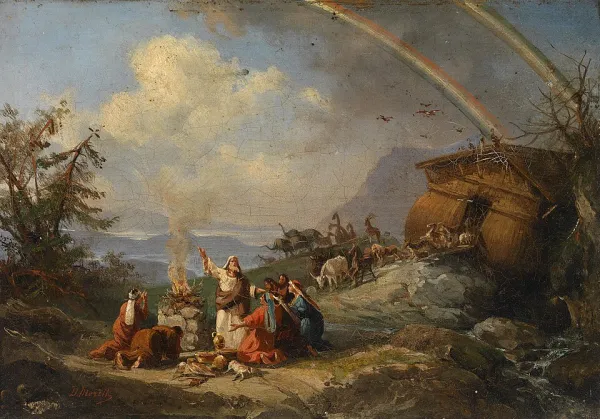
That path is the seven Noahide laws — a set of universal moral principles that the Talmud identifies as binding on all humanity. They are called “Noahide” because they were given to Noah after the flood, representing a covenant not with one people but with all of humanity.
If the 613 commandments are Judaism’s internal operating system, the Noahide laws are its external interface — the minimum ethical standard that God expects of every human being, regardless of religion, nationality, or background.
The Seven Laws
The Talmud (Sanhedrin 56a) enumerates seven commandments given to the descendants of Noah — meaning all of humanity:
1. Do Not Worship Idols
Recognize that there is one God (or at minimum, do not worship false gods or idols). This is the most theologically specific of the seven laws and the most debated in application. Does it prohibit Christianity’s Trinity? Maimonides said yes (for Jews); other authorities disagreed regarding non-Jews. The consensus is that the prohibition applies to creating and worshipping physical idols and polytheistic deities.
2. Do Not Blaspheme God
Do not curse God. This law establishes a baseline of reverence — even if you struggle with belief, active cursing of the divine is prohibited. It reflects the principle that human beings should relate to their Creator with a minimum of respect.
3. Do Not Murder
The sanctity of human life is absolute. Every human being is created in the image of God (Genesis 9:6), and taking a human life is the ultimate violation. This includes abortion in some interpretations, self-defense exceptions, and the complexities of capital punishment.
4. Do Not Steal
Respect the property and possessions of others. This extends beyond simple theft to include fraud, deception, and economic exploitation. The Talmud discusses this law in connection with just business practices, fair wages, and honest dealings.
5. Do Not Commit Sexual Immorality
The Talmud defines specific prohibited relationships: adultery, incest, and certain other sexual acts. The exact boundaries have been debated across centuries, with different authorities drawing the lines differently. The core principle is that sexual relationships carry moral weight and require boundaries.
6. Do Not Eat the Limb of a Living Animal
This is perhaps the most surprising law on the list. It prohibits tearing a limb from a living animal and eating it — establishing a baseline of compassion toward animals. While it does not require vegetarianism, it insists that even in the act of eating meat, a minimum standard of decency must be maintained. No cruelty for cruelty’s sake.
7. Establish Courts of Justice
Humanity must create legal systems to enforce the other six laws. Justice cannot be left to individual conscience alone — it requires institutions, judges, and accountability. This law reflects Judaism’s deep commitment to the idea that justice is a communal responsibility, not just a personal virtue.
Where Do These Laws Come From?
The Talmud derives the Noahide laws from various verses in Genesis, particularly from the commands given to Adam and Noah. The rabbis identified six laws that were given to Adam in the Garden of Eden and a seventh (not eating a limb from a living animal) that was added after the flood when God permitted Noah to eat meat (Genesis 9:3-4).
Maimonides, in his Mishneh Torah (Laws of Kings 8:10-11), codifies the Noahide laws as legal obligations, not just ethical recommendations. He writes that a non-Jew who observes these seven laws because God commanded them in the Torah is considered one of the “righteous of the nations” and has a share in the World to Come.
This is a remarkable statement. Maimonides — the greatest Jewish legal authority of the medieval period — explicitly affirms that non-Jews can achieve spiritual merit and a place in the afterlife without becoming Jewish. They simply need to live by these seven principles.
Righteous Gentiles
The concept of the chasid umot ha’olam (righteous person among the nations) is deeply embedded in Jewish thought. Judaism does not teach that only Jews are saved, righteous, or beloved by God. Anyone who lives a moral life — defined by the Noahide laws — is considered righteous.
This has practical implications:
- Non-Jews do not need to convert to be “right with God.”
- Judaism does not send missionaries. It has no interest in converting the world.
- The goal is not a world where everyone is Jewish but a world where everyone is ethical.
The modern use of “Righteous Among the Nations” by Yad Vashem to honor non-Jews who saved Jews during the Holocaust draws on this ancient concept, though the criteria are different (heroic action vs. everyday ethical living).
The Modern Noahide Movement
In recent decades, a growing movement of non-Jews has embraced the Noahide laws as a conscious spiritual path. These “Noahides” or “B’nei Noach” (children of Noah):
- Study Torah (particularly the parts relevant to the Noahide laws)
- Form communities and prayer groups
- Celebrate aspects of Jewish tradition (some observe Shabbat in modified forms)
- Seek guidance from Orthodox rabbis
- Reject their previous religions (often Christianity or Islam) in favor of ethical monotheism without full Jewish observance
The Chabad-Lubavitch movement has been particularly active in supporting Noahide communities, providing educational materials and rabbinic guidance. Estimates of the global Noahide community range from tens of thousands to several hundred thousand, with significant populations in the Philippines, Nigeria, Brazil, and the United States.
Philosophical Significance
The Noahide laws represent something profound: a religion that defines itself as particular (for one people) while simultaneously articulating a universal ethic (for all people). Judaism says: we have our path (613 commandments), and you have yours (7 laws). Both are valid. Both lead to righteousness.
This is remarkably different from religions that claim universal applicability and seek to convert the world. Judaism’s position is: we do not want everyone to be Jewish. We want everyone to be good. And here are seven principles that define what “good” means at a minimum.
The laws also reflect a hierarchy of moral priorities:
- Human dignity (no murder, no theft, no sexual violation)
- Relationship with God (no idolatry, no blasphemy)
- Compassion for animals (no eating limbs from living creatures)
- Social order (establish justice)
These are not arbitrary rules. They are the foundation of any functioning civilization — which is precisely the point.
Summing Up
The Noahide laws are Judaism’s answer to a question that every exclusive religion must face: what about everyone else? Judaism’s answer is generous and practical. You do not need to be Jewish. You do not need to follow 613 commandments. You need to be decent — do not murder, do not steal, do not be cruel, respect God (or at least do not curse Him), maintain sexual ethics, and build systems of justice. Seven laws for seven billion people. It is Judaism’s gift to the world — a universal moral floor that anyone can stand on.
Frequently Asked Questions
Do non-Jews have to follow the 613 commandments?
No. Judaism teaches that the 613 commandments of the Torah are binding specifically on Jews. Non-Jews are expected to follow only the seven Noahide laws. A non-Jew who fulfills the Noahide laws is considered righteous and, according to Maimonides, has a share in the World to Come. This is a remarkably inclusive position — Judaism does not claim that only Jews can be righteous or achieve spiritual merit.
What is a 'righteous gentile' in Jewish law?
A 'chasid umot ha'olam' — a righteous person among the nations — is a non-Jew who observes the seven Noahide laws. According to Maimonides, such a person has a share in Olam HaBa (the World to Come). The term 'Righteous Among the Nations' is also used by Yad Vashem to honor non-Jews who risked their lives to save Jews during the Holocaust, though this is a different (modern) usage.
Is the Noahide movement a form of conversion?
No. Noahides do not convert to Judaism. They remain non-Jews who choose to live according to the seven laws and may take on additional ethical practices. Some Noahides study Torah, celebrate certain aspects of Jewish tradition, and form their own communities and prayer groups. But they are not Jews and are not expected to observe Jewish law. The Noahide path is its own path — universal, ethical, and distinct from Judaism.
Sources & Further Reading
Related Articles
Orthodox, Conservative, and Reform: Understanding Jewish Denominations
Judaism is not monolithic — it encompasses diverse movements from Ultra-Orthodox to Reform, each with its own approach to tradition, law, and modern life.
Pikuach Nefesh: Saving a Life
Pikuach nefesh — the obligation to save a life — is the most powerful principle in Jewish law, overriding nearly every commandment including Shabbat, Yom Kippur fasting, and kashrut.
Torah Portions: The Weekly Reading Cycle
Every week, Jewish communities worldwide read the same Torah portion. Explore the 54 parashot, the system of aliyot, the Haftarah connection, and the joyous restart on Simchat Torah.