Moses: Prophet, Leader, Lawgiver — The Man Who Shaped a People
Born a slave, raised a prince, called by a burning bush — Moses led the Israelites from Egypt, received the Torah at Sinai, and shaped Judaism more profoundly than any other human being.
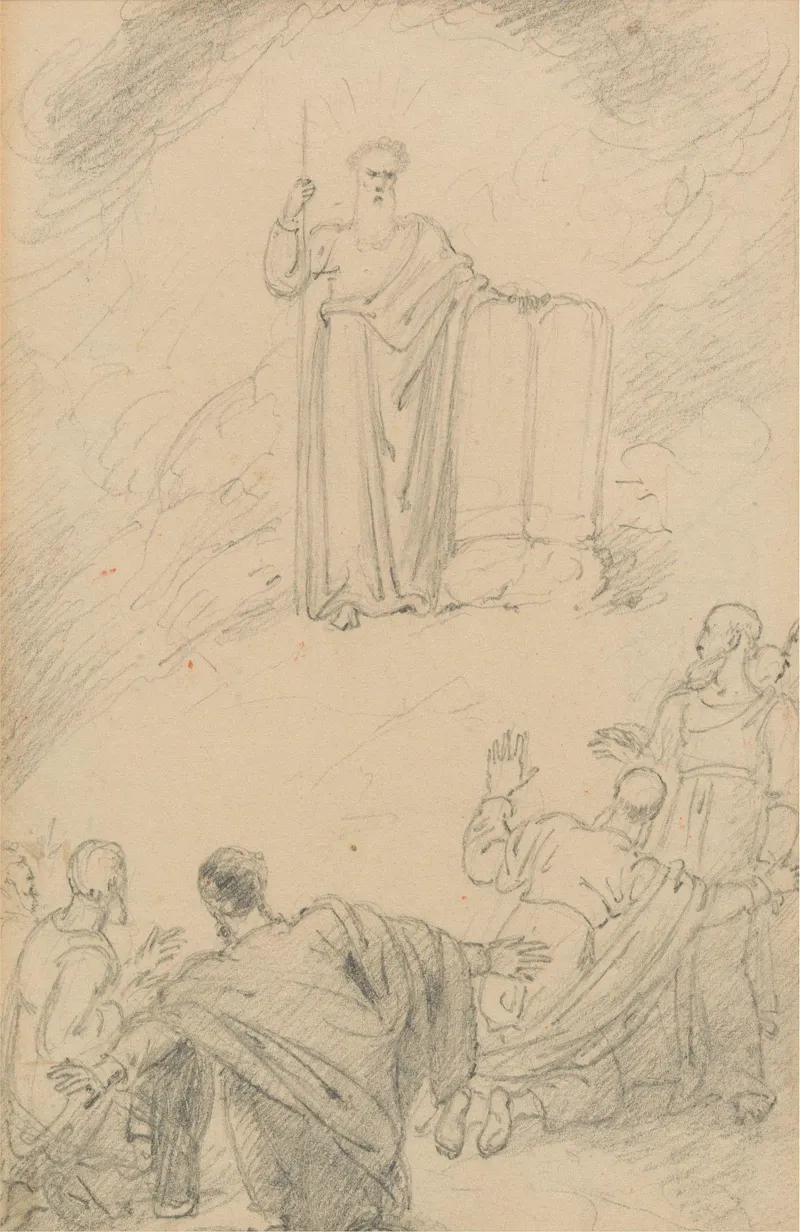
The Humblest Man
The Torah describes Moses as “very humble, more than any person on the face of the earth” (Numbers 12:3). This is a strange description for a man who confronted Pharaoh, split the sea, spoke face-to-face with God, and single-handedly shaped the religious identity of a nation. And yet the tension between Moses’ extraordinary role and his personal humility is precisely what makes him the central figure of Judaism — and precisely why Judaism never worships him.
Moses is everywhere in Jewish life. The Torah is called “Torat Moshe” — the Torah of Moses. He is mentioned in prayers, studied in classrooms, referenced in legal arguments, and invoked in sermons. He is the prophet against whom all other prophets are measured. And yet he remains, in the deepest sense, a servant — not the master of the story but its most faithful messenger.
A Baby in a Basket
The story begins in slavery. Pharaoh, threatened by the growing Israelite population, decrees that all newborn Hebrew boys be thrown into the Nile. A Levite woman named Yocheved gives birth to a son, hides him for three months, and then — unable to hide him any longer — places him in a waterproofed basket among the reeds at the river’s edge.
Pharaoh’s daughter comes to bathe, finds the basket, and is moved by the crying infant. Moses’ sister Miriam, watching from a distance, approaches and offers to find a Hebrew nursemaid — and brings back the baby’s own mother. So Moses is nursed by his biological mother but raised in Pharaoh’s palace — an Israelite slave’s son growing up as an Egyptian prince.
The Torah compresses Moses’ early years into a few verses. We know almost nothing about his upbringing in the palace. What we do know is the moment that changed everything: “Moses grew up and went out to his brothers, and he saw their burdens. He saw an Egyptian beating a Hebrew, one of his brothers. He looked this way and that, and seeing no one, he struck down the Egyptian and buried him in the sand” (Exodus 2:11-12).
This single act — choosing solidarity with the enslaved over privilege with the powerful — defined Moses’ character. It also made him a fugitive. He fled to Midian, became a shepherd, married Zipporah (daughter of the priest Jethro), and seemed destined for an obscure life in the desert.
The Burning Bush
Then came the bush. While tending his flock near Mount Horeb (Sinai), Moses noticed a bush that burned without being consumed. He turned aside to look — and God spoke: “Moses, Moses!” “Here I am.” “Remove your sandals from your feet, for the place on which you stand is holy ground… I am the God of your father, the God of Abraham, the God of Isaac, and the God of Jacob.” Moses hid his face, afraid to look at God (Exodus 3:4-6).
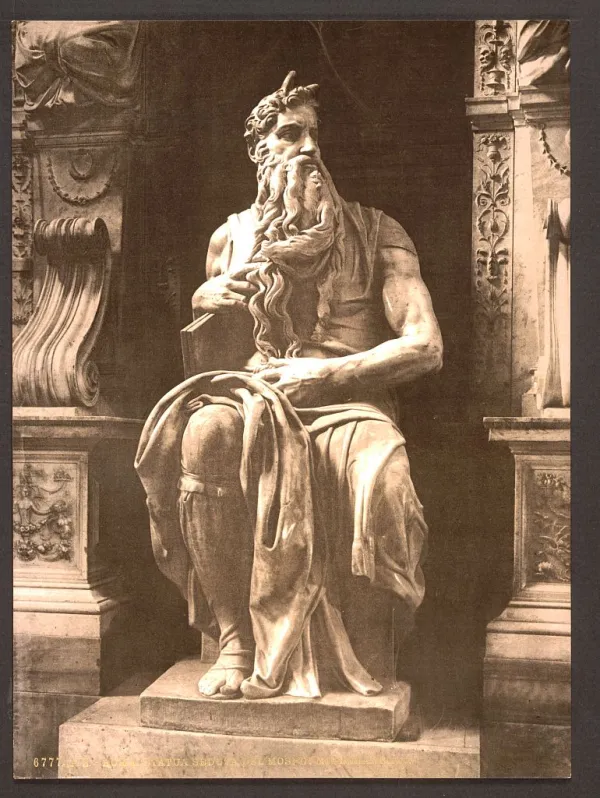
God commanded Moses to return to Egypt and demand the Israelites’ freedom. Moses’ response was not heroic eagerness. It was a series of objections: “Who am I that I should go to Pharaoh?” “What if they don’t believe me?” “I am not a man of words — I am slow of speech.” Finally, desperately: “Please send someone else” (Exodus 4:13).
God’s patience ran out, but He accommodated: Aaron, Moses’ brother, would serve as spokesman. The reluctant prophet set out for Egypt.
Confronting Pharaoh
The confrontation with Pharaoh is the Bible’s greatest drama of liberation. Ten plagues — blood, frogs, lice, wild beasts, pestilence, boils, hail, locusts, darkness, and the death of the firstborn — systematically dismantled Egypt’s sense of divine superiority. Each plague targeted an Egyptian deity: the Nile (worshipped as a god) turned to blood; the sun (Ra) was blotted out in darkness; Pharaoh’s own firstborn — considered divine — died.
Moses’ demand was simple and uncompromising: “Let my people go, that they may serve Me” (Exodus 7:16). Freedom was not an end in itself but a means — liberation for something, not merely from something. The Israelites were not being freed to do whatever they pleased; they were being freed to serve God. This distinction between freedom-as-license and freedom-as-purpose runs through all of Jewish thought.
The Exodus and the Sea
After the tenth plague, Pharaoh relented. The Israelites left Egypt in haste — their bread unrisen, their possessions on their backs. Then Pharaoh changed his mind and sent his army in pursuit. The Israelites found themselves trapped between the Egyptian chariots and the Sea of Reeds (Yam Suf).
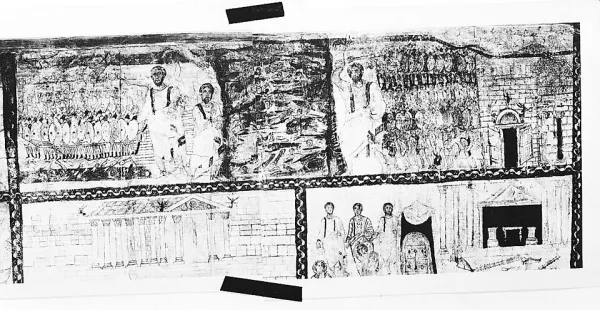
“Stand firm and see the salvation of the Lord,” Moses told the terrified people (Exodus 14:13). The sea split. The Israelites crossed on dry ground. The waters closed over the pursuing Egyptians. On the far shore, Moses and the people sang the Shirat HaYam — the Song of the Sea — one of the oldest poems in the Bible.
The Exodus became the foundational event of Jewish identity. It is referenced more than any other event in the Torah. It is the reason for Shabbat (“remember that you were a slave in Egypt”), the basis of ethical obligation (“love the stranger, for you were strangers in Egypt”), and the template for every subsequent liberation. The Passover seder, retelling this story every year, makes the Exodus not a historical memory but a living experience: “In every generation, a person must see themselves as if they personally had gone out of Egypt.”
Sinai: Revelation and Law
Seven weeks after the Exodus, the Israelites arrived at Mount Sinai. What happened there was the most consequential event in Jewish theology: God’s revelation of the Torah.
The scene was overwhelming. Thunder, lightning, thick cloud, the sound of a shofar growing louder. The mountain itself trembled. God spoke the Ten Commandments directly to the entire people — the only time in the Bible when an entire nation hears God’s voice.
Moses then ascended the mountain for forty days and forty nights, receiving the entirety of the Torah — both the Written Torah and, according to rabbinic tradition, the Oral Torah that would eventually be recorded in the Mishnah and Talmud.
When Moses descended, he found the people worshipping a golden calf. His response was fierce: he shattered the tablets, destroyed the calf, and interceded with God, who was ready to annihilate the people and start over with Moses alone. Moses’ refusal — “If You will not forgive them, blot me out of the book You have written” (Exodus 32:32) — is one of the most selfless moments in scripture.
God forgave. Moses ascended again for another forty days and returned with a second set of tablets. The broken first tablets and the intact second tablets were both placed in the Ark of the Covenant — a teaching that brokenness and wholeness can coexist in sacred space.
Forty Years in the Wilderness
The wilderness years tested Moses relentlessly. The people complained about food (God sent manna). They complained about water (Moses struck or spoke to a rock). They complained about leadership (Korah’s rebellion). They refused to enter the Promised Land after ten of the twelve spies brought back a frightening report, and God decreed that the entire generation would die in the desert.
Through it all, Moses led — teaching, judging, interceding, and recording the laws that would govern Jewish life for millennia. He organized the priesthood, built the Tabernacle (the portable sanctuary), established a judicial system (on the advice of his father-in-law Jethro), and delivered the laws covering everything from criminal justice to agricultural practices to the treatment of animals.
The View from Nebo
At the end of forty years, with the Promised Land in sight, God told Moses he would not enter. Moses’ sin at Meribah — striking the rock instead of speaking to it — had sealed his fate. The punishment seems disproportionate, and Jewish commentators have debated for millennia exactly what Moses did wrong. But the message is clear: no one is above accountability. Not even Moses.
Moses delivered his final addresses — the book of Deuteronomy is essentially his farewell speech — in which he reviewed the law, urged faithfulness, and warned of the consequences of disobedience. He blessed each tribe individually. He appointed Joshua as his successor.
Then he climbed Mount Nebo. God showed him the entire land — Gilead to Dan, Naphtali to the Negev, the Jordan valley, Jericho, and beyond. “I have let you see it with your eyes,” God said, “but you shall not cross over there” (Deuteronomy 34:4).
Moses died on the mountain. He was 120 years old, and “his eye was not dim, nor his vigor diminished.” God buried him in an unknown grave — “and no one knows his burial place to this day.”
The Teacher, Not the King
Judaism’s insistence on calling Moses Rabbeinu — “our teacher” — rather than “our king” or “our lord” speaks to something essential about how Jews understand leadership and authority. Moses brought the Torah, but it is God’s Torah. Moses performed miracles, but they were God’s miracles. Moses was the greatest prophet, but he was still a prophet — a messenger, not the message.
This deliberate de-emphasis of the human messenger in favor of the divine message is one of Judaism’s most distinctive features. It is why there is no cult of Moses, no pilgrimage to his tomb (it doesn’t exist), no deification of the man. The Torah that Moses carried down the mountain — that is what endures. The teacher passes. The teaching remains.
Frequently Asked Questions
Why is Moses considered the greatest prophet in Judaism?
The Torah explicitly states that 'there has not arisen a prophet in Israel like Moses, whom the Lord knew face to face' (Deuteronomy 34:10). Unlike other prophets who received God's messages through dreams, visions, or angels, Moses spoke with God directly — 'mouth to mouth, clearly and not in riddles' (Numbers 12:8). He received the entire Torah at Sinai, performed the most dramatic miracles, and led the people for forty years. Jewish tradition holds that Moses' level of prophecy was unique and will never be equaled.
Why wasn't Moses allowed to enter the Promised Land?
In the incident at Meribah (Numbers 20), God instructed Moses to speak to a rock to bring forth water. Instead, Moses struck the rock twice with his staff, saying 'Shall we bring you water from this rock?' God's punishment was severe: Moses would not enter the Promised Land. The exact nature of his sin is debated — some say it was anger, others say it was taking credit ('shall we bring'), others say it was the striking instead of speaking. Whatever the reason, even Moses was held accountable, demonstrating that no one is above God's standards.
Why doesn't Judaism worship Moses?
Despite Moses' unparalleled status, Judaism deliberately avoids anything resembling worship of Moses. His burial place is unknown — the Torah says God buried him and 'no one knows his burial place to this day' (Deuteronomy 34:6) — specifically, tradition suggests, to prevent his tomb from becoming a shrine. Moses is called 'Moshe Rabbeinu' (Moses our Teacher), not a saint or divine figure. The Torah he brought is called the Torah of God, not the Torah of Moses. Judaism insists that only God is worthy of worship.
Sources & Further Reading
Related Articles
Exodus (Shemot): From Slavery to Sinai
The Book of Exodus tells the dramatic story of Israelite slavery in Egypt, the rise of Moses, the ten plagues, the splitting of the sea, the revelation at Sinai, and the building of the Tabernacle.
The Ten Commandments: Foundation of Moral Law
Given at Mount Sinai and inscribed on two stone tablets, the Ten Commandments form the moral bedrock of Judaism — and have shaped ethical thinking across civilizations.
The Torah: The Heart of Judaism
The Torah is more than a book — it is the living constitution of Jewish life, studied and debated for over three millennia.