Brit Milah: The Covenant of Circumcision
Brit milah — Jewish circumcision on the eighth day — is one of the oldest rituals in Judaism, sealing the covenant between God and Abraham for every generation.
The Oldest Covenant
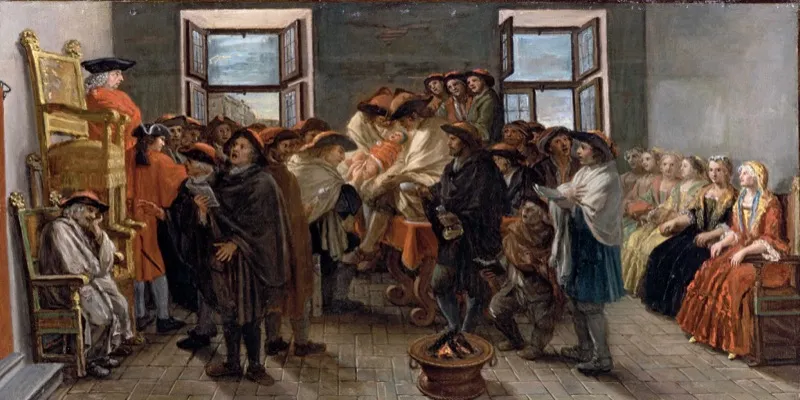
Picture a room full of family and friends, gathered around a newborn boy just eight days old. The father is nervous, the grandmothers are crying, and a man in a kippah is preparing a centuries-old set of instruments. There is wine on the table, a prayer book open, and a special chair — empty, reserved for an invisible guest. This is the brit milah, and it has been happening in Jewish homes for nearly four thousand years.
The brit milah — literally “covenant of circumcision” — is one of the most ancient and enduring rituals in Judaism. It marks a boy’s entry into the covenant between God and the Jewish people, a pact that traces its origin to a single, remarkable moment described in the Torah: God’s command to Abraham in Genesis 17.
“This is My covenant, which you shall keep, between Me and you and your offspring after you: Every male among you shall be circumcised.” — Genesis 17:10
For observant Jews across every denomination and geography, brit milah is not simply a cultural tradition or a medical procedure. It is a physical sign of an eternal relationship — carved, quite literally, into the body.
The Covenant of Abraham
The story begins with Abraham, the first patriarch. At the age of ninety-nine, God appeared to him and established a covenant — a binding agreement — promising that Abraham would be the father of many nations and that his descendants would inherit the land of Canaan. In return, God commanded Abraham to circumcise himself, his household, and every male born into his line, on the eighth day of life.
Abraham obeyed. He circumcised himself, his thirteen-year-old son Ishmael, and every male in his household. When his son Isaac was born to Sarah, Abraham circumcised him on the eighth day — the first brit milah performed according to the commandment.
This covenant is not metaphorical. Jewish tradition understands it as a literal, binding obligation that applies to every generation. The brit milah is considered so important that it overrides Shabbat, Yom Kippur, and every other holiday — if the eighth day falls on any of these, the circumcision still takes place.
The Ceremony
The Mohel
The circumcision is performed by a mohel (plural: mohalim), a trained practitioner who is both medically skilled and religiously knowledgeable. Historically, the mohel was a community figure — part surgeon, part spiritual leader. Today, many mohalim are also physicians, though the role does not require a medical degree. What it does require is extensive training in both the procedure and the liturgy.
The Sandek
The sandek — often translated as “godfather” — holds the baby on a pillow during the circumcision. This is considered a great honor, traditionally given to a grandfather or respected elder. The sandek’s role is compared in the Talmud to the altar in the Temple: just as offerings were placed on the altar, the child is placed on the sandek’s lap for this act of covenant.
The Chair of Elijah
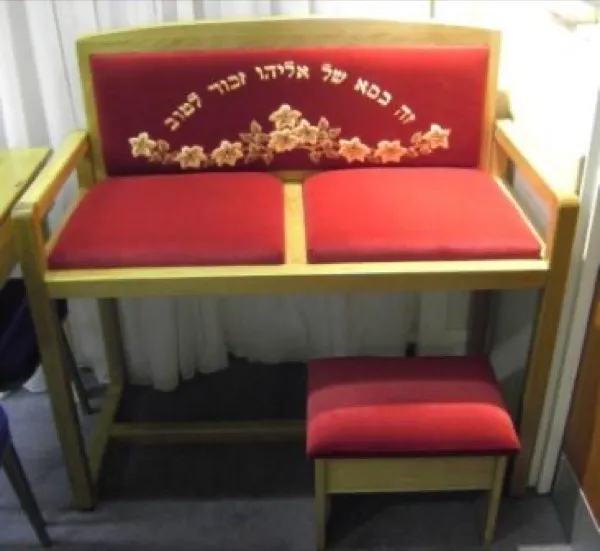
At every brit milah, a special chair is set aside for the prophet Elijah — Kisei shel Eliyahu. According to tradition, Elijah attends every circumcision as a witness. The custom originates from the Midrash, which recounts that Elijah once complained to God that the Israelites had abandoned the covenant. God responded by commanding Elijah to attend every brit milah, so he would see with his own eyes that the covenant endures.
The Naming
After the circumcision, the baby receives his Hebrew name. The father recites a blessing, and the community responds with the traditional formula: “Just as he has entered the covenant, so may he enter into Torah, the wedding canopy, and good deeds.” A festive meal — the seudat mitzvah — follows, celebrating the occasion with food, wine, and blessings.
The Eighth Day: Why Eight?
The insistence on the eighth day is one of the most distinctive features of brit milah. Jewish commentators have offered many explanations. The most widely cited is symbolic: the number seven represents the natural order — the seven days of creation — while eight represents what lies beyond nature. The brit milah, performed on the eighth day, signifies that the covenant transcends the physical world.

There is also a practical dimension. The rabbis noted that by the eighth day, a newborn has experienced at least one Shabbat — he has lived through a complete cycle of creation. Medically, Vitamin K levels (essential for blood clotting) peak around the eighth day, a fact that modern science has confirmed.
Medical and Ethical Debates
Brit milah has always existed at the intersection of religion, medicine, and ethics — and in recent decades, the conversation has grown more complex.
The Medical Perspective
Medical organizations, including the American Academy of Pediatrics, have stated that the health benefits of circumcision (reduced risk of urinary tract infections, certain STIs, and penile cancer) outweigh the risks, but that the benefits are not sufficient to recommend universal circumcision. The procedure remains a matter of parental choice.
Ethical Questions
Critics — including some Jews — have raised questions about performing an irreversible procedure on a child who cannot consent. Organizations like Beyond the Bris and Jews Against Circumcision argue that bodily autonomy should take precedence over tradition. These voices remain a minority within the Jewish world, but they have prompted serious discussion.
Communities That Do Not Practice
Not all Jews circumcise. Some families in the Reform and Reconstructionist movements have chosen not to perform brit milah, opting instead for alternative covenant ceremonies. In Scandinavia and parts of Europe, there have been legislative efforts to ban circumcision of minors, which Jewish communities have strongly opposed as a threat to religious freedom.
Brit Bat: Welcoming Daughters
Because brit milah applies only to boys, Jewish communities have long sought meaningful ways to welcome girls into the covenant. The most common ceremony is the brit bat (covenant of the daughter) or simchat bat (celebration of the daughter).
These ceremonies vary widely — there is no single fixed liturgy — but they typically include blessings, the giving of a Hebrew name, readings from Torah and poetry, and a festive meal. In Sephardic communities, the ceremony is called zeved habat. In many liberal congregations, the brit bat has become as elaborate and communal as the brit milah.
A Living Tradition
Whether performed in a grand synagogue or a small living room, by an Orthodox mohel or a Reform rabbi, the brit milah remains one of the most powerful rituals in Jewish life. It connects a newborn child to Abraham, to Sinai, to every generation of Jews who have carried this covenant across centuries and continents.
It is also, undeniably, a moment of tension — joy and pain, celebration and vulnerability, ancient obligation and modern questioning. That tension is part of what makes it so deeply human. The brit milah does not pretend that covenant is easy. It asks something real, something physical, something permanent. And in doing so, it says: this child belongs to something larger than himself.
Frequently Asked Questions
Why is brit milah performed on the eighth day?
The Torah (Genesis 17:12) specifies the eighth day. In Jewish thought, seven represents the natural world (days of creation), while eight represents the transcendent — the covenant between humanity and God. The commandment is so central that brit milah overrides even Shabbat and Yom Kippur.
What is the difference between a mohel and a doctor performing circumcision?
A mohel is a trained Jewish practitioner who performs the circumcision as a religious ritual, reciting blessings and conducting the covenant ceremony. A medical circumcision performed by a doctor may remove the foreskin but does not fulfill the religious obligation unless it includes the proper blessings and ritual elements.
Are there Jewish alternatives to brit milah?
Some families, particularly in liberal Jewish movements, have adopted brit shalom — a non-surgical covenant ceremony for boys — or brit bat/simchat bat for girls. These ceremonies include blessings, naming, and welcoming the child into the covenant without circumcision. Most Orthodox and Conservative authorities do not consider brit shalom a substitute for brit milah.
Key Terms
Sources & Further Reading
Related Articles
The Covenant: The Bond Between God and Israel
The covenant — brit in Hebrew — is the foundational relationship between God and the Jewish people. From Abraham's circumcision to the revelation at Sinai, explore what it means to live in covenant with the divine.
Jewish Lifecycle: From Birth to Death
Judaism marks every stage of life with sacred rituals — from the brit milah eight days after birth to the traditions of mourning and remembrance.
The Torah: The Heart of Judaism
The Torah is more than a book — it is the living constitution of Jewish life, studied and debated for over three millennia.
What Is Judaism? A Living Introduction to the World's Oldest Monotheistic Faith
Judaism is the world's oldest monotheistic religion, built on covenant, Torah, ethical living, and an unbroken chain of tradition stretching back four thousand years.