The Hebrew Alphabet: A Complete Guide to Aleph-Bet
22 letters, written right to left, each with its own character and history — the Hebrew alphabet is the script of the Torah, modern Israel, and 3,000 years of Jewish civilization.
Strange and Beautiful Marks
The first time you see Hebrew letters, they look like nothing you know. If you grew up reading English, the shapes seem alien — angular and curved at once, dense and mysterious, written in the wrong direction. You might notice dots and dashes hovering above and below certain letters, like a secret code layered onto an already unfamiliar script.
And then you learn them. One by one, the shapes acquire names and sounds. The silent Aleph. The gentle Bet. The guttural Chet that catches in your throat. Within a few weeks of practice, what once looked like indecipherable marks becomes readable text — and you realize you are looking at one of the oldest writing systems still in daily use anywhere on earth.
The Hebrew alphabet — called the Aleph-Bet after its first two letters — has been used continuously for roughly 3,000 years. As one of the foundational scripts in Jewish linguistic heritage, it serves as the writing system for the Torah, the Talmud, medieval poetry, modern Israeli newspapers, and the street signs of Tel Aviv. Learning it is the gateway to an entire civilization.
A Brief History of the Script
Phoenician Origins
The Hebrew alphabet descends from the Proto-Sinaitic and Phoenician scripts, which were among the first alphabetic writing systems in history. The Phoenician alphabet, developed around the 11th century BCE along the coast of modern-day Lebanon, was the ancestor of nearly all alphabets in use today — including Greek, Latin, Arabic, and Hebrew.
The earliest Hebrew inscriptions, such as the Gezer Calendar (10th century BCE), use a script that is nearly identical to Phoenician. Over centuries, the forms diverged, and a distinctively Hebrew script emerged.
From Paleo-Hebrew to Ktav Ashuri
The script used in ancient Israel — now called Paleo-Hebrew or Ktav Ivri — looked quite different from the Hebrew letters we know today. After the Babylonian exile (6th century BCE), Jews gradually adopted the Aramaic square script known as Ktav Ashuri (“Assyrian script”). This is the script used in Torah scrolls today and the basis for all modern Hebrew writing.
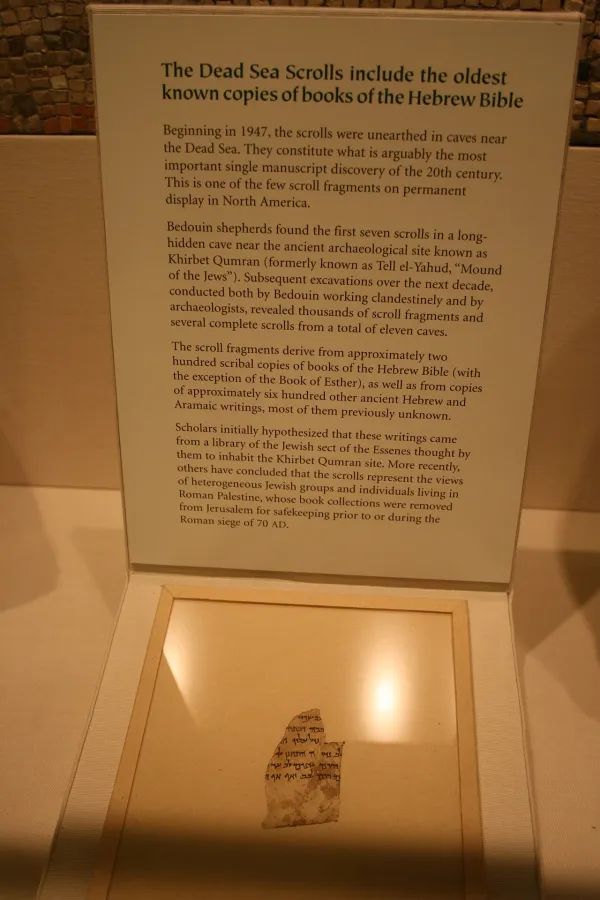
The transition from Paleo-Hebrew to the square script was not instant. The Dead Sea Scrolls (3rd century BCE – 1st century CE) show both scripts in use during the same period. Eventually, the square script won out for everyday and sacred use, while Paleo-Hebrew survived mainly on coins and in a few ceremonial contexts.
The 22 Letters
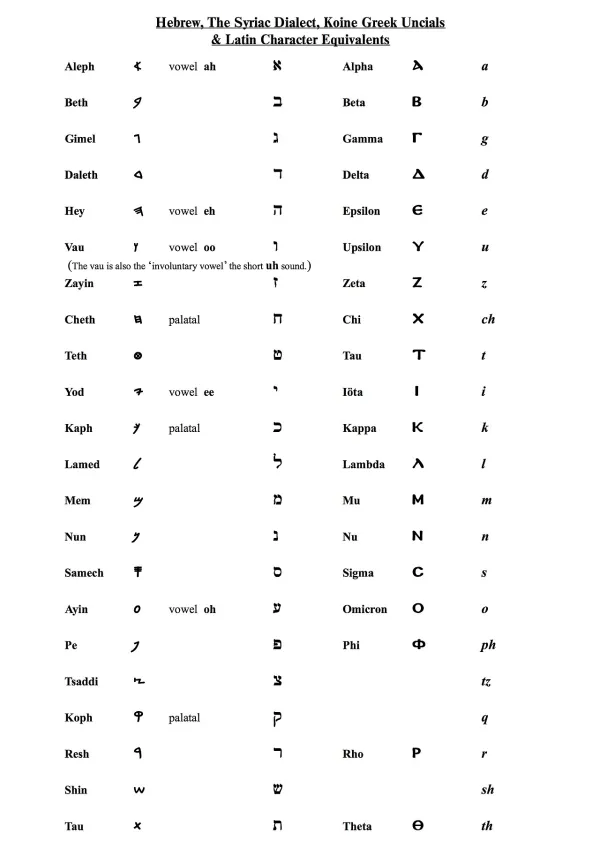
The Hebrew alphabet consists of 22 consonant letters. Here they are, with their names, sounds, and numerical values:
| Letter | Name | Sound | Value |
|---|---|---|---|
| א | Aleph | silent | 1 |
| ב | Bet/Vet | b/v | 2 |
| ג | Gimel | g | 3 |
| ד | Dalet | d | 4 |
| ה | He | h | 5 |
| ו | Vav | v | 6 |
| ז | Zayin | z | 7 |
| ח | Chet | ch (guttural) | 8 |
| ט | Tet | t | 9 |
| י | Yod | y | 10 |
| כ | Kaf/Khaf | k/kh | 20 |
| ל | Lamed | l | 30 |
| מ | Mem | m | 40 |
| נ | Nun | n | 50 |
| ס | Samekh | s | 60 |
| ע | Ayin | silent (guttural) | 70 |
| פ | Pe/Fe | p/f | 80 |
| צ | Tsade | ts | 90 |
| ק | Qof | k | 100 |
| ר | Resh | r | 200 |
| ש | Shin/Sin | sh/s | 300 |
| ת | Tav | t | 400 |
A Few Things to Notice
Dual sounds: Six letters — Bet, Gimel, Dalet, Kaf, Pe, and Tav — historically had two pronunciations each: a “hard” sound and a “soft” sound, distinguished by a dot called a dagesh placed inside the letter. In modern Hebrew, only three of these distinctions are commonly maintained: Bet/Vet (b/v), Kaf/Khaf (k/kh), and Pe/Fe (p/f).
Similar sounds: Several letters produce sounds that overlap. Both Tet and Tav make a “t” sound. Both Kaf and Qof make a “k” sound. Both Samekh and Sin make an “s” sound. These distinctions reflect ancient pronunciation differences that have merged in modern Hebrew but remain important for spelling and religious texts.
Silent letters: Aleph and Ayin are essentially silent in modern Israeli Hebrew, though Ayin was historically a guttural sound (still pronounced in some Mizrahi and Yemenite traditions). These letters serve as carriers for vowel sounds.
Final Forms (Sofit)
Five letters change their shape when they appear at the end of a word. These are called sofit (final) forms:
| Regular | Final | Name |
|---|---|---|
| כ | ך | Kaf sofit |
| מ | ם | Mem sofit |
| נ | ן | Nun sofit |
| פ | ף | Pe sofit |
| צ | ץ | Tsade sofit |
The final forms are easy to spot once you know them. Mem sofit (ם) becomes a closed square. Nun sofit (ן) drops below the line. Learning to recognize these forms is essential for reading Hebrew fluently — they tell your eye that a word is ending, which helps you parse text more quickly.
Vowels: The Nikkud System
Here is something that surprises many learners: the Hebrew alphabet contains no vowels. The 22 letters are all consonants. So how do you know how to pronounce a word?
The answer is the nikkud system — a set of dots and dashes placed above, below, and inside the consonant letters to indicate vowel sounds. Developed by the Masoretes (Jewish scholars in Tiberias) between the 7th and 10th centuries CE, nikkud was created to preserve the correct pronunciation of the Hebrew Bible at a time when Hebrew was no longer a widely spoken everyday language.
The main vowel marks include:
- Kamatz (ָ) — “ah” sound
- Patach (ַ) — “ah” sound (shorter)
- Tsereh (ֵ) — “eh” sound
- Segol (ֶ) — “eh” sound (shorter)
- Chirik (ִ) — “ee” sound
- Cholam (ֹ) — “oh” sound
- Kubutz (ֻ) — “oo” sound
- Shva (ְ) — very short or silent
When Are Vowels Used?
In modern Israel, nikkud is usually omitted. Newspapers, books, websites, street signs, and text messages are all written without vowels. Native readers rely on context, vocabulary knowledge, and pattern recognition to determine pronunciation.
Nikkud appears in:
- The Torah and prayer books — to ensure precise pronunciation of sacred texts
- Children’s books and school textbooks — to help young readers
- Poetry — where exact pronunciation matters for rhythm and rhyme
- Dictionaries — to show how words are pronounced
- Ambiguous words — occasionally added to prevent confusion
Learning to read without vowels is one of the biggest challenges for Hebrew learners. It is also one of the most satisfying skills to acquire — when you can look at a line of consonants and hear the word in your head, you have crossed a threshold into true Hebrew literacy.
Writing Direction
Hebrew is written and read from right to left. This applies to both the ancient script and modern Hebrew. If you are accustomed to left-to-right reading, this takes some adjustment — your eyes need to retrain their scanning direction, and your hand (if you are writing) needs to move in the opposite direction.
Numbers, however, are written left to right using standard Arabic numerals (1, 2, 3…). This creates an interesting phenomenon in modern Hebrew text: a sentence flows right to left, but when a number appears, your eye momentarily switches direction and then switches back. Native readers do this without thinking, but it can be disorienting for beginners.
The Aleph-Bet Song
Just as English-speaking children learn “A-B-C-D-E-F-G…” set to the tune of “Twinkle, Twinkle, Little Star,” Hebrew-speaking children learn the Aleph-Bet through song. The Aleph-Bet Song sets all 22 letters to a simple, catchy melody that makes memorization almost effortless.
The song goes: “Aleph, Bet, Gimel, Dalet, He, Vav, Zayin, Chet, Tet, Yod, Kaf, Lamed, Mem, Nun, Samekh, Ayin, Pe, Tsade, Qof, Resh, Shin, Tav.”
There are many versions — some slow and sweet for toddlers, some fast and rhythmic for older children, some with hand motions. But they all serve the same purpose: to make these 22 shapes feel like friends rather than strangers.
Gematria: Numbers in the Letters
Every Hebrew letter has a numerical value (shown in the table above). This system, called gematria, has been used for thousands of years to find hidden connections between words, to encode messages, and to add layers of meaning to sacred texts.
Some famous examples:
- The Hebrew word chai (חי), meaning “life,” has a numerical value of 18 (Chet = 8, Yod = 10). This is why Jews often give gifts in multiples of 18 — it is considered a gift of life.
- The word Elohim (God) has a value of 86, which is the same as HaTeva (Nature) — a connection that kabbalists and philosophers have pondered for centuries.
Gematria ranges from folk tradition to serious scholarship. Some see it as deep mystical wisdom; others view it as creative wordplay. Either way, it reflects a culture that treats every letter as more than a mere symbol — each one carries weight, meaning, and number.
Torah Script vs. Modern Script
There are two main styles of Hebrew writing that every learner should know:
Ktav Ashuri (Block/Print Script)
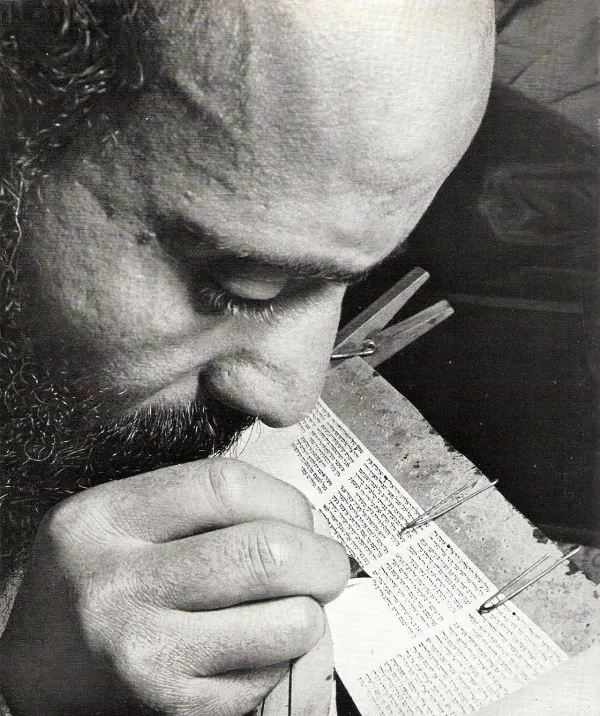
This is the formal, square script used in Torah scrolls, prayer books, and printed text. It is the font you see in the table above. Each letter is distinct, upright, and clearly formed. Torah scrolls must be written in this script by a sofer (scribe), using specific rules that govern the exact shape, spacing, and formation of every letter. A single misformed letter can render a Torah scroll unfit for use.
Ktav (Cursive/Handwriting Script)
Modern Hebrew handwriting uses a cursive script that looks quite different from the printed block letters. Many letters are simplified, rounded, or connected in ways that make them faster to write by hand. Learning both scripts is essential — you need block letters to read books and signs, and cursive to write notes, fill out forms, and text your Israeli friends.
The gap between the two scripts can be startling for beginners. A letter that looks like a neat square in print may become a quick squiggle in cursive. But with practice, the connection between the two becomes clear, and reading both becomes second nature.
Fun Facts About Hebrew Letters
-
Every letter has a meaning. Aleph means “ox,” Bet means “house,” Gimel means “camel,” Dalet means “door.” These names reflect the pictographic origins of the alphabet — ancient Aleph actually looked like an ox head turned on its side.
-
The smallest letter is Yod (י). It is just a tiny mark, but it appears in God’s name and is considered deeply significant. Jesus referenced it in the phrase “not one jot or tittle” — “jot” comes from “Yod.”
-
Hebrew has no capital letters. The first letter of a sentence looks exactly the same as the first letter of any other word. This gives Hebrew text a more uniform visual appearance than English.
-
The letter Shin (ש) appears on every mezuzah and is said to stand for one of God’s names, Shaddai (Almighty).
-
Yiddish, the language of Eastern European Jews, uses the Hebrew alphabet to write what is essentially a Germanic language — a remarkable cultural fusion. Ladino, the language of Sephardic Jews, was also traditionally written in Hebrew characters.
Start Here
If you are reading this article, you are probably thinking about learning Hebrew. Here is the honest truth: the alphabet is the easy part. You can learn to recognize all 22 letters in a week or two. Reading with vowels comes shortly after. The real challenge — reading without vowels, building vocabulary, understanding grammar — takes much longer.
But that first step, learning the Aleph-Bet, is also the most magical. Each letter you learn is a small door opening onto a vast civilization. Behind Aleph stands the word Elohim (God). Behind Bet stands Bereshit (“In the beginning” — the first word of the Torah). Behind Shin stands Shalom (peace).
Twenty-two letters. Three thousand years. One unbroken thread connecting the ancient inscriptions of the Gezer Calendar to the glowing screen of a smartphone in Jerusalem. That thread begins with Aleph.
Frequently Asked Questions
How many letters are in the Hebrew alphabet?
The Hebrew alphabet has 22 letters, all consonants. Five letters (Kaf, Mem, Nun, Pe, Tsade) have special 'final' forms used at the end of a word. Vowels are represented by dots and dashes (nikkud) placed above or below the letters, but are usually omitted in modern Hebrew writing.
Is Hebrew written left to right or right to left?
Hebrew is written and read from right to left. This applies to both ancient and modern Hebrew. Numbers, however, are written left to right (using standard Arabic numerals), which can create interesting mixed-direction text in modern Hebrew.
How long does it take to learn the Hebrew alphabet?
Most people can learn to recognize and read the 22 Hebrew letters in 1-2 weeks with regular practice. Learning to write them takes a bit longer. Reading fluently with vowels (nikkud) takes a few more weeks. Reading without vowels — as in Israeli newspapers — requires vocabulary knowledge and takes months to years.
Key Terms
Sources & Further Reading
Related Articles
Hebrew: The Language of the Torah and Israel
From an ancient sacred tongue to a modern spoken language — the remarkable story of Hebrew's revival.
Jewish Languages Worldwide: A Journey Through Linguistic Diversity
Explore the remarkable linguistic diversity of Jewish communities worldwide — from Hebrew's revival to Yiddish's golden age, Ladino's poetry, and dozens of other Jewish languages across the globe.
The Torah: The Heart of Judaism
The Torah is more than a book — it is the living constitution of Jewish life, studied and debated for over three millennia.
Yiddish: The Language of the Ashkenazi Heart
A thousand years of humor, wisdom, and survival — Yiddish is far more than a language, it's a worldview.