Aramaic: The Ancient Language That Shaped Judaism
Aramaic was the lingua franca of the ancient Near East and became the language of the Talmud, the Kaddish, Kol Nidre, the Zohar, and the Jewish marriage contract. It has survived for 3,000 years — and some people still speak it today.
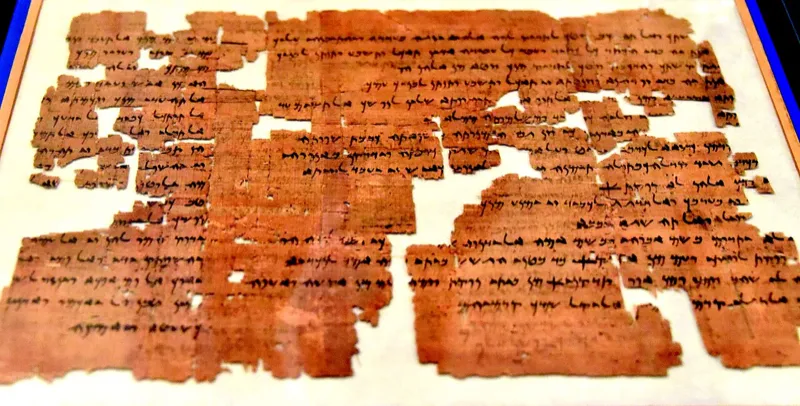
The Language That Refused to Die
There is a language that Jesus spoke, that the Talmud was written in, that Jews recite every time they say Kaddish or listen to Kol Nidre, that mystics used to write the Zohar, and that appears on every Jewish marriage certificate. It is not Hebrew. It is Aramaic — one of the most resilient languages in human history, with a continuous history spanning over 3,000 years.
Most Jews encounter Aramaic without realizing it. The Kaddish? Aramaic. Kol Nidre on Yom Kippur? Aramaic. The ketubah (marriage contract)? Aramaic. The most studied text in the yeshiva world — the Babylonian Talmud? Overwhelmingly Aramaic. This ancient tongue represents one of the most enduring elements of Jewish linguistic heritage, woven so deeply into Jewish life that pulling it out would unravel the tradition itself.
A Brief History
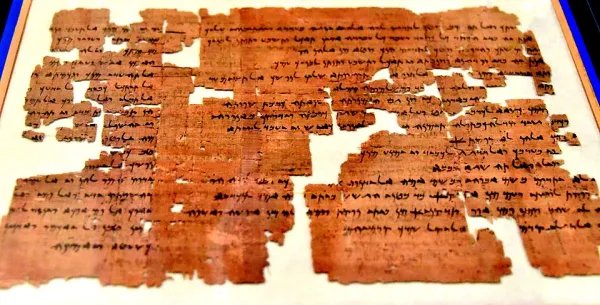
Origins (1200-800 BCE)
Aramaic originated among the Aramaean tribes in what is now Syria and upper Mesopotamia. It is a Northwest Semitic language, closely related to Hebrew, Phoenician, and Ugaritic.
Imperial Aramaic (800-300 BCE)
The Assyrian Empire adopted Aramaic as its administrative language, and the Persian Empire (Achaemenid) made it the official lingua franca of the entire empire — from Egypt to India. During this period, Aramaic was to the ancient Near East what English is to the modern world: the language of diplomacy, trade, correspondence, and cross-cultural communication.
Several sections of the Hebrew Bible are written in Aramaic, including portions of Daniel (2:4-7:28) and Ezra (4:8-6:18, 7:12-26), reflecting the bilingual reality of the Jewish community during and after the Babylonian exile.
Jewish Aramaic (300 BCE - 700 CE)
After the Babylonian exile (586 BCE), Jews increasingly adopted Aramaic as their everyday spoken language, while Hebrew remained the language of scripture, prayer, and scholarship. By the time of Jesus (1st century CE), most Jews in the Land of Israel and Babylon spoke Aramaic as their first language. Hebrew was the “holy tongue” — for study and liturgy — while Aramaic was the vernacular.
This bilingual situation produced some of Judaism’s most important texts in Aramaic — including the Targumim (Aramaic translations of the Torah), the Talmud, and eventually the Zohar.
Decline and Survival (700 CE - present)
As Arabic spread through the Middle East following the Islamic conquests, Aramaic gradually declined as a spoken language. But it survived in three ways:
- As a liturgical and literary language in Judaism (Talmud, Kaddish, ketubah)
- As a spoken language among Assyrian Christian communities in Iraq, Syria, and Turkey
- As a ritual language in Mandaean and Syriac Christian traditions
Aramaic in Jewish Life
The Talmud
The Babylonian Talmud — the foundational text of rabbinic Judaism, studied daily by hundreds of thousands of Jews worldwide — is written primarily in Aramaic (specifically Babylonian Jewish Aramaic). The Mishnah (the Talmud’s core) is in Hebrew, but the Gemara (the extensive commentary and discussion) is in Aramaic. Learning Talmud means learning Aramaic — there is no way around it.
The Jerusalem Talmud uses a different Aramaic dialect (Palestinian/Galilean Aramaic). Both dialects differ from the Aramaic of the Bible and from the Aramaic of the Zohar.
The Kaddish
The Kaddish — the prayer recited by mourners and at transitions in the prayer service — is in Aramaic. Its opening words, “Yitgadal v’yitkadash shmei raba” (“May His great name be magnified and sanctified”), are among the most frequently recited words in Jewish liturgy.
Why Aramaic? Because when the Kaddish was composed (during the late Second Temple or early rabbinic period), Aramaic was the language people actually spoke. The rabbis wanted this particular prayer — a public declaration of God’s greatness — to be understood by everyone, not just the Hebrew-literate elite.
Kol Nidre
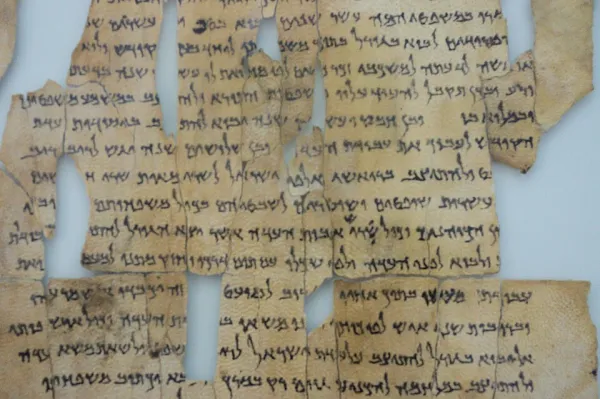
The most emotionally powerful moment of the Jewish year — Kol Nidre, chanted at the beginning of Yom Kippur — is in Aramaic. “Kol Nidre” means “All vows,” and the text is a legal declaration annulling personal vows and promises made to God that were not fulfilled.
The haunting melody of Kol Nidre has moved Jews to tears for centuries. But the text itself is dry, legalistic Aramaic — a reminder that in Judaism, law and emotion are never far apart.
The Ketubah (Marriage Contract)
The Jewish marriage contract, read under the chuppah at every Jewish wedding, is written in Aramaic. It specifies the groom’s financial obligations to the bride — a practical, legal document that is also a work of art (decorated ketubot are a major Jewish art form).
The Zohar
The Zohar — the central text of Kabbalah (Jewish mysticism) — is written in a literary Aramaic that scholars believe was artificially composed in 13th-century Spain by Rabbi Moses de Leon, styled to sound ancient. Regardless of its origins, the Zohar’s Aramaic became the language of Jewish mysticism.
Targumim (Translations)
The Targum Onkelos (on the Torah) and Targum Yonatan (on the Prophets) are Aramaic translations of the Hebrew Bible, produced during the rabbinic period. They are not just translations but interpretive — adding explanations and nuances that reveal how the rabbis understood the biblical text. The Targum Onkelos is traditionally printed alongside the Hebrew Torah text in many editions.
How Aramaic Sounds
Aramaic is close enough to Hebrew that a Hebrew speaker will recognize many words:
- “Abba” (father) — the same in Hebrew and Aramaic
- “Shmaya” (heaven) — compare Hebrew “shamayim”
- “Malka” (king) — compare Hebrew “melech”
- “Yoma” (day) — compare Hebrew “yom”
But the grammar is different. Aramaic uses a definite article suffix (-a) rather than a prefix (Hebrew ha-). Verb forms differ. And there is a large vocabulary of uniquely Aramaic words that do not exist in Hebrew.
Aramaic Today
Remarkably, Aramaic is not dead. Several thousand Assyrian Christians in communities in Iraq, Syria, Turkey, and the global diaspora still speak modern Aramaic dialects (Neo-Aramaic) as their mother tongue. These communities face existential threats from war, displacement, and assimilation, making their linguistic survival precarious.
In the Jewish world, Aramaic lives on as a literary and liturgical language — recited daily in prayers, studied intensively in yeshivot, and encountered at every Jewish wedding, funeral, and Yom Kippur. It is not spoken conversationally, but it is far from forgotten.
Summing Up
Aramaic is the hidden second language of Judaism — present at the most sacred moments (Kaddish, Kol Nidre, the wedding), woven through the most studied text (the Talmud), and underlying the most mystical tradition (the Zohar). It has survived for 3,000 years by embedding itself so deeply in Jewish practice that removing it would be impossible. Every Jew who says Kaddish, who signs a ketubah, who opens a page of Talmud, is keeping this ancient language alive — one word at a time.
Frequently Asked Questions
Is Aramaic the same as Hebrew?
No, but they are closely related. Both are Semitic languages that share the same alphabet, many cognate words, and similar grammatical structures. A Hebrew speaker can recognize some Aramaic words and vice versa — similar to the relationship between Spanish and Portuguese. But they are distinct languages with different vocabulary, grammar, and verb systems. Learning one helps with the other, but they are not interchangeable.
Why is the Kaddish in Aramaic instead of Hebrew?
The Kaddish was composed during a period when Aramaic was the everyday spoken language of Jews in Babylon and the Land of Israel. The rabbis wanted the Kaddish — a prayer praising God — to be understood by everyone, including those who did not know Hebrew. Ironically, Aramaic later became the less understood language, but the prayer remained in its original form. There is also a mystical tradition that Aramaic was used to prevent the angels from understanding the prayer — ensuring it went directly to God.
Can you still learn Aramaic today?
Yes. Aramaic is taught at many universities as an academic subject. Yeshiva students who study Talmud develop reading proficiency in Aramaic through immersion. Several textbooks exist for self-study, and some languages courses are available online. A small number of communities — primarily Assyrian Christians in Iraq, Syria, Turkey, and the diaspora — still speak modern Aramaic dialects as a living language. Some Kurdish Jews also preserved Aramaic dialects until their immigration to Israel in the mid-20th century.
Sources & Further Reading
Related Articles
Hasidic Dress: Tradition in Every Thread
The distinctive black and white attire of Hasidic Jews carries centuries of meaning — each garment tells a story of piety, community, and identity.
Hebrew: The Language of the Torah and Israel
From an ancient sacred tongue to a modern spoken language — the remarkable story of Hebrew's revival.
Jewish Languages Worldwide: A Journey Through Linguistic Diversity
Explore the remarkable linguistic diversity of Jewish communities worldwide — from Hebrew's revival to Yiddish's golden age, Ladino's poetry, and dozens of other Jewish languages across the globe.
Torah Portions: The Weekly Reading Cycle
Every week, Jewish communities worldwide read the same Torah portion. Explore the 54 parashot, the system of aliyot, the Haftarah connection, and the joyous restart on Simchat Torah.