The Second Temple Period: From Exile's End to Rome's Destruction
From the return from Babylon to the Roman destruction in 70 CE — how six centuries of foreign rule, theological innovation, and political turmoil created the Judaism we know today.
Between Two Destructions
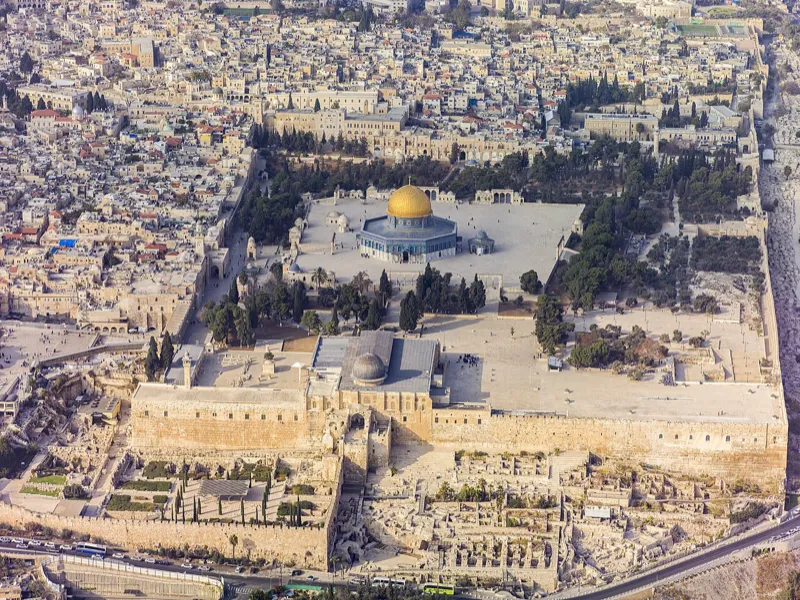
The Second Temple period spans six centuries — from the return of Jewish exiles from Babylon around 538 BCE to the Roman destruction of the Temple in 70 CE. That is longer than the entire history of the United States. And within those six hundred years, virtually everything that defines Judaism as we know it today was born, debated, refined, and tested.
If you want to understand why Jews pray three times a day, why rabbis exist, why the Passover seder has its particular form, why Jews read from the Torah in synagogues, or why the Western Wall is sacred — you need to understand the Second Temple period. It is the bridge between ancient Israelite religion and modern Judaism.
Return and Rebuilding
In 538 BCE, the Persian king Cyrus the Great conquered Babylon and issued a decree permitting conquered peoples to return to their homelands and rebuild their temples. For the Jewish exiles, this was miraculous — the prophet Isaiah had actually named Cyrus as God’s instrument before it happened (Isaiah 45:1).
But the return was not the triumphal homecoming the exiles had imagined. Only a minority chose to go back — perhaps 42,000, according to the book of Ezra. Many had built comfortable lives in Babylon and chose to stay, establishing the oldest continuous diaspora community. Those who returned found Jerusalem in ruins, the land occupied by people who had moved in during the exile, and the project of rebuilding enormously difficult.
Under Zerubbabel, a descendant of the Davidic line, and Joshua the High Priest, construction of the Second Temple began. When the foundation was laid, the older exiles who remembered Solomon’s Temple wept — it was so much smaller, so much humbler than what had been lost. The younger generation, who had never seen the original, shouted for joy (Ezra 3:12-13).
The Second Temple was completed around 516 BCE — exactly seventy years after the destruction of the first, just as Jeremiah had prophesied.
The Persian Period: Ezra, Nehemiah, and the Torah
Under Persian rule, two figures reshaped Jewish life. Nehemiah, a Jewish official in the Persian court, came to Jerusalem around 445 BCE and rebuilt the city walls. Ezra, a priest and scribe, arrived with a copy of the “Torah of Moses” and read it publicly to the assembled people in what scholars consider the first public Torah reading — a practice that continues every Shabbat in every synagogue in the world.
Ezra also enforced strict boundaries around Jewish identity, controversially requiring Jewish men who had married non-Jewish women to dissolve those marriages. Whatever we think of this decision, it reflected a community terrified of losing its identity — and determined to survive.
The Persian period was relatively peaceful for Jews. They had limited self-governance under the High Priest, could practice their religion freely, and developed the institutions — synagogue, public Torah reading, scribal traditions — that would eventually make the Temple itself unnecessary for Jewish survival.
The Greek Challenge
Everything changed in 332 BCE when Alexander the Great swept through the region. After Alexander’s death, his empire fragmented, and the land of Israel became a contested territory between the Ptolemies of Egypt and the Seleucids of Syria.
Greek culture — Hellenism — was seductive. Greek philosophy, athletics, theater, and aesthetics offered a sophisticated, cosmopolitan worldview. Many Jews embraced it enthusiastically. They attended the gymnasium, adopted Greek names, wrote in Greek, and saw no contradiction between being Jewish and being Hellenistic. Others viewed Hellenism as an existential threat to Jewish identity.
The crisis came under the Seleucid king Antiochus IV Epiphanes (reigned 175–164 BCE). Antiochus banned Jewish practices — circumcision, Sabbath observance, Torah study — and desecrated the Temple by erecting an altar to Zeus and sacrificing pigs on it. This was not mere cultural pressure; it was forced assimilation backed by the death penalty.
The response was the Maccabean revolt, led by the priest Mattathias and his sons, most famously Judah Maccabee. Against enormous odds, the Maccabees defeated the Seleucid forces, recaptured the Temple, and rededicated it in 164 BCE — the event commemorated by Hanukkah.
The Hasmonean Kingdom
The Maccabees’ descendants — the Hasmonean dynasty — established an independent Jewish kingdom that lasted about a century (140–63 BCE). It was the last period of Jewish political independence until 1948.
But the Hasmonean kingdom was troubled. The Hasmoneans were priests, not Davidic descendants, and many questioned their legitimacy as kings. They expanded the kingdom through military conquest and forced conversion of neighboring peoples — a practice that troubled many Jews. Internal power struggles, civil wars, and increasingly corrupt governance eroded whatever idealism had launched the revolt.
The various Jewish factions that would define the late Second Temple period crystallized during Hasmonean rule. The Sadducees — the priestly aristocracy — supported the Hasmonean establishment. The Pharisees — popular teachers who emphasized oral tradition and personal piety — often clashed with the rulers. Tensions between these groups sometimes erupted into outright violence.
Rome Arrives
In 63 BCE, the Roman general Pompey conquered Jerusalem, walked into the Holy of Holies (finding it empty, to his surprise), and made Judea a Roman client state. Jewish independence was over.
Rome initially ruled through local proxies. The most significant was Herod the Great (reigned 37–4 BCE), an Idumean (Edomite) whose family had been forcibly converted to Judaism by the Hasmoneans. Herod was a brilliant builder, a cunning politician, and a paranoid tyrant who executed several of his own sons and one of his wives.
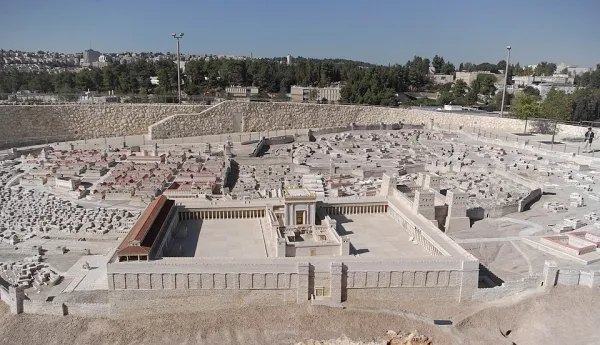
Herod’s greatest project was the expansion of the Second Temple. He essentially rebuilt it on a massive scale, doubling the size of the Temple Mount by constructing enormous retaining walls (the Western Wall is part of this construction) and erecting a Temple of extraordinary beauty. The Talmud records: “He who has not seen Herod’s Temple has never seen a beautiful building in his life” (Bava Batra 4a).
Pharisees, Sadducees, and Essenes
By the first century CE, Jewish life was extraordinarily diverse. Three major movements vied for influence:
The Sadducees controlled the Temple. They accepted only the Written Torah as authoritative, denied the resurrection of the dead, and were politically pragmatic — willing to accommodate Roman power to preserve their position. They were the establishment.
The Pharisees were the popular movement. They believed in an Oral Torah — a tradition of interpretation passed down alongside the Written Torah — and championed practices that made Judaism accessible outside the Temple: synagogue worship, personal prayer, ethical behavior, and study. They believed in resurrection, angels, and divine providence. Their intellectual heirs would create the Talmud.
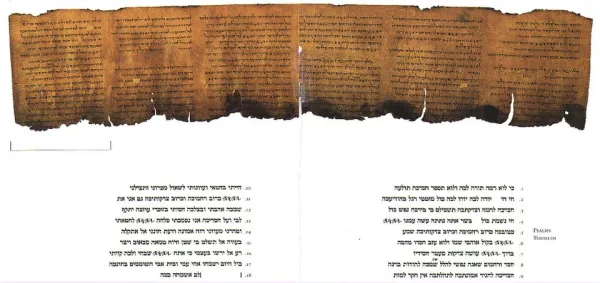
The Essenes rejected both groups. They withdrew from mainstream society, living in ascetic communities (most famously at Qumran by the Dead Sea). They practiced ritual immersion, held property in common, and studied apocalyptic texts. The Dead Sea Scrolls, discovered in 1947, are believed to be their library.
There were also Zealots who advocated armed resistance to Rome, and various messianic movements that anticipated divine intervention to overthrow Roman rule.
The Great Revolt and Destruction
Roman governance of Judea was often brutal and insensitive. Tensions built throughout the first century CE until, in 66 CE, a full-scale revolt erupted. The Jews initially succeeded, driving the Romans out of Jerusalem and defeating a Roman legion.
Rome responded with overwhelming force. General Vespasian (later emperor) and his son Titus systematically reconquered the territory. In 70 CE, after a brutal siege during which famine killed thousands within the walls, the Romans breached Jerusalem’s defenses and burned the Temple.
The destruction occurred on the ninth of Av (Tisha B’Av) — the same date, tradition holds, as the destruction of the First Temple. The coincidence was too powerful to be coincidence. It became the darkest day on the Jewish calendar.
The Temple — the center of Jewish worship for a millennium, the place where heaven and earth met, the destination of pilgrimage, the site of sacrifice — was gone. The Sadducees, whose power depended on the Temple, disappeared from history. The Essenes vanished. The Zealots made a last stand at Masada in 73 CE.
From Destruction to Renewal
Only the Pharisaic tradition survived — and it did more than survive. Under the leadership of Rabban Yochanan ben Zakkai, who according to legend escaped Jerusalem in a coffin during the siege, the rabbis gathered at Yavneh and began the monumental work of transforming Judaism from a Temple-centered religion into a text-centered, prayer-centered, community-centered way of life.
Prayer replaced sacrifice. The synagogue replaced the Temple. The rabbi replaced the priest. Torah study became the highest form of worship. The rhythms of Jewish life — Shabbat, holidays, lifecycle events — were reorganized around practices that could be performed anywhere, by anyone, without a Temple.
This was not merely adaptation. It was one of the most remarkable acts of religious reinvention in human history. The Judaism that emerged from the ashes of the Second Temple is, in its essentials, the Judaism practiced today — from Orthodox synagogues in Brooklyn to Reform congregations in San Francisco to Sephardi communities in Istanbul.
The Temple is gone. But what replaced it has proven far more durable than stone.
Frequently Asked Questions
When was the Second Temple built and destroyed?
The Second Temple was built around 516 BCE, approximately seventy years after the Babylonians destroyed the First Temple. It was rebuilt by Jewish exiles who returned from Babylon under the Persian king Cyrus the Great's decree. King Herod massively expanded and renovated the Temple beginning around 19 BCE. The Romans destroyed the Second Temple in 70 CE, ending the sacrificial worship system that had been central to Jewish practice for a millennium.
What were the Pharisees, Sadducees, and Essenes?
These were the major Jewish religious movements of the late Second Temple period. The Sadducees were the priestly aristocracy who accepted only the Written Torah and controlled the Temple. The Pharisees were popular teachers who believed in an Oral Torah alongside the Written Torah and championed synagogue worship and personal piety. The Essenes were an ascetic sect who withdrew from mainstream society — the Dead Sea Scrolls are believed to be their library. After the Temple's destruction, the Pharisaic tradition survived and evolved into rabbinic Judaism.
Why is the Second Temple period so important for understanding modern Judaism?
Virtually every form of Judaism practiced today traces its roots to developments during the Second Temple period. The synagogue, the rabbi, prayer as a substitute for sacrifice, the canon of the Hebrew Bible, the concept of oral law, the Passover seder, and the idea of individual resurrection — all emerged or crystallized during this era. The destruction of the Temple in 70 CE forced the transformation from a Temple-centered religion to the portable, text-centered Judaism that has survived for two millennia.
Sources & Further Reading
Related Articles
Ancient Israel: From Abraham to the Kingdoms
The foundational story of the Jewish people — from the call of Abraham through the united monarchy of David and Solomon.
The Bar Kokhba Revolt: The Last Jewish Stand Against Rome
In 132 CE, Simon bar Kokhba led the last great Jewish revolt against Rome. Initially successful, the rebellion was crushed with devastating consequences — Judaea was renamed Palestine, and the Jewish people's relationship with their homeland was fundamentally altered.
The Maccabees and the Hasmonean Era
The dramatic story of the Maccabean revolt against Greek oppression — from Mattathias's defiance to Judah Maccabee's victories, the Temple rededication, and the rise and fall of the Hasmonean dynasty.