Ralph Lauren: From the Bronx to the American Dream
Ralph Lifshitz from the Bronx became Ralph Lauren, architect of the American Dream — building a fashion empire by selling an idealized vision of America to the world.
The Tie That Built an Empire
In 1967, a twenty-eight-year-old man from the Bronx began selling neckties from a drawer in a showroom in the Empire State Building. The ties were wider than anything else on the market — bold, European-styled, and expensive. Department store buyers said they were too wide, too different, too costly. But the man had a vision of American style that went beyond neckties, beyond fashion, beyond clothing itself. He was selling a dream.
His name was Ralph Lifshitz. He had changed it to Ralph Lauren. And the dream he was selling would become one of the most successful fashion empires in history.
The Bronx
Ralph Lauren was born on October 14, 1939, in the Bronx, New York, to Frank and Frieda Lifshitz, Ashkenazi Jewish immigrants from Belarus. Frank worked as a house painter. The family of six lived in a small apartment. Money was tight, but the children were loved, fed, and expected to make something of themselves.
Young Ralph was fascinated by clothing from an early age. He studied the movie stars — Cary Grant, Fred Astaire, Gary Cooper — and noticed that their clothes told stories. A tweed jacket suggested old-money education. A leather bomber jacket suggested adventure. Clothing was not just fabric; it was identity.
He bought his clothes with money earned from odd jobs, carefully selecting pieces that created the impression of a life far more glamorous than a walk-up apartment in the Bronx. He changed his name because “Lifshitz” invited mockery. It was a pragmatic decision, but also a symbolic one: the boy from the Bronx was already reinventing himself.
Building Polo
After a stint in the Army and a job selling ties for a Boston company, Lauren struck out on his own. His wide, hand-made neckties caught the attention of Bloomingdale’s, which gave him a small display. They sold out immediately. By 1968, he had launched the Polo brand with a complete men’s line.
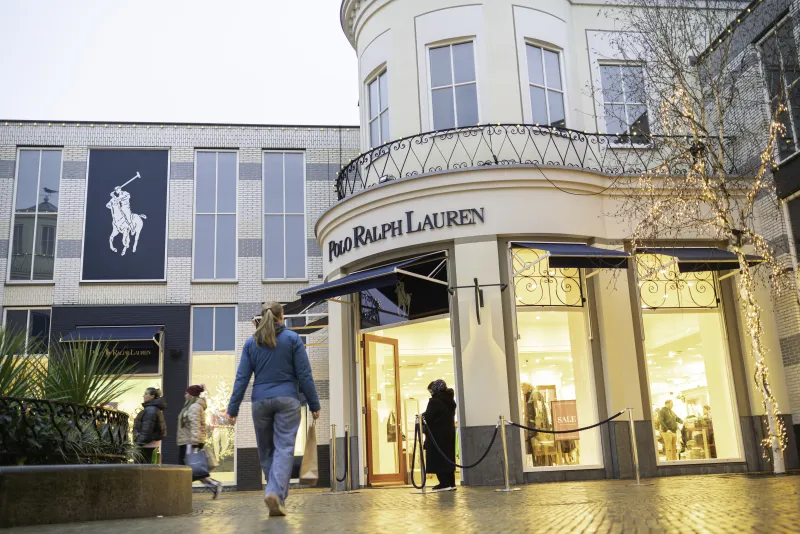
What set Lauren apart was not just design but storytelling. Every collection told a story — the English countryside, the American West, safari adventure, Gatsby-era elegance. He was selling not clothes but aspirations. The famous Polo logo — a polo player on horseback — evoked a world of inherited wealth, athletic grace, and effortless style.
The irony was exquisite: a Jewish kid from the Bronx, the son of immigrants, was telling America what American elegance looked like. And America believed him. Lauren understood something fundamental about the American immigrant experience: the American Dream is not about where you come from. It is about where you are going.
The Empire
Lauren expanded relentlessly: women’s wear, home furnishings, fragrances, restaurants, a media company. He was the first designer to create a complete lifestyle brand — not just clothes but an entire aesthetic vision that extended from the bedroom to the dinner table to the ranch.
By the 1990s, Ralph Lauren was a multi-billion-dollar global brand. Lauren himself became one of the wealthiest people in fashion, with a net worth exceeding $6 billion. He lived on an estate in Bedford, New York, drove vintage cars, and collected Western art — living the life he had imagined as a boy in the Bronx.
Jewish Identity
Lauren has been relatively private about his Jewish identity, but it is woven into his story. The immigrant experience — the drive to belong, to succeed, to transcend the circumstances of one’s birth — is the engine of his career. He has donated generously to Jewish causes and to cancer research (he was treated for a brain tumor in 1987).
His story is the quintessential Jewish-American success story: a child of immigrants who took nothing for granted, worked relentlessly, and transformed an entire industry through sheer force of vision. Ralph Lauren proved that in America, a boy named Lifshitz from the Bronx could define what it means to be American.
Frequently Asked Questions
What was Ralph Lauren's original name?
Ralph Lauren was born Ralph Lifshitz on October 14, 1939, in the Bronx, New York. He changed his name to Lauren as a teenager, reportedly because the name Lifshitz invited teasing. His brother Jerry also changed his surname.
How did Ralph Lauren start his fashion career?
Lauren started by selling wide, European-style neckties from a drawer in a showroom on the Empire State Building's upper floors. His ties were wider, bolder, and more expensive than anything else on the market. Bloomingdale's gave them shelf space, they sold out immediately, and Lauren used the profits to launch Polo Ralph Lauren in 1967.
What is Ralph Lauren's net worth?
Ralph Lauren's net worth is estimated at over $6 billion, making him one of the wealthiest people in the fashion industry. The Ralph Lauren Corporation generates approximately $6 billion in annual revenue, with operations in over 100 countries.
Key Terms
Sources & Further Reading
- Alan Flusser — Ralph Lauren: In His Own Fashion
- Forbes — Ralph Lauren Profile ↗
- Jewish Virtual Library — Ralph Lauren ↗
Related Articles
Jewish Immigration to America: Four Waves That Built a Community
Jewish immigration to America came in four distinct waves — Sephardic (1654), German (1840s), Eastern European (1880-1924), and Soviet/Israeli (1970s+). Each wave transformed the community, and each left marks on American life that endure today.
Jewish Inventors Who Changed the World
From the polio vaccine to blue jeans, from nuclear science to Google — Jewish inventors and entrepreneurs have shaped the modern world. Meet the innovators whose work touches daily life in ways most people never realize.
Jews in America: Four Centuries of History
From 23 refugees arriving in New Amsterdam in 1654 to a thriving community of nearly seven million, the story of Jews in America is a story of reinvention, contribution, and enduring identity.