Niels Bohr: Atomic Pioneer and Rescuer of Danish Jews
Niels Bohr revolutionized atomic physics with his model of the atom, then risked his life to help rescue nearly all of Denmark's Jews from the Holocaust.
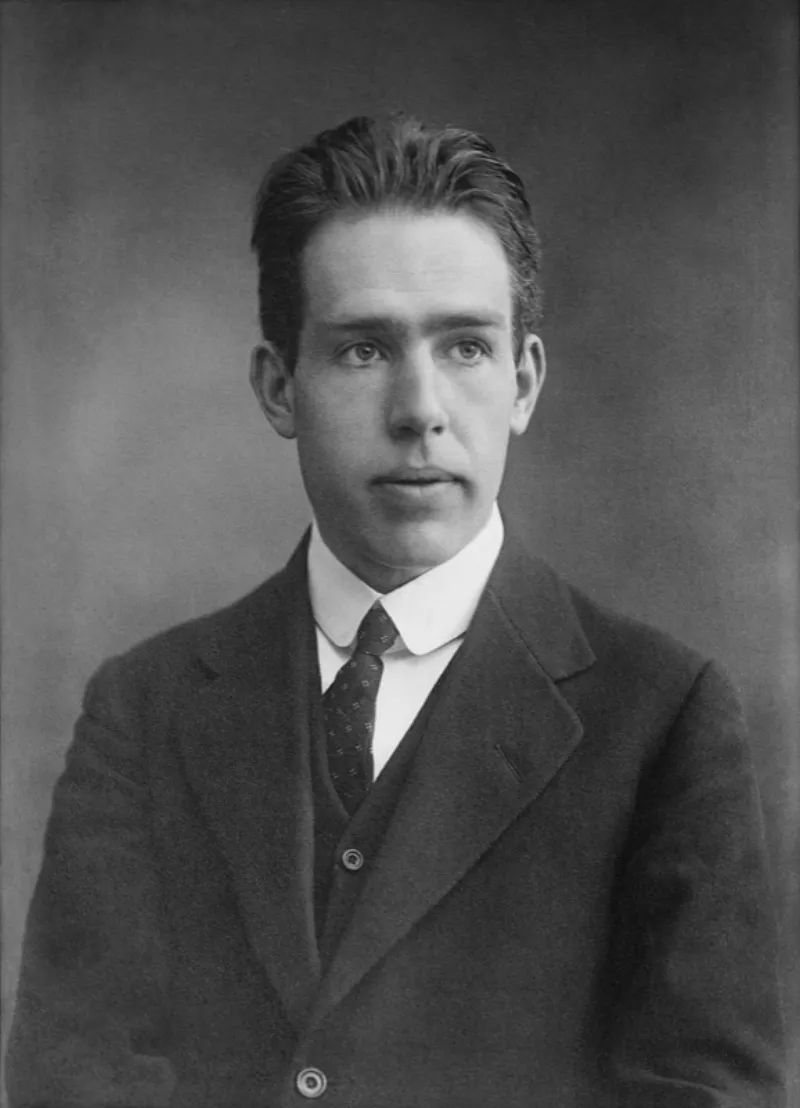
The Atom’s Architect
In 1913, a young Danish physicist published three papers that changed everything we knew about the structure of matter. Niels Henrik David Bohr proposed that atoms were not the tiny billiard balls that classical physics imagined. Instead, electrons orbited the nucleus at specific energy levels, jumping between them like a person climbing a staircase — never hovering between steps. It was a radical idea, and it was right. It launched the quantum revolution.
But Bohr’s life was not only about atoms. Three decades after his breakthrough, with the Nazis occupying his homeland, he would face a different kind of challenge — one that required not scientific genius but moral courage. His response to that challenge is as important as anything he did in physics.
Copenhagen Childhood
Bohr was born on October 7, 1885, in Copenhagen, Denmark. His father, Christian Bohr, was a distinguished physiology professor. His mother, Ellen Adler, came from one of Denmark’s most prominent Jewish families — the Adlers were bankers, politicians, and intellectuals who had been part of Danish society for generations.
The Bohr household was intellectually vibrant. Christian Bohr hosted gatherings with philosophers, scientists, and artists. Young Niels and his brother Harald (who became a famous mathematician and Olympic soccer player) grew up immersed in ideas. Ellen Adler’s Jewish family brought a tradition of intellectual seriousness and social responsibility that shaped both sons deeply.
Bohr studied physics at the University of Copenhagen, then went to Cambridge and Manchester, where he worked with Ernest Rutherford, who had just discovered the atomic nucleus. It was in Manchester that Bohr had his great insight: combining Rutherford’s nuclear model with Max Planck’s quantum theory to create the Bohr model of the atom.
The Quantum Revolution
The Bohr model explained something that had baffled physicists for years: why atoms emit light only at specific wavelengths. Bohr showed that when an electron drops from a higher energy level to a lower one, it emits a photon of a precise frequency. The model perfectly predicted the spectral lines of hydrogen.
For this work, Bohr received the Nobel Prize in Physics in 1922. He founded the Institute for Theoretical Physics in Copenhagen (later renamed the Niels Bohr Institute), which became the world’s leading center for quantum mechanics. The greatest physicists of the era — Heisenberg, Pauli, Dirac, Einstein — all came to Copenhagen to work with Bohr.
Bohr developed the Copenhagen interpretation of quantum mechanics, which held that particles do not have definite properties until they are measured. This led to his famous debates with Einstein, who refused to accept that God “plays dice with the universe.” Bohr reportedly replied: “Stop telling God what to do.”
The Occupation and the Rescue
When Germany occupied Denmark in April 1940, Bohr initially stayed in Copenhagen, continuing his work and protecting his institute. His Jewish heritage made his position precarious, but Denmark’s relatively lenient occupation allowed him to continue for a time.
In September 1943, the situation changed dramatically. The Nazis planned to round up and deport Denmark’s approximately 7,800 Jews. Word leaked to the Danish resistance, which organized one of the most remarkable rescue operations of the Holocaust. In a matter of days, ordinary Danes — fishermen, doctors, teachers, students — smuggled nearly 7,200 Jews across the narrow Oresund strait to neutral Sweden in fishing boats, rowboats, and kayaks.
Bohr played a crucial role. He helped spread the warning to the Jewish community and used his international prestige to ensure that Sweden would accept the refugees. He personally met with King Gustav V of Sweden and secured a public statement guaranteeing asylum. Then Bohr himself had to flee. On September 29, 1943, he and his family were smuggled to Sweden in a fishing boat.
From Sweden, Bohr was flown to Britain in the bomb bay of a Mosquito aircraft — a harrowing journey during which he nearly died from lack of oxygen because his head was too large for the flight helmet. He then traveled to the United States, where he joined the Manhattan Project at Los Alamos.
After the War
At Los Alamos, Bohr contributed to the bomb project but was primarily concerned with the political implications of nuclear weapons. He met with both Churchill and Roosevelt to advocate for international control of atomic energy, arguing that openness and cooperation were the only alternatives to a catastrophic arms race. Churchill was dismissive; Roosevelt was sympathetic but died before acting.
After the war, Bohr returned to Copenhagen and spent his remaining years advocating for peaceful uses of nuclear energy and international scientific cooperation. He received numerous honors and remained active in physics until his death on November 18, 1962, at the age of seventy-seven.
Jewish Legacy
Bohr’s relationship to his Jewish heritage was complex. He was not religious, and Denmark’s assimilated Jewish community did not emphasize ethnic identity the way other Jewish communities did. But the experience of the occupation — of being targeted for his Jewish blood, of watching his community face annihilation, of fleeing for his life — deepened his sense of connection to Jewish history and to the broader struggle against antisemitism.
His commitment to rescuing Danish Jews reflected values that his mother’s family had embodied for generations: the belief that privilege carries responsibility, that intellectual achievement means nothing without moral commitment, and that standing by while others suffer is itself a form of complicity. These are Jewish values — chesed, tikkun olam — even when expressed by a man who never set foot in a synagogue.
Frequently Asked Questions
Was Niels Bohr Jewish?
Niels Bohr's mother, Ellen Adler, came from a prominent Danish Jewish banking family. Under Nazi racial laws, this made Bohr Jewish. While he was raised in a secular household and did not practice Judaism, his Jewish heritage made him a target during the German occupation of Denmark and influenced his commitment to rescuing Danish Jews.
What was Niels Bohr's atomic model?
In 1913, Bohr proposed that electrons orbit the atom's nucleus at fixed energy levels, and that they jump between these levels by absorbing or emitting specific amounts of energy (quanta). This model explained the spectral lines of hydrogen and laid the groundwork for quantum mechanics.
How did Bohr help save Danish Jews?
In September 1943, when the Nazis planned to deport Denmark's Jews, Bohr helped alert the Jewish community and used his influence to secure asylum in Sweden. He personally met with the Swedish king to ensure Denmark's Jews would be accepted. Nearly 7,200 Danish Jews were smuggled to safety across the Oresund strait in fishing boats.
Key Terms
Sources & Further Reading
Related Articles
Albert Einstein: Genius, Refugee, and Jewish Icon
He revolutionized physics, fled Nazi Germany, was offered the presidency of Israel (and declined), played the violin, and became the most recognized scientist in history. Einstein's Jewish identity shaped his life in ways most people never learn about.
The Holocaust: Remembering the Six Million
The systematic murder of six million Jews during World War II — the darkest chapter in human history and its lasting impact on Jewish identity.
Robert Oppenheimer: Father of the Atomic Bomb
Robert Oppenheimer led the creation of the atomic bomb, then spent the rest of his life grappling with its consequences — a story of brilliance, tragedy, and Jewish moral reckoning.