Jewish Printing: How Books Changed Jewish Learning Forever
From the Soncino family's first Hebrew press to the Vilna Talmud that sits in every yeshiva today, the printing revolution transformed how Jews study, argue, and transmit their tradition.
Before the Press
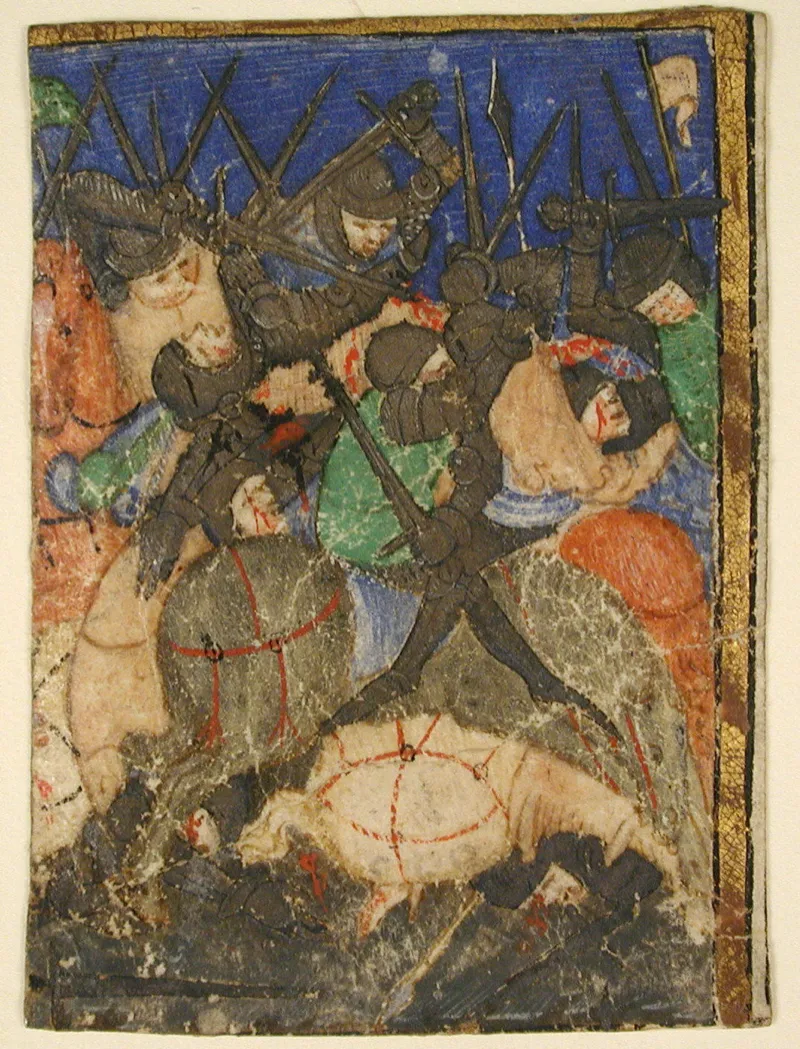
Imagine studying Talmud before printing existed. There is no book in front of you — books cost more than most families earn in a year. Instead, you sit in a study hall while the master reads aloud from a manuscript that he copied by hand from another manuscript that someone else copied from yet another. If there is a dispute about what the text says — and there often is — the only way to resolve it is to find another manuscript, which may be in another city, or another country, and which may itself contain errors introduced by a tired scribe working by candlelight three hundred years ago.
This was the reality of Jewish learning for over a thousand years. The Jewish textual tradition — one of the most complex and demanding intellectual systems ever created — was transmitted through hand-copied manuscripts, each one unique, each one precious, each one vulnerable to fire, water, war, and human error.
Then, in the second half of the fifteenth century, everything changed.
The Soncino Family: Jewish Printing Begins
Johannes Gutenberg printed his Bible in Mainz around 1455. Within two decades, the technology had spread to Italy, where it intersected with one of the most vibrant Jewish communities in Europe.
The Soncino family — named after the Italian town where they established their first press — became the pioneers of Hebrew printing. Israel Nathan Soncino set up the press, and his son Joshua Solomon Soncino and later his grandson Gershom Soncino made it famous. Beginning in the 1480s, the Soncino press produced:
- A complete Hebrew Bible (the Soncino Bible of 1488) — the first complete Hebrew Bible ever printed
- Tractates of the Talmud — making these texts available to students who could never have afforded manuscript copies
- Works of Rashi, Maimonides, and other classical commentators
- Prayer books, legal codes, and works of philosophy
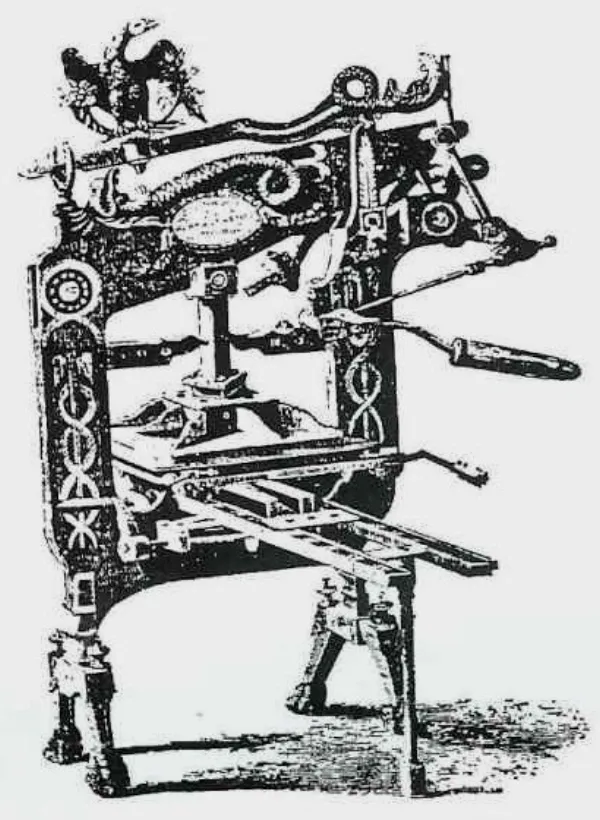
Gershom Soncino was a restless genius. He moved his press from city to city — Brescia, Barco, Fano, Pesaro, Rimini, Constantinople — sometimes driven by business opportunities, sometimes by the precarious legal status of Italian Jews. Wherever he went, he printed. His output was extraordinary in both quantity and quality, and his editions became the standard texts of the Jewish world.
The Soncino name lives on today: the Soncino Press, founded in London in 1926, published English translations of the Talmud and other classical texts that became standard reference works for English-speaking Jews.
Daniel Bomberg: The Christian Who Shaped the Talmud
The most consequential figure in the history of Jewish printing was, improbably, a Christian.
Daniel Bomberg was a wealthy Flemish merchant who established a Hebrew press in Venice in the early 1500s. He was not Jewish, but he recognized the commercial potential of the Hebrew book market and invested heavily in producing definitive editions of Jewish texts. He hired the finest Jewish scholars — including the convert Felix Pratensis and the great editor Rabbi Jacob ben Hayyim — to prepare his editions.
Bomberg’s achievement was monumental:
The Rabbinic Bible (Mikraot Gedolot), 1516-1517. This was the first printed edition of the Hebrew Bible accompanied by Targum (Aramaic translation) and major commentaries, arranged around the biblical text on each page. This layout — text in the center, commentaries surrounding it — became the standard format that is still used today.
The Babylonian Talmud, 1520-1523. This was the watershed event. Bomberg’s edition was the first complete printed Babylonian Talmud. More importantly, his editor established the page layout that every subsequent Talmud has followed:
- The Talmud text (Gemara) occupies the center of the page
- Rashi’s commentary runs along the inner margin in a distinctive semi-cursive typeface (now called “Rashi script”)
- The Tosafot (medieval Franco-German commentaries) run along the outer margin
- Cross-references and additional notes fill the remaining space
This layout was so logical, so functional, and so widely adopted that it became permanent. When you open a volume of the Talmud today — in a yeshiva in Brooklyn, a study hall in Jerusalem, or on the Sefaria website — you are looking at Daniel Bomberg’s page layout, unchanged in five hundred years.
Bomberg also established the page numbering that is universally used to cite the Talmud. When a scholar writes “Berakhot 2a,” they mean page 2, side a (front), of the tractate Berakhot — as numbered in Bomberg’s edition. This system ensures that every student in the world, regardless of which edition they are using, is literally on the same page.
Prague, Amsterdam, and Beyond
After Venice, Hebrew printing spread across Europe:
Prague became a major center of Hebrew publishing, producing the famous Prague Haggadah of 1526 — the first illustrated Haggadah, with woodcuts depicting the Exodus story that have been copied and adapted for five centuries.
Amsterdam, with its religiously tolerant atmosphere and its community of former conversos returning to open Jewish practice, became the “Jerusalem of the West” for Hebrew printing. The Menasseh ben Israel press (1627-1657) published works that reached audiences across the Jewish world. Amsterdam’s Hebrew printers produced editions of extraordinary beauty — clean typography, elegant layouts, and the kind of attention to detail that comes from printers who genuinely cared about the texts they were producing.
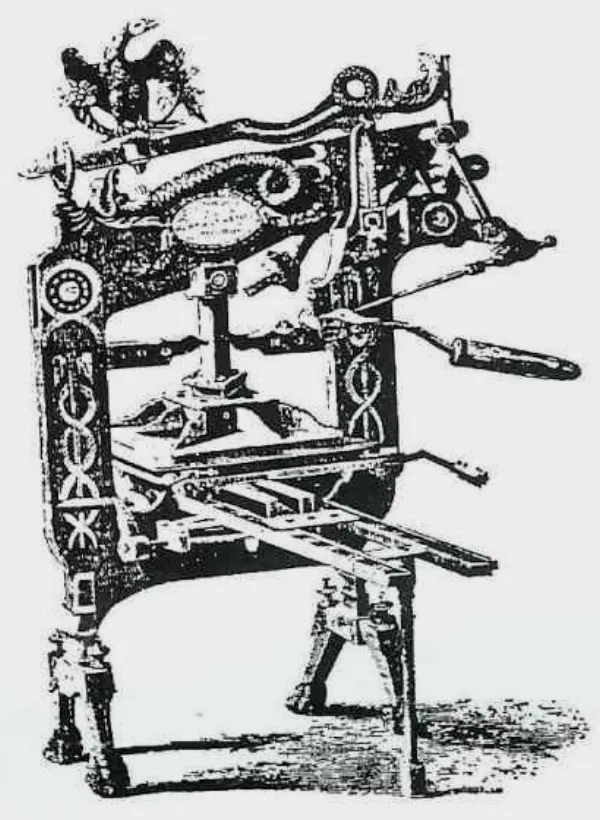
Slavuta and Zhitomir, in the Russian Empire, became centers of Hasidic publishing in the late 18th and 19th centuries. The Slavuta Talmud (1801-1808), printed by the grandsons of Rabbi Schneur Zalman of Liadi, became legendary among Hasidic Jews — so much so that individual pages are still treated as sacred objects.
The Vilna Romm Talmud: The Definitive Edition
The culmination of Jewish printing history came in Vilna (present-day Vilnius, Lithuania), where the Romm publishing house produced what would become the definitive edition of the Babylonian Talmud between 1880 and 1886.
The Vilna Shas (as it is universally known — Shas being an acronym for Shishah Sedarim, the six orders of the Mishnah) was a masterpiece of scholarly editing and typographic art. It incorporated:
- The complete Talmud text with Rashi and Tosafot
- Additional commentaries from dozens of authorities
- Cross-references to related passages throughout the Talmud
- References to legal codes and later rulings
- The Ein Mishpat index connecting Talmudic discussions to their halakhic conclusions
The Vilna edition was so comprehensive, so well-edited, and so widely distributed that it effectively replaced all previous editions. When people say “the Talmud” today, they almost always mean the Vilna Romm edition. Every modern printed Talmud — and even most digital versions — reproduces its page layout and numbering.
How Printing Changed Everything
The printing revolution transformed Jewish life in ways both obvious and subtle:
Democratization of learning. Before printing, serious Jewish study was limited to those who had access to major libraries or wealthy patrons. After printing, a student in a small town could own the same texts as a scholar in a great academy. This leveled the playing field and opened Jewish learning to a vastly broader population.
Standardization of texts. Manuscript traditions inevitably produce variants — a word here, a phrase there, slowly accumulating over centuries of copying. Printing froze texts in place, reducing (though not eliminating) textual variation.
Spread of new movements. The Zohar — the central text of Kabbalah — was first printed in 1558-1560, and its availability in print helped fuel the spread of Jewish mysticism. Similarly, the writings of the Hasidic masters spread rapidly through print, enabling a movement that might otherwise have remained local.
Preservation. Manuscripts are fragile. They burn, they rot, they are lost in wars and expulsions. Printed books, produced in hundreds or thousands of copies, are far more resilient. The printing press may have saved Jewish literature from the same fate that befell so many ancient libraries.
The Legacy
Today, in an age of digital texts and online databases, it is easy to forget how revolutionary printing was. But every time you open a Talmud to study, you are interacting with a technology and a layout that was created five hundred years ago by a Christian printer in Venice, perfected by Jewish editors across Europe, and codified in a Lithuanian publishing house. The page you are reading is the same page that scholars have read for generations — the same layout, the same fonts, the same arrangement of voices arguing across centuries.
That continuity is not an accident. It is the gift of Jewish printing.
Frequently Asked Questions
What was the first Hebrew printed book?
The first book printed entirely in Hebrew was Rashi's commentary on the Torah, printed in Reggio di Calabria, Italy, in 1475. However, individual Hebrew letters had appeared in non-Hebrew books slightly earlier. The Soncino family, beginning in the 1480s, became the most important early Hebrew printers, producing editions of the Bible, Talmud, and other classical Jewish texts.
Why does every Talmud page look the same?
The standard layout of the Talmud page — with the Talmud text in the center, Rashi's commentary on the inner margin, and the Tosafot on the outer margin — was established by Daniel Bomberg's Venice printing of 1520-1523. This layout was so successful that every subsequent edition has followed it, including the definitive Vilna Romm edition of 1880-1886. When scholars cite the Talmud, they reference the Bomberg page numbers, ensuring that every student worldwide is literally on the same page.
How did printing change Jewish life?
Before printing, Jewish texts were copied by hand — an expensive, slow, and error-prone process that limited access to the wealthy and scholarly elite. Printing made books affordable and widely available, democratizing Jewish learning. It standardized texts (reducing the variants that accumulated through hand-copying), enabled the spread of new ideas (including Kabbalah and Hasidism), and made it possible for ordinary Jews to own books that had previously been accessible only in major academies.
Sources & Further Reading
- Jewish Virtual Library — Hebrew Printing ↗
- Library of Congress — Hebrew Books ↗
- Marvin J. Heller, The Sixteenth Century Hebrew Book
Related Articles
Jewish Education: Schools & Study
From the ancient cheder to modern day schools, Daf Yomi to Birthright Israel — Jewish education spans a vast landscape of institutions and methods dedicated to lifelong learning.
The Talmud: A Beginner's Guide to Jewish Oral Law
The Talmud is the vast ocean of Jewish thought — centuries of rabbinic debate on law, ethics, storytelling, and the meaning of life, all compiled into one extraordinary work.
The Torah: The Heart of Judaism
The Torah is more than a book — it is the living constitution of Jewish life, studied and debated for over three millennia.