Jewish Astronauts in Space: From Judith Resnik to Ilan Ramon
The Jewish astronauts who reached for the stars — Judith Resnik on Challenger, Ilan Ramon on Columbia with a Torah scroll, and others who carried Jewish identity into orbit.
The Highest Diaspora
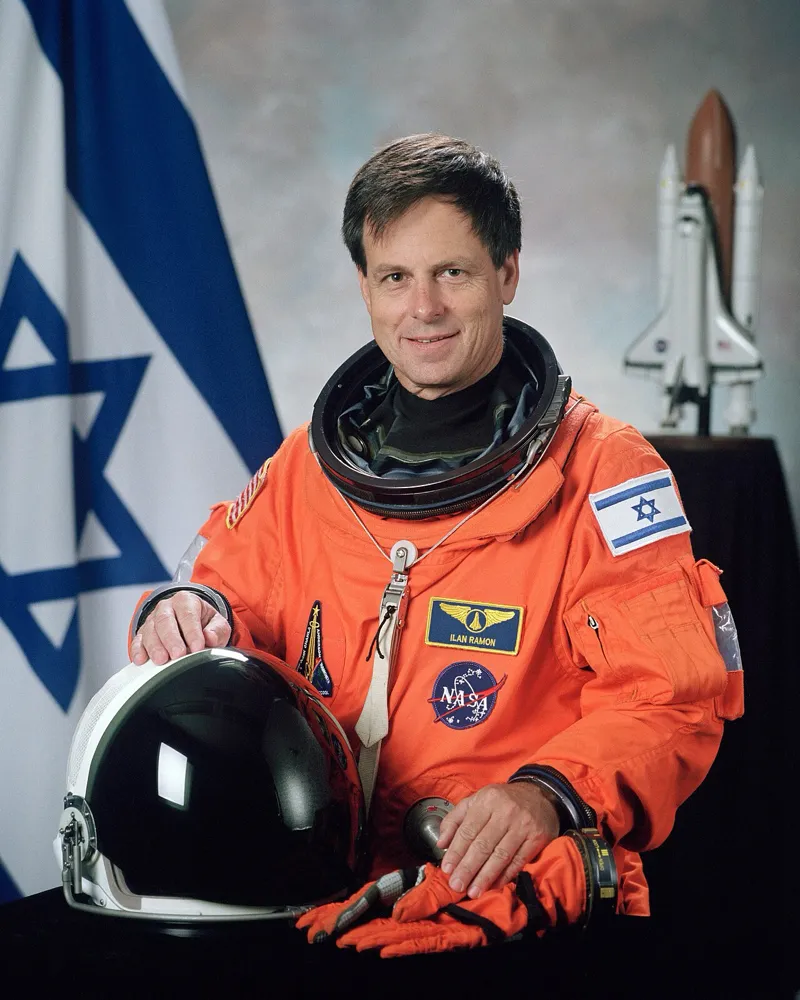
On January 28, 2003, Colonel Ilan Ramon — fighter pilot, husband, father, and the first Israeli astronaut — floated inside the Space Shuttle Columbia, orbiting Earth at 17,500 miles per hour. He carried with him a miniature Torah scroll that had survived the Bergen-Belsen concentration camp, a barbed-wire drawing titled “Moon Landscape” by a 14-year-old boy murdered at Auschwitz, and a microfiche copy of the Hebrew Bible.
From the highest point any Israeli had ever reached, Ramon looked down at the planet and said: “The world looks marvelous from up here, so peaceful, so wonderful, and so fragile.”
Four days later, Columbia disintegrated during re-entry. All seven crew members were killed.
Ramon’s story — heroic, tragic, and profoundly symbolic — is the most dramatic chapter in the history of Jews in space. But it is not the only one. Jewish astronauts have been part of the American space program since its earliest days, carrying their identities, their questions, and sometimes their ritual objects beyond the atmosphere.
Judith Resnik (1949–1986): Pioneer and Tragedy
Judith Arlene Resnik, the daughter of Ukrainian Jewish immigrants in Akron, Ohio, earned a PhD in electrical engineering from the University of Maryland and was selected for NASA’s astronaut class in 1978 — the first class to include women.
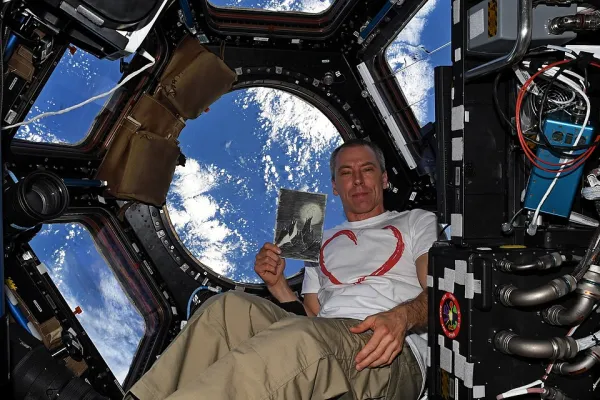
In August 1984, Resnik flew aboard the Space Shuttle Discovery, becoming the first Jewish American astronaut and the second American woman in space (after Sally Ride). During the mission, she deployed a satellite and operated the shuttle’s mechanical arm.
On January 28, 1986, Resnik was aboard the Space Shuttle Challenger when it exploded 73 seconds after launch, killing all seven crew members. She was 36 years old.
Resnik was not publicly observant, but she identified strongly as Jewish. The Judith Resnik Memorial, a lunar crater named in her honor, and an IEEE award bearing her name ensure that her legacy endures.
Jeffrey Hoffman (born 1944): The Menorah in Space
Jeffrey Hoffman, born in Brooklyn to a Jewish family, became the first Jewish astronaut to celebrate a Jewish holiday in space. During a Space Shuttle mission in December 1993, which coincided with Hanukkah, Hoffman brought a small menorah and dreidel aboard the shuttle Endeavour. In a video message, he spun the dreidel in zero gravity — it kept spinning, never landing on any letter — and lit the menorah (symbolically; fire is prohibited on spacecraft).
Hoffman flew five missions over his career, logging more than 1,200 hours in space. He was also part of the first Hubble Space Telescope servicing mission, one of the most technically challenging spacewalks ever performed.
“I always felt that my Jewish identity was part of who I was as an astronaut,” Hoffman has said. “You bring your whole self into space.”
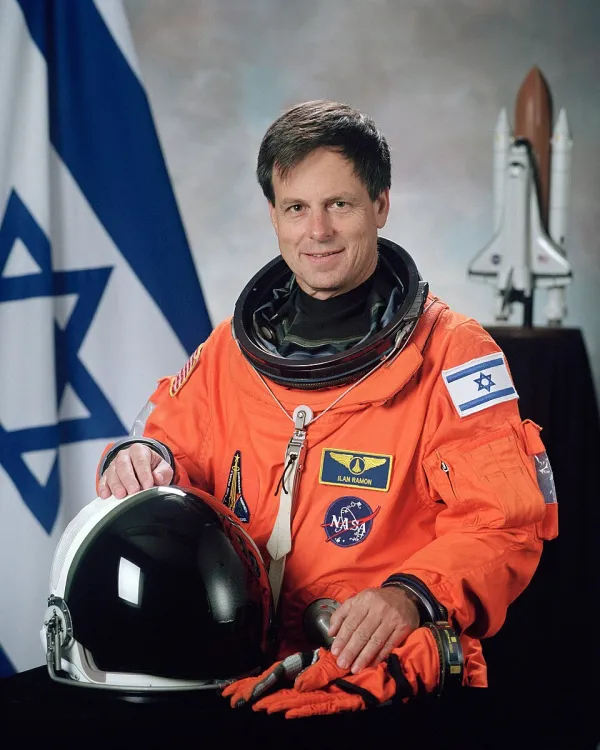
Ilan Ramon (1954–2003): The First Israeli
Ilan Ramon’s journey to space was itself a story of Jewish history. His mother and grandmother had survived Auschwitz. His father had fought in Israel’s War of Independence. Ramon himself was one of the pilots who destroyed Iraq’s Osirak nuclear reactor in 1981 — a mission that may have changed the course of Middle Eastern history.
When Israel selected Ramon for the Space Shuttle program, he approached the mission not just as a pilot but as a representative of the Jewish people. He consulted with rabbis about keeping kosher in space. He arranged for kosher food on the shuttle. He asked about Shabbat observance (since the shuttle orbited Earth every 90 minutes, creating a sunset every hour and a half).
The items he brought to space were chosen with deep intentionality:
- A miniature Torah scroll — given to a young boy in Bergen-Belsen by a rabbi who did not survive. The boy, Joachim Joseph, grew up to become a professor at Tel Aviv University and entrusted the scroll to Ramon.
- “Moon Landscape” — a drawing by Petr Ginz, a 14-year-old boy murdered at Auschwitz, depicting what the Earth might look like from the moon. Ramon carried it as a tribute to all the children who never returned.
- A Kiddush cup and a copy of the Shema — the prayer that Jews recite morning and evening, and the last words on the lips of martyrs.
Ramon’s death aboard Columbia on February 1, 2003, devastated Israel. His son, Assaf Ramon, became a fighter pilot in his father’s honor — and was killed in a training accident in 2009 at age 21. The double tragedy became a national wound.
Other Jewish Astronauts
Several other astronauts of Jewish heritage have flown in space:
- David Wolf (born 1956) — flew four missions and spent 128 days aboard the Russian space station Mir. Born to a Jewish family in Indianapolis.
- Scott Horowitz (born 1957) — flew four shuttle missions. The son of a Jewish mother.
- Mark Polansky (born 1956) — commanded two shuttle missions. Of Jewish background.
- Garrett Reisman (born 1968) — flew two missions and served as a SpaceX engineer after leaving NASA. Identified openly as Jewish.
- Jessica Meir (born 1977) — participated in the first all-female spacewalk in 2019. Her father is an Israeli immigrant from Iraq.
Shabbat at 17,500 Miles Per Hour
The question of how to observe Jewish law in space is not merely academic — it has been seriously discussed by rabbis and halakhic authorities. The challenges include:
When is Shabbat? In orbit, the sun rises and sets every 90 minutes. Traditional Shabbat observance is tied to sunset. One proposed solution: follow the time zone of the launch site. Another: follow Jerusalem time. The question remains unresolved.
What direction is Jerusalem? The Amidah prayer is traditionally recited facing Jerusalem. From orbit, Jerusalem’s direction changes constantly. Some suggest facing Earth in general as a symbolic alternative.
Can you light Shabbat candles? Open flames are forbidden on spacecraft. Electric lights have been proposed as substitutes — a question already debated for submarine sailors and hospital patients.
These questions may seem esoteric, but they reflect something beautiful about Jewish tradition: it takes its obligations so seriously that it insists on addressing them even in the most extreme circumstances. If a Jew can reach space, Judaism must follow.
Beyond the Atmosphere
Jewish astronauts have carried into orbit not just their expertise but their identity — menorahs and dreidels, Torah scrolls and Kiddush cups, the memory of the Holocaust and the hope of the prophets. They represent the most literal form of the Jewish diaspora: a people scattered not just across continents but beyond the planet itself.
And in a tradition that began with Abraham looking up at the stars and being told his descendants would be as numerous as the heavenly hosts, there is something fitting about Jews reaching those stars — carrying with them the ancient words, the ancient questions, and the stubborn insistence that wherever a Jew goes, Jewish life goes with them.
Frequently Asked Questions
Who was the first Jewish astronaut?
Judith Resnik became the first Jewish American astronaut when she flew aboard the Space Shuttle Discovery in 1984. She was also the second American woman in space. Tragically, she was killed in the Challenger disaster on January 28, 1986, along with six other crew members.
What did Ilan Ramon bring to space?
Ilan Ramon, the first Israeli astronaut, brought several items of Jewish significance aboard the Space Shuttle Columbia in 2003: a miniature Torah scroll that had survived the Bergen-Belsen concentration camp, a drawing by a 14-year-old boy who died in Auschwitz titled 'Moon Landscape,' and a copy of the Kiddush prayer. He was killed when Columbia disintegrated during re-entry on February 1, 2003.
How do Jewish astronauts observe Shabbat in space?
This is a genuine halakhic question. In low Earth orbit, the sun rises and sets approximately every 90 minutes, making traditional Shabbat observance based on sunset impossible. Rabbis have proposed various solutions, including following the time zone of the launch site (Houston/Cape Canaveral), following Jerusalem time, or following a 24-hour cycle based on Coordinated Universal Time (UTC).
Sources & Further Reading
Related Articles
Jewish Diversity: Race, Ethnicity, and the Many Faces of the Jewish People
From Ethiopian Beta Israel to Indian Bene Israel to Chinese Kaifeng Jews, the Jewish people span every continent and complexion — challenging assumptions about what a Jew looks like.
Jewish Contributions to Science: From Ancient Physicians to Nobel Laureates
Jews represent 0.2% of the world's population but have won over 20% of all Nobel Prizes in science. The reasons go deeper than talent — they involve a culture built on questioning, learning, and argument.
The Birth of Modern Israel
From the rise of Zionism to the declaration of independence in 1948 — the story of how the Jewish homeland was reestablished.