Henry Kissinger: Power, Realpolitik, and Controversy
Henry Kissinger fled Nazi Germany as a boy and became the most powerful diplomat of the Cold War era — a Nobel laureate whose legacy remains fiercely debated.
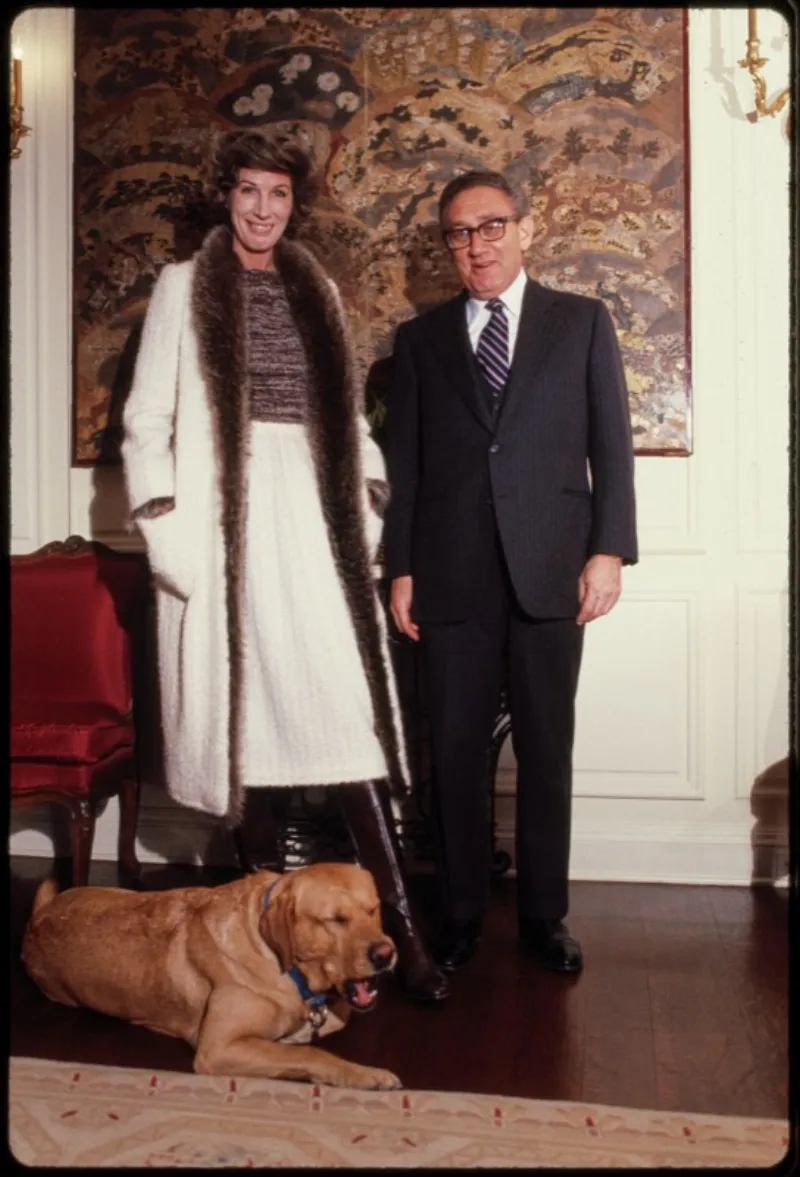
The Refugee Who Ruled the World
Heinz Alfred Kissinger was born on May 27, 1923, in Fürth, Germany, into an Orthodox Jewish family. His father, Louis, was a beloved teacher at a local school — until the Nazis forbade Jews from teaching. His mother, Paula Stern, came from a prominent Jewish family. Young Heinz experienced the full degradation of Nazi antisemitism: expelled from school, beaten by Hitler Youth, forbidden from attending soccer matches.
In 1938, when Heinz was fifteen, the family fled to New York. They settled in Washington Heights, the neighborhood known as “Frankfurt on the Hudson” for its concentration of German-Jewish refugees. Heinz became Henry, learned English, worked in a factory, and attended George Washington High School at night. Thirteen of his relatives who stayed behind were murdered in the Holocaust.
From GI to Harvard
Kissinger was drafted into the U.S. Army in 1943, became a citizen, and served in the Counter Intelligence Corps in Europe. He returned to Germany as an American soldier — a Jewish refugee now in uniform, interrogating the Nazis who had driven him out. The experience was formative. “I came away with a deep sense of the fragility of civilization,” he later said.
After the war, Kissinger attended Harvard on the GI Bill, earning his BA, MA, and PhD in political science. His doctoral thesis — on the Congress of Vienna — established themes that would define his career: the importance of great-power diplomacy, the balance of power, and the necessity of making morally ambiguous choices in an imperfect world.
Secretary of State
Kissinger served as National Security Advisor (1969-1975) and Secretary of State (1973-1977) under Presidents Nixon and Ford. He was the most powerful foreign policy official in American history, conducting diplomacy with a combination of intellectual brilliance, personal charm, and ruthless pragmatism.
His achievements were genuinely historic: the opening of relations with Communist China in 1972, the negotiation of arms control agreements with the Soviet Union, and the shuttle diplomacy that produced disengagement agreements between Israel and its Arab neighbors after the 1973 Yom Kippur War. For his role in negotiating the Paris Peace Accords that ended American involvement in Vietnam, he received the 1973 Nobel Peace Prize — the most controversial Nobel in history.
The Dark Side
Kissinger’s critics — and they are legion — point to a trail of devastation. The secret bombing of Cambodia killed tens of thousands of civilians. The U.S.-backed coup against Salvador Allende in Chile installed the brutal dictator Augusto Pinochet. Kissinger gave a “green light” to Indonesia’s invasion of East Timor, which resulted in genocide. He supported Pakistan during the Bangladesh independence war despite reports of mass atrocities.
Kissinger’s defense was always the same: the world is dangerous, choices are constrained, and moralism in foreign policy leads to worse outcomes than pragmatism. His critics respond that realpolitik without moral limits is simply the exercise of power without conscience.
Jewish Identity
Kissinger’s relationship with his Jewishness was complicated. He rarely discussed it publicly and seemed uncomfortable when it was raised. Yet the Holocaust shaped him profoundly. His worldview — the conviction that order is fragile, that chaos lurks beneath the surface, that power must be managed or it will destroy — was the worldview of a man who had watched civilization collapse as a child.
During the Yom Kippur War of 1973, Kissinger organized the massive American airlift of weapons to Israel that helped turn the tide of the war. Yet he also delayed the airlift, reportedly to let Israel suffer enough to be more amenable to peace negotiations. This calculation — saving Israel while manipulating its vulnerability — captured the moral ambiguity of his entire career.
Henry Kissinger died on November 29, 2023, at the age of one hundred. He remained controversial to the end — admired for his intellect, condemned for his methods, and impossible to ignore. His life — from Jewish refugee to the most powerful diplomat on earth — is an American story, a Jewish story, and a cautionary tale about the uses and abuses of power.
Frequently Asked Questions
Was Henry Kissinger Jewish?
Yes. Kissinger was born Heinz Alfred Kissinger in Fürth, Germany, to an Orthodox Jewish family. His father, Louis Kissinger, was a teacher. The family fled Nazi Germany in 1938 when Henry was fifteen. Thirteen of his relatives who remained were murdered in the Holocaust. Kissinger maintained a complex relationship with his Jewish identity throughout his life.
What was Kissinger's realpolitik approach?
Kissinger practiced 'realpolitik' — foreign policy based on practical national interest rather than moral principles. He believed that stability and the balance of power were more important than promoting democracy or human rights. This led to achievements like opening relations with China but also to supporting dictatorships in Chile, Argentina, and elsewhere.
Why was Kissinger controversial?
Critics accuse Kissinger of complicity in the bombing of Cambodia, the overthrow of Chile's democratic government, support for Pakistan during the Bangladesh genocide, and the Indonesian invasion of East Timor. His supporters credit him with ending the Vietnam War, opening relations with China, and managing the Cold War without nuclear conflict.
Key Terms
Sources & Further Reading
Related Articles
Albert Einstein: Genius, Refugee, and Jewish Icon
He revolutionized physics, fled Nazi Germany, was offered the presidency of Israel (and declined), played the violin, and became the most recognized scientist in history. Einstein's Jewish identity shaped his life in ways most people never learn about.
The Holocaust: Remembering the Six Million
The systematic murder of six million Jews during World War II — the darkest chapter in human history and its lasting impact on Jewish identity.
Jewish Immigration to America: Four Waves That Built a Community
Jewish immigration to America came in four distinct waves — Sephardic (1654), German (1840s), Eastern European (1880-1924), and Soviet/Israeli (1970s+). Each wave transformed the community, and each left marks on American life that endure today.